
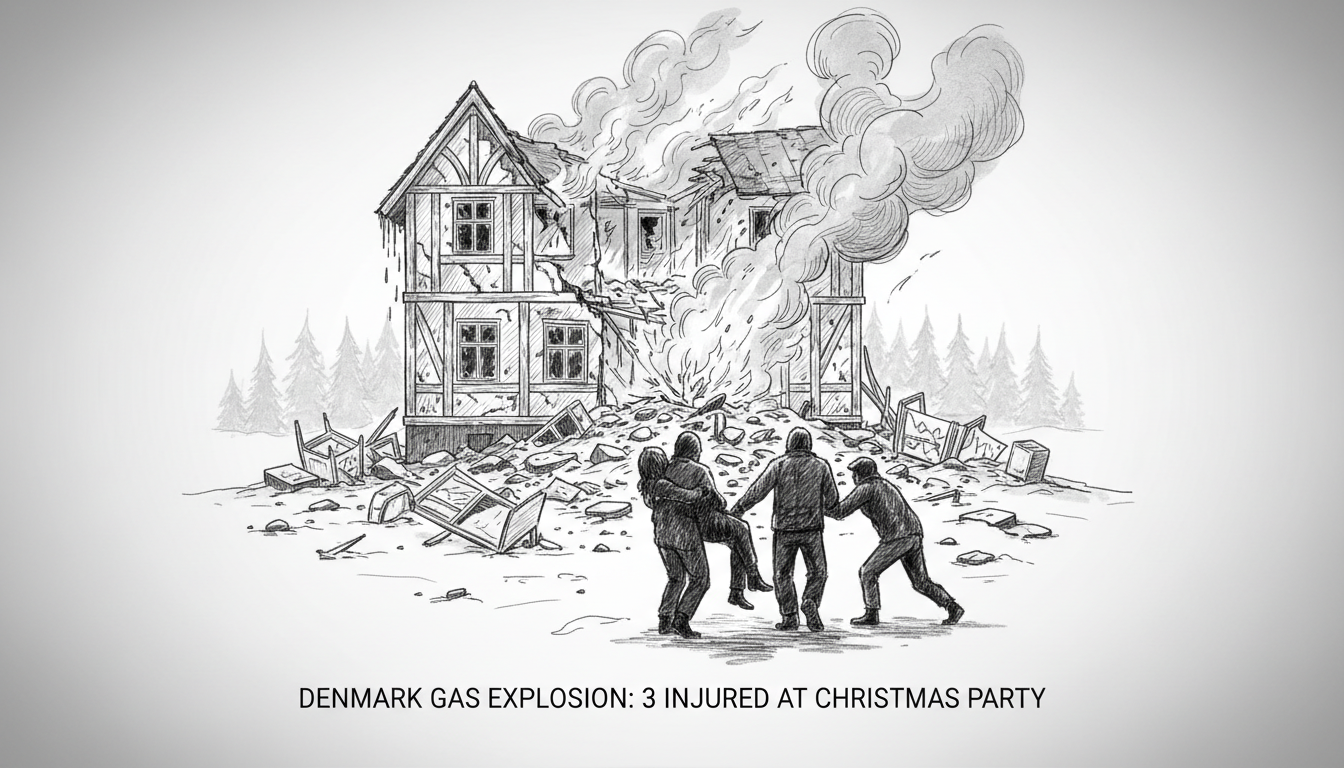
Denmark explosion news centers on a sports hall near Skærbæk, where a suspected gas cylinder leak triggered a blast during a packed julefrokost. Approximately 300 people were celebrating when the explosion and subsequent fire erupted on Saturday evening, sending three individuals to the hospital with injuries. The incident, now under investigation by local police, casts a shadow over a cherished Danish tradition and raises immediate questions about public safety at communal events.
Emergency services from Brand & Redning Sønderjylland responded swiftly to the scene at Sportsvej in Frifelt. Firefighters evacuated multiple guests from the hall while battling the flames, which originated from a truck where the gas cylinder was reportedly placed. The head of operations later commended the partygoers for their calm demeanor and for maintaining a safe distance, which allowed crews to work effectively. This cooperation likely prevented a more severe outcome in the crowded space.
A Community Celebration Interrupted
The julefrokost is a cornerstone of Danish social life, a festive gathering where colleagues, friends, and club members celebrate the season. For the local community in South Jutland, this event in the sports hall was a highlight. The abrupt shift from celebration to crisis represents a profound shock. While the three injuries are reported as non-life-threatening, the psychological impact on hundreds of witnesses, including families and children, could be significant. Community leaders in Tønder Municipality are now tasked with providing support in the aftermath.
Local authorities have confirmed the leading theory points to a technical failure. “The explosion is presumed to be due to a gas cylinder that was leaking,” a police statement explained. The cylinder, mounted on a truck, caught fire and caused the explosion. This initial finding directs scrutiny toward the setup and handling of gas equipment used for heating or cooking at the large event. Danish safety regulations for such installations in public venues will be a key part of the ongoing investigation.
Examining Safety Protocols for Public Gatherings
This incident forces a necessary examination of safety protocols for large, informal gatherings across Denmark. While workplaces and licensed venues operate under strict codes, community-organized events in local halls can sometimes rely on volunteer setup. “An event with 300 people requires meticulous planning, especially when involving potential hazards like gas cylinders,” said Lars Mikkelsen, a former chief fire officer and now a private safety consultant. “The placement, securing, and inspection of equipment are critical steps that cannot be overlooked.”
Mikkelsen emphasized that gas cylinders should always be stored and used upright, in well-ventilated areas, away from heat sources and exits. The fact this cylinder was on a truck suggests it was part of a temporary setup, a common sight at Danish country fairs and parties. Regular leak checks and having appropriate fire extinguishers on hand are basic yet vital precautions. This explosion will likely prompt Brandvæsnet, the Danish Emergency Management Agency, to issue renewed guidance to sports clubs and community centers nationwide.
The Broader Context of Danish Public Safety
Denmark generally enjoys a strong reputation for public safety and orderly event management. This makes the Skærbæk explosion particularly jarring. It occurs against a backdrop of national confidence in the welfare system’s ability to protect citizens. The effective emergency response showcases the professionalism of regional services, but the preventable nature of the cause invites public scrutiny. It highlights a potential vulnerability in the chain of responsibility for ad-hoc, community-driven events that are so integral to Danish social culture.
Statistics from the Danish Working Environment Authority show that accidents at public and private events, while uncommon, are often linked to technical failures or human error during setup. There is no centralized national database for minor incidents at private parties, which underscores how rare it is for a julefrokost to make headlines for such a dangerous reason. The incident will resonate in municipalities across the country, likely triggering informal reviews of local hall rental agreements and safety checklists.
Looking Ahead: Recovery and Reflection
For the residents of Skærbæk and the surrounding area, the immediate focus is on recovery. The sports hall, a hub for local activity, may face structural damage assessments and repairs. The organizers and attendees are dealing with the trauma of a peaceful night turning chaotic. This human impact is the most lasting consequence, far beyond the physical damage. Community cohesion, often strengthened by such traditional gatherings, will now be tested and potentially fortified through shared experience.
The investigation by South Jutland Police will provide definitive answers in the coming weeks. Their findings could influence municipal policies on event permits and equipment checks. Will this lead to stricter enforcement of existing rules, or merely a temporary surge in vigilance? In a society that values informal togetherness (hygge) and trust, the balance between regulation and communal responsibility is delicate. This explosion serves as a stark reminder that safety is a collective duty, especially when gathering to celebrate.
Ultimately, the Skærbæk incident is a story of near-miss. With 300 people present, the potential for tragedy was immense. The effective emergency response and the calm of the crowd mitigated the outcome. Yet, it leaves an indelible mark. It asks every community group planning a festive gathering: have we done enough to ensure that joy, not jeopardy, defines our celebration? As Denmark moves deeper into the julefrokost season, that question will carry a new, sobering weight.