
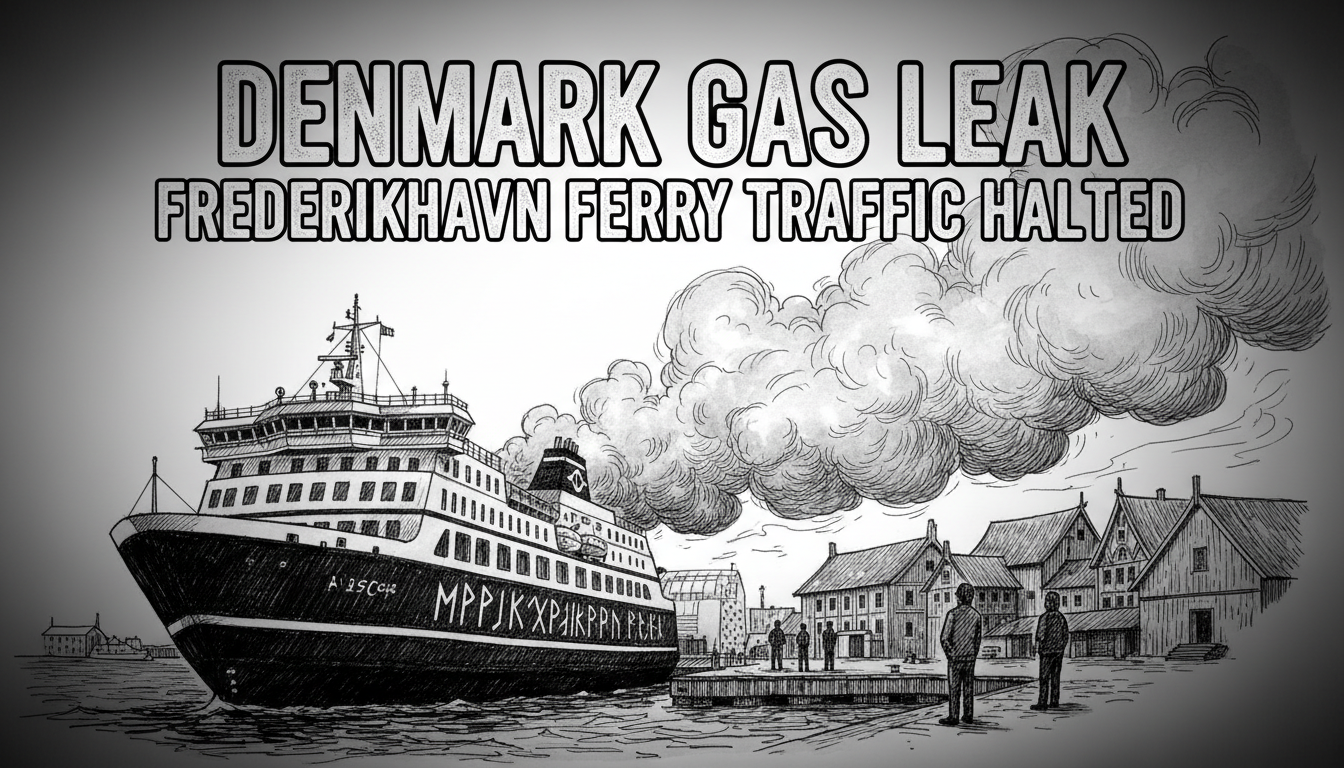
Denmark gas leak and ferry traffic disruption converged in Frederikshavn on Friday when a routine roadwork project struck a major utility line. A 63mm gas pipeline was punctured near the Stena Line terminal, forcing evacuations and creating a significant backlog of freight trucks. The incident, which blocked a key route for about 45 minutes, highlights the fragile balance between infrastructure maintenance and the uninterrupted flow of international trade.
Emergency services responded swiftly to the midday leak on Europavej. Workers replacing large traffic signs had drilled into the ground, inadvertently hitting the buried gas main. "The workers on site were evacuated, after which we secured the area," said incident commander Bo Isaksen of Nordjyllands Bredskab. He confirmed the gas company was repairing the line and the situation was under control. While traffic was blocked for up to three-quarters of an hour, Isaksen stated no one missed their scheduled ferry departure despite the buildup of trucks.
A Critical Transport Node Disrupted
Frederikshavn's port is a vital artery for Scandinavian trade. Stena Line ferries connect northern Denmark to Gothenburg in Sweden and Oslo in Norway, carrying a steady stream of freight lorries alongside passenger vehicles. Any disruption to the traffic flow around the terminal has immediate economic ripple effects. Delays in goods transport can disrupt supply chains and incur costly penalties for logistics companies operating on tight schedules. This incident, though brief, exposed the vulnerability of this critical node to seemingly minor infrastructure accidents.
Local business owners and transport managers express constant concern about such disruptions. "Every minute of delay at the port costs money," said Lars Jensen, a local logistics coordinator who preferred not to name his firm. "Our drivers have strict check-in times, and the margins in freight are thin. A half-hour closure might not sound like much, but it creates a domino effect for the rest of the day's routes." The efficiency of Denmark's welfare state and high standard of living is partly built on such seamless logistics, making these choke points matters of national economic interest.
The Hidden Network Beneath Our Feet
The Frederikshavn gas leak points to a broader, often invisible challenge in urban management: utility mapping. Before any excavation work, contractors are required to consult detailed charts of underground pipelines for gas, water, fiber optics, and district heating. However, these maps are not always perfectly accurate due to decades of ad-hoc upgrades and repairs. A 63mm pipeline is a substantial piece of infrastructure, and striking it suggests a potentially significant mapping error or a procedural lapse.
Experts in urban infrastructure stress the importance of investing in precise, digital utility mapping. "This is a classic example of a preventable incident," noted Karen Toft, a civil engineering consultant specializing in public works. "The cost of advanced ground-penetrating radar surveys or updated digital mapping is far lower than the cost of an emergency response, repairs, and business disruption. For a municipality, it's an investment in resilience." Danish municipalities, responsible for most local roads, operate under strict public budgeting but also bear the responsibility for public safety and economic continuity.
Emergency Response in the Danish Model
The handling of the leak offers a case study in Denmark's organized emergency response protocols. The Beredskab (Emergency Management Agency) operates regionally, ensuring specialized teams can reach incidents quickly. Their priority sequence was evident: immediate evacuation to ensure human safety, followed by securing the area to mitigate the hazard, and then coordinating with the utility owner for repairs. This structured approach minimized risk and contained the incident within a short timeframe.
This efficiency is a cornerstone of the Danish welfare model's practical administration. Tax-funded services are expected to function with high competence and coordination. The public's trust in the system relies on incidents like this being resolved swiftly and without major consequences. The fact that no ferries were missed is a testament to that effective response, limiting the economic impact to temporary congestion rather than cancelled sailings.
The Bigger Picture of Infrastructure Maintenance
While a single gas leak is a minor event, it fits into a larger national conversation about Denmark's aging infrastructure. Much of the country's utility network was installed during the mid-20th century expansion of the welfare state. Now, these systems require continuous maintenance and renewal. Roadwork, while often seen as a nuisance, is essential. The challenge for cities like Frederikshavn is to execute this maintenance without crippling the daily functions that the infrastructure supports.
Municipal planners increasingly use sophisticated traffic modeling to schedule works during lower-impact periods and ensure alternative routes are viable. However, in a port area where traffic is constant and international, there is rarely a truly quiet time. The incident underscores the need for even more careful planning and coordination between municipal road authorities, utility companies, and port operators. A simple sign replacement project can, as seen, have disproportionate consequences if the planning fails to account for all variables beneath the surface.
Looking Ahead: Prevention and Preparedness
The Frederikshavn incident will likely lead to a review of local procedures. Did the workers have the correct, updated maps? Were they using appropriate detection equipment for the task? The answers will help prevent a recurrence. For Denmark, a country proud of its orderly society and efficient systems, such small breakdowns are important learning opportunities. They test the protocols and reveal weak points in the complex web of services that keep society running.
As Denmark continues to invest in its physical infrastructure, the integration of better digital tools for planning and real-time traffic management will be crucial. The goal is a society where maintenance happens seamlessly in the background, not as a disruptive event on the front page. Friday's gas leak was a small puncture, but it briefly released the pressure we all feel when the systems we depend on unexpectedly fail. It serves as a reminder that the smooth surface of daily life rests on a hidden, and sometimes fragile, network below.