
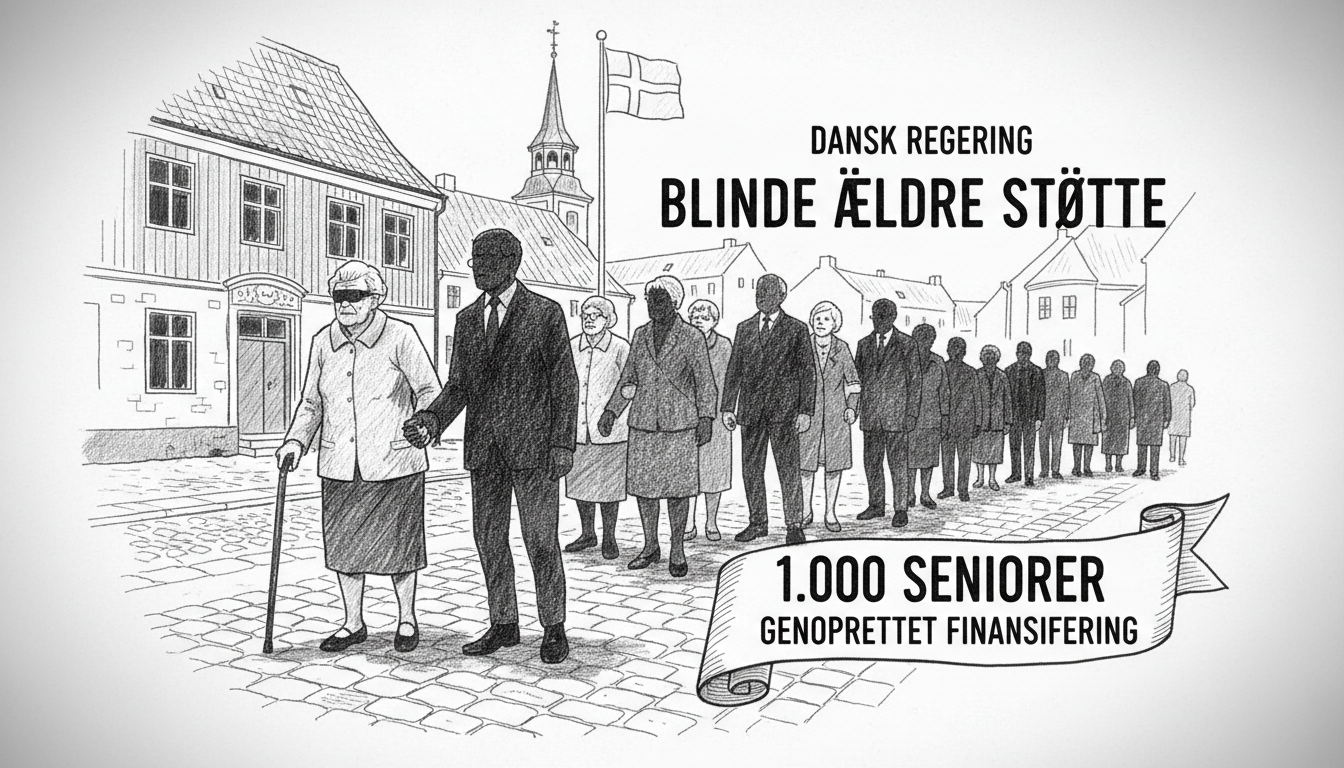
A wave of relief is washing over a thousand elderly Danish citizens this week. The government has reversed a controversial decision to cut a vital companion service for blind and visually impaired people over 67. The program, which allows participants to attend concerts, go for walks, and engage with community life, will now continue into the next year. This reversal came after intense public criticism and emotional appeals from those affected.
Eighty-year-old Jørn Størup from Lønstrup was one of many who faced a stark future. He depends on the temporary companion scheme. He said he would be left sitting at home if it ended. His fear was shared by around a thousand participants across Denmark. The scheme has operated as a trial for four years, offering a crucial social lifeline.
The Danish Association of the Blind labeled the initial decision to omit funding a catastrophe. The organization's chair, Diana Stentoft, described receiving a wave of feedback filled with tears. People expressed how profoundly the program impacted their daily lives and mental well-being. This public outcry proved impossible for politicians to ignore.
Social and Housing Minister Sophie Hæstorp Andersen announced the government found 30 million kroner to extend the program. The funds were located within existing budget reserves. This means no other social programs will lose money to cover this cost. The minister acknowledged the public's strong desire to keep the service and stated she understood the concern it caused.
This episode highlights the constant tension within the Danish welfare system. Programs are often launched as trials, creating uncertainty for vulnerable groups when evaluation periods end. The future of this companion scheme beyond the next year remains politically undecided. Minister Andersen stated that making it a permanent right would require finding more substantial, long-term funding. That decision will fall to the parliament formed after the next general election.
From an integration and social policy perspective, this story is about more than budget lines. It is about social inclusion for all citizens, regardless of age or ability. Denmark prides itself on a comprehensive welfare model, but its sustainability is regularly tested. Municipalities and local social centers are often on the front line, implementing these national policies and witnessing their human impact firsthand.
The government's quick reversal shows the power of organized advocacy and public sentiment in Danish politics. It also exposes a reactive rather than proactive approach to social care planning. For the international observer, it is a case study in how Nordic welfare states navigate aging populations and rising costs. The core question remains whether support for society's most vulnerable is a fixed pillar or a negotiable expense. The answer defines the character of the social contract.