
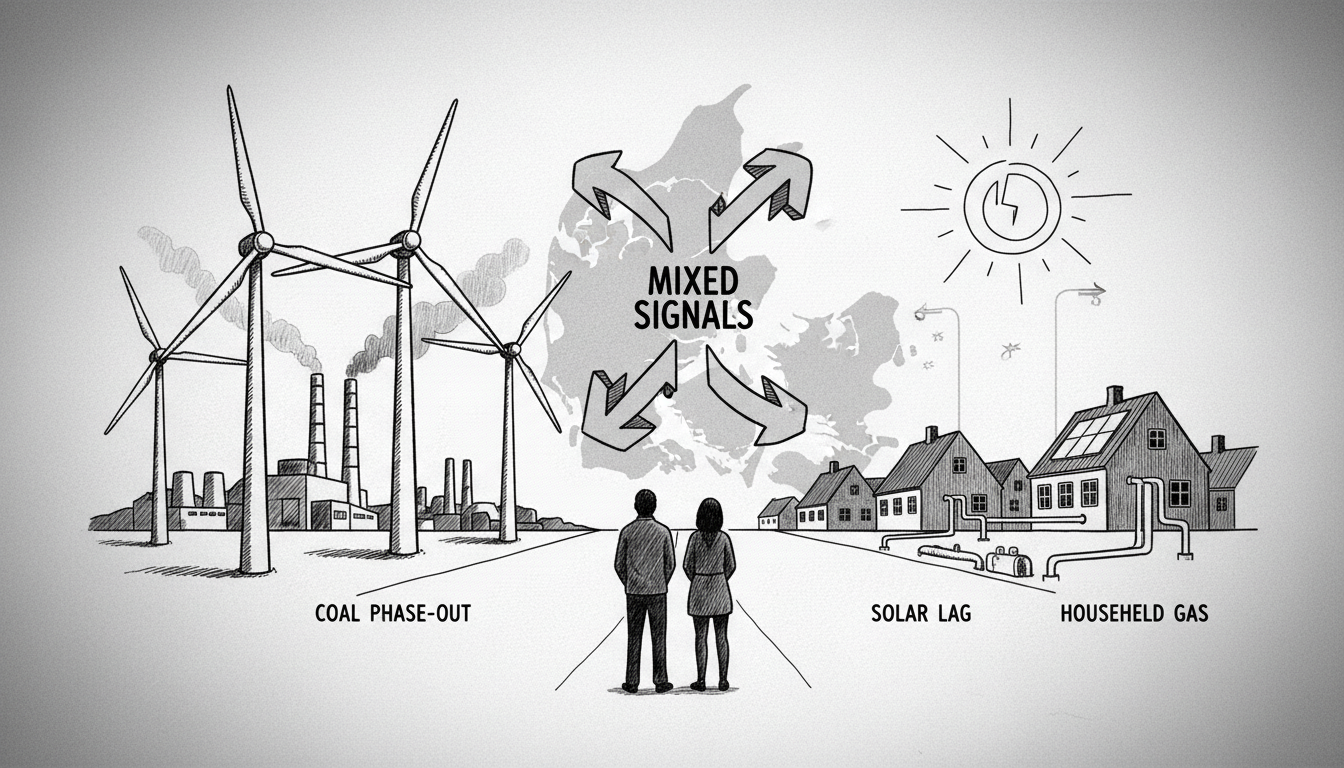
Denmark's ambitious journey toward a greener society reveals a landscape of both progress and significant hurdles. The nation aims for a profound transformation by the end of this decade, with more wind and solar power in homes, electric machinery on construction sites, and factories heated by heat pumps. A recent analysis, drawing on data from a leading business think tank, provides a concrete snapshot of where the country stands. The findings show a complex picture, one familiar to those of us observing Danish society news and its integration of major policy shifts into daily life.
Denmark's climate law mandates annual progress checks to ensure efforts support the core goal of cutting emissions by 70 percent compared to 1990 levels. So how is the transition actually going? In solar energy, the nation has been overtaken by many European peers. The installation of new solar panels has stalled, placing Denmark behind when measuring capacity per person. This slowdown directly impacts Copenhagen integration of sustainable technology into urban infrastructure and housing projects.
Yet, Denmark holds its ground in wind power. Thanks to a historic build-out both offshore and on land, the country remains near the top, just after Sweden and Finland. This success story is a cornerstone of the Danish welfare system's investment in long-term, state-backed energy security. The monthly consumption of fossil fuels, adjusted for seasonal swings, is falling. The most encouraging sign is that coal use has effectively dropped to zero, a major victory for public health and environmental policy.
The number of households using natural gas is also declining, a key part of Denmark immigration policy into a fossil-free future. However, the pace of this decline slowed last year. Analysts suggest mixed political signals from government parties about the phase-out path may have caused uncertainty among homeowners. A government energy crisis unit, known as the Nekst group, has charted a dotted line toward eliminating private gas consumption by 2035. The current data shows the real-world trajectory is not yet matching that ambitious target.
This gap between policy goals and on-the-ground implementation is a critical test for Denmark social policy. Major transitions require clear, consistent signals to municipalities, businesses, and families. When announcements fluctuate, it stalls investment and public adoption. Community leaders in social centers across Danish municipalities often see this hesitation firsthand, as residents weigh the cost and confusion of switching heating systems. The integration of green technology is not just an industrial project. It is a social one, requiring trust and clarity.
The broader implication is clear. Denmark's climate ambitions are structurally sound but pragmatically challenged. The nation excels in areas with strong historical foundations and state coordination, like wind. It struggles in sectors reliant on decentralized, private adoption, like solar and residential heating. For international observers, Denmark's experience offers a real-time case study. It shows that even a wealthy, politically stable country with a strong green consensus faces friction when transforming its entire energy foundation. The next few years will determine if the current pace is enough, or if a new policy push is needed to cross the finish line.