
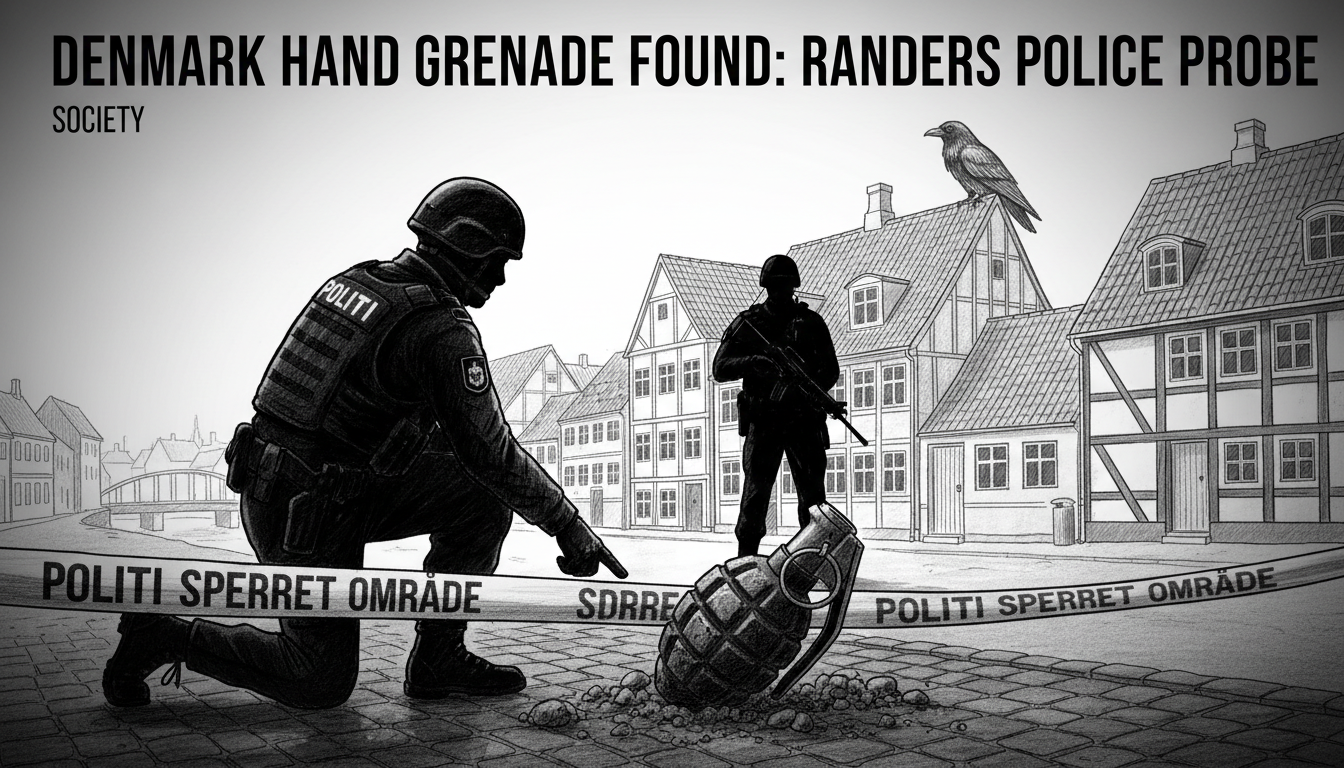
Denmark police are investigating the discovery of a live hand grenade in a residential area of Randers. Østjyllands Politi confirmed the explosive device was found on Skovlund road in the Vorup district, prompting a major emergency response. Bomb disposal experts, multiple police units, ambulances, and fire crews secured the scene on Monday. The incident has unsettled a quiet neighborhood and raised immediate questions about how such a dangerous weapon ended up there.
A Quiet Street on Lockdown
Skovlund is a residential road in Vorup, a southeastern district of Randers, Denmark's sixth-largest city. It is not an area typically associated with high-level criminal activity or weapons trafficking. The arrival of police cars, followed by specialized bomb squad vehicles and ambulances, created a jarring scene. Authorities established a wide perimeter, cordoning off the area and instructing residents to stay away. The police presence was expected to last for several hours as forensic officers meticulously examined the location. For local families, the sight of bomb technicians in protective gear was a stark and alarming departure from daily life.
This discovery fits a troubling pattern of military-grade weapons appearing in Scandinavian communities. While Denmark maintains strict gun control laws, illicit firearms and explosives periodically surface, often linked to organized crime. A hand grenade represents a significant escalation in potential violence due to its indiscriminate nature. Police have not indicated whether the device was primed or inert, treating all such finds with maximum caution. The immediate priority was the safe removal and controlled detonation of the grenade to eliminate any public threat.
The Serious Business of Bomb Disposal
The deployment of bomb disposal units, known as bomberyddere, underscores the grave risk involved. These specialists are trained to handle unstable explosives that could detonate from movement, temperature change, or electronic signals. Their work involves remote examination using robots before any human approaches the device. Securing the grenade requires isolating it in a protective container for transport to a remote demolition range. Every step is governed by strict protocols to protect both the technicians and the surrounding community.
"When a weapon like a hand grenade is found in a civilian area, the procedure is absolute containment," explained a former police security consultant, who spoke on background. "The investigation has two parallel tracks: rendering the device safe and forensically tracing its origin. These grenades often have serial numbers or unique markings that can point to thefts from military stocks or smuggling routes." The consultant noted that such weapons are sometimes used as intimidation tools in criminal conflicts or held in hidden caches. Their discovery in a residential area, rather than an industrial zone or forest, significantly increases the perceived threat level and public alarm.
Community Impact and Lingering Questions
For residents of Vorup, the police activity transforms a familiar neighborhood into a temporary security zone. The sight of armed police and emergency vehicles creates anxiety and disrupts the sense of safety that defines Danish suburban life. Parents may hesitate to let children play outside, and neighbors exchange concerned conversations about what the grenade means for their community. While Randers does not have the same profile for gang violence as parts of Copenhagen or Aarhus, any weapons find triggers broader worries about criminal activity spreading.
The police have released minimal details, stating only that they are investigating a "suspicious circumstance" that led to the grenade find. This is standard procedure to avoid compromising an active investigation. Key questions remain unanswered. Was the grenade recently discarded, or had it been hidden for some time? Was it linked to a specific threat or criminal transaction? Are there any suspects or witnesses? Police will likely conduct door-to-door inquiries and review local camera footage to piece together the timeline of events leading to the discovery.
A Broader Context of Weapons in Denmark
While statistically rare, discoveries of military explosives periodically make headlines in Denmark. They highlight the challenges of intercepting illicit weapons within Europe's open borders. Danish authorities collaborate closely with international partners like Europol to track trafficking networks that may supply grenades and automatic weapons to criminal groups. These groups sometimes use high-powered arms to escalate conflicts or bolster their reputation. The presence of a single grenade can indicate wider criminal logistics operations in a region.
Denmark's integrated police and intelligence services typically respond to such finds with a combination of forensic investigation and increased patrols. The goal is to deter any related criminal activity and reassure the public. The Randers incident will likely prompt a review of local intelligence reports and any prior warnings about weapons in the area. It also serves as a reminder that the tools of serious violence can appear far from major urban centers, affecting the security perceptions of smaller cities and towns.
Looking Ahead: Investigation and Reassurance
The investigation on Skovlund road will continue long after the cordon is lifted. Forensic analysis of the grenade could provide vital clues about its provenance. Police will work to determine if this is an isolated incident or part of a larger cache. Community policing teams may increase their visibility in Vorup to foster dialogue with residents and gather informal intelligence. Restoring public confidence is as crucial as solving the crime itself.
Discoveries like this hand grenade create a ripple effect of concern. They momentarily puncture the societal trust that allows Danes to feel secure in their homes and neighborhoods. The professional response of Østjyllands Politi aims to manage the immediate physical danger and begin the process of answering the inevitable questions. Who brought a weapon of war to a quiet street in Randers, and why? Until those answers come, a sense of unease will linger alongside gratitude for the bomb squad who ensured the day ended not with an explosion, but with a sigh of relief.