
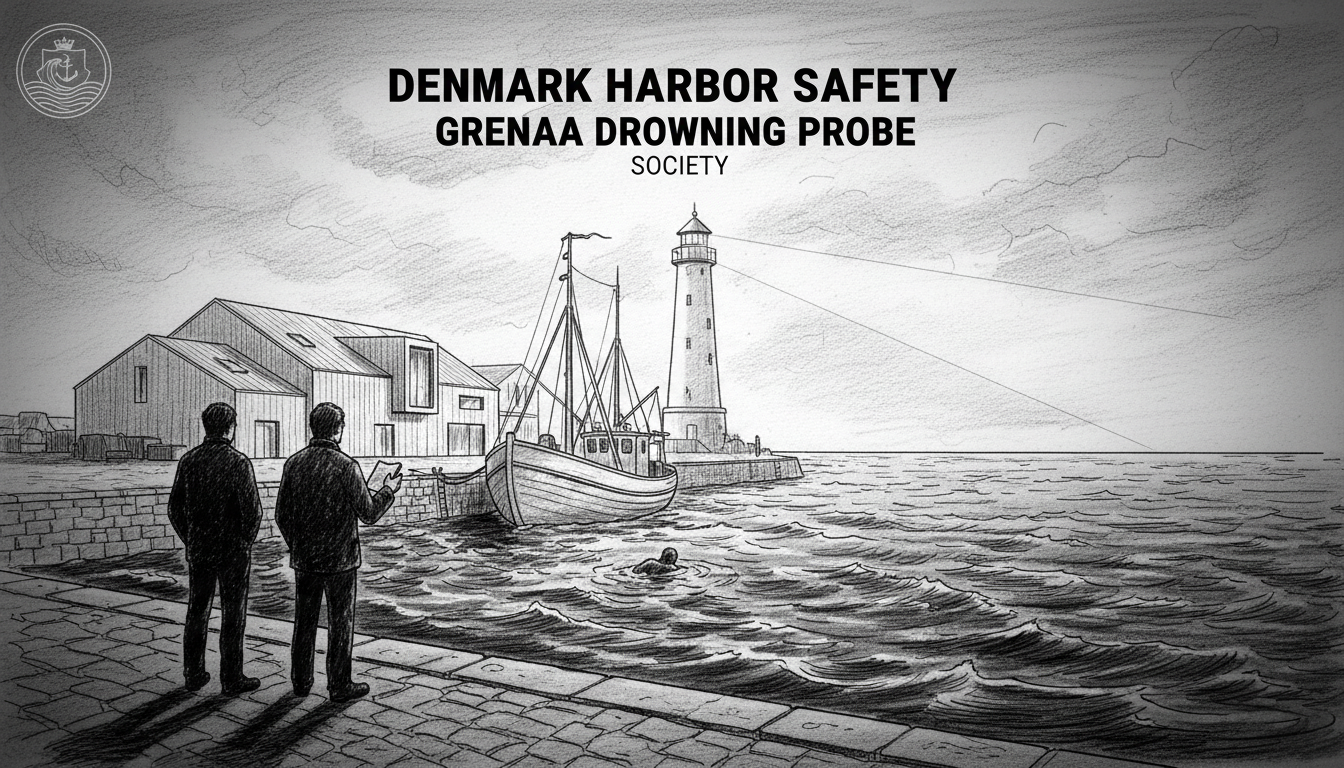
Denmark emergency services responded to a possible drowning at Grenaa Harbor on Thursday evening. Police, ambulances, and fire crews converged on the port area following reports of a person in distress in the water. The incident highlights the ever-present risks in Denmark's bustling coastal communities, where water and public activity intersect daily. As a reporter who often writes about the structures of Danish society, I see these moments as stark reminders of the systems we rely on and the human stories they are built to protect.
A Community's Evening Interrupted
Grenaa, a town on the east coast of Jutland's Djursland region, is defined by its relationship with the sea. Grenaa Havn is not just a scenic backdrop but a vital economic and social hub. It functions as a ferry terminal with routes to Sweden, a commercial port for goods, and a marina for leisure boats. On any given evening, the area sees a mix of workers, travelers, and locals enjoying the waterfront. The sudden arrival of multiple emergency vehicles with flashing blue lights would have dramatically altered the scene. Such responses are protocol-driven, involving coordinated efforts to locate, retrieve, and provide immediate medical aid to a potential victim. The presence of all three core services—police for investigation and control, ambulances for medical care, and the fire department often for specialized water rescue—indicates the seriousness with which Danish authorities treat these calls.
The Human Cost Behind the Headline
While the immediate facts concern an emergency response, the real story lies in the human impact. A possible drowning is a traumatic event that ripples outwards. It affects the individual involved, their family and friends, the witnesses, and the first responders themselves. These incidents force a community to confront vulnerability. For the family, the agonizing wait for news is a private tragedy unfolding against a very public emergency operation. In my reporting on social policy, I've learned that Denmark's welfare system extends beyond healthcare and education to include crisis response and psychological support for those affected by sudden tragedies. The local municipality and social services would typically mobilize in the aftermath to offer such support, though this occurs away from the flashing lights of the initial scene.
Harbor Safety in the Danish Context
Denmark, as a nation surrounded by water and with a deep maritime culture, has developed extensive safety regulations for its ports and harbors. Grenaa Havn, like all public harbors, is subject to rules governing everything from fencing and lighting to the placement of lifebuoys and emergency ladders. Commercial areas are strictly separated from public access zones where possible. Yet, accidents can still happen. A slip on a wet pier, a misstep in the dark, or a sudden medical episode can lead to a person entering the water unexpectedly. Investigations following such events meticulously examine these factors. They look at whether safety equipment was accessible and functional, if warning signage was adequate, and if environmental conditions played a role. The goal is never to assign blame in a vacuum but to identify tangible ways to prevent a repeat occurrence. This systematic, preventative approach is a hallmark of Danish public safety policy.
The Unseen Network of Response
What the public witnesses is the visible tip of a vast operational iceberg. The dispatch of police, ambulance, and fire services to Grenaa Harbor triggers a well-rehearsed chain of command and communication. The Central Denmark Region's emergency medical services coordinate with the police district and the local fire brigade. In coastal areas, the Danish Sea Rescue Society (RS) might also be alerted. Each unit has a defined role: securing the area, conducting the search and rescue, and providing advanced life support. This integrated response model is a product of continuous training and investment. It reflects a societal consensus that protecting citizens from harm, whether on land or water, is a fundamental public responsibility. The efficiency of this response, however, is cold comfort to those directly involved in the tragedy.
A Personal Reflection on Risk and Community
Living in Denmark means living with water. We are never far from a beach, a canal, or a harbor like Grenaa's. This proximity is a source of joy, recreation, and economic life, but it carries an inherent risk that becomes painfully clear on evenings like this. As an immigrant who has come to call Denmark home, I've observed how Danish society manages this relationship with nature. There is a profound trust in the system—the properly maintained barriers, the reliable emergency number 112, the competent professionals who respond. An incident like the one in Grenaa tests that trust. It asks quiet, difficult questions about whether we have done enough to make shared spaces safe for everyone. The answers are found not in the dramatic news headline, but in the careful investigation that follows and the policy adjustments that may result.
Looking Beyond the Immediate Crisis
The aftermath of a possible drowning extends far beyond the night of the response. If a life is lost, there will be a coroner's investigation. The police will compile a report on the circumstances. Harbor authorities and the municipal council will review safety protocols. This process, though administrative and slow, is crucial. It transforms a single, heartbreaking event into data and analysis that can inform future decisions. Perhaps it leads to additional lighting along a pier, more frequent safety inspections, or a public awareness campaign about harbor risks. This is how Danish society often works—using structured analysis to address human problems, aiming to build a safer environment for all. It is a continuous, often unseen, effort to learn from tragedy.
The Silent Statistics of Safety
While national statistics on harbor-specific drownings are not immediately centralized, drowning remains a cause of accidental death in Denmark. Each incident contributes to a broader understanding of risk factors, whether related to alcohol, unsupervised swimming, or falls. The work of organizations like the Danish Lifesaving Society focuses on education and prevention, complementing the emergency response. The event in Grenaa is a single data point in this larger context. It reminds us that for all our planning and regulation, water demands respect. The true measure of a society's resilience is not just in its response to crisis, but in its willingness to examine, learn, and adapt once the emergency vehicles have departed. As the community of Grenaa processes Thursday's events, that quieter, more profound work begins.