
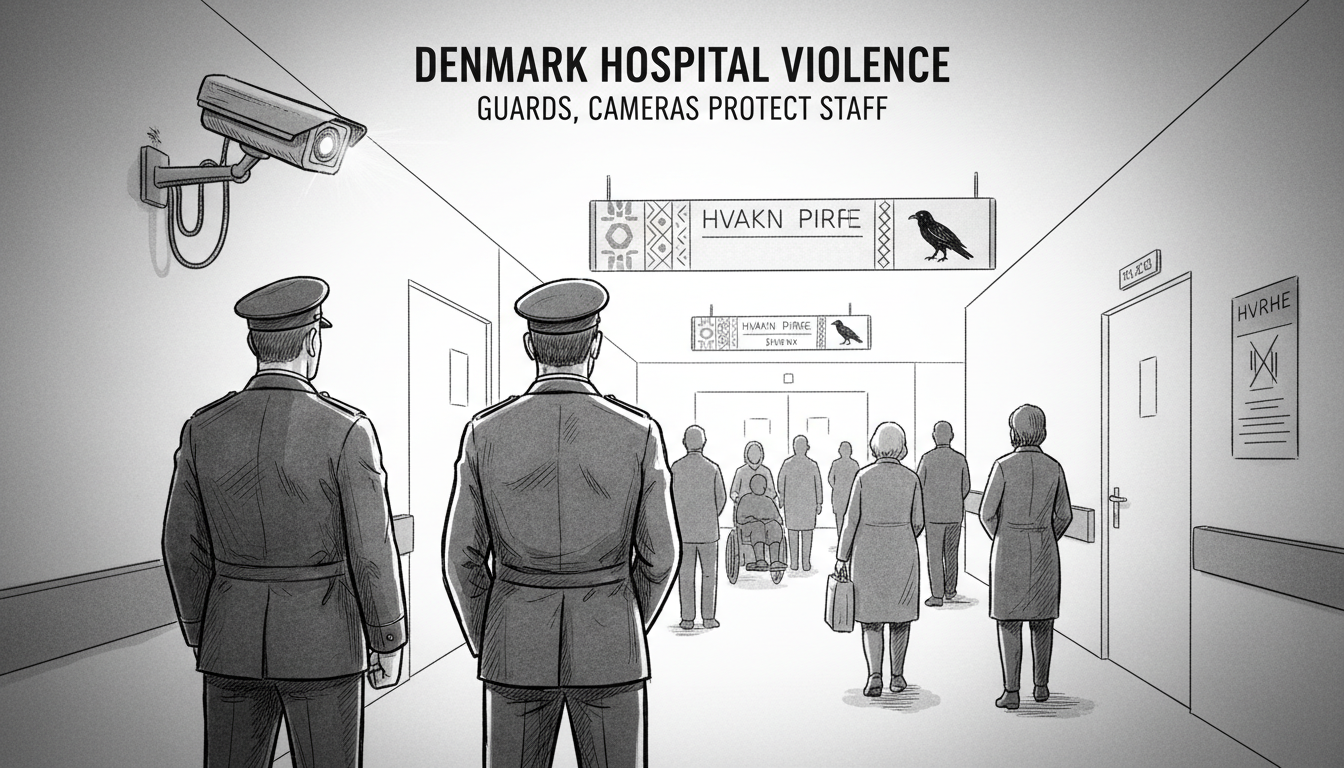
Danish hospital violence is driving a major security overhaul, with guards and body-worn cameras introduced to shield fearful staff. New figures reveal over 40% of nurses in the Capital Region face threats or physical attacks annually, a statistic fueling urgent policy action. For Fatima Al-Khalil, a veteran nurse at Bispebjerg Hospital, the fear has become a routine part of her shift. 'We come to work to care, not to be screamed at, pushed, or spat on,' she tells me, her voice a mix of exhaustion and resolve. 'The final straw was when a colleague was punched in the face for trying to insert an IV. That's not care; that's assault, and it's happening in our wards.' Her experience is a stark window into a systemic crisis within Denmark's cherished welfare system.
A System Under Strain
The response from healthcare authorities is now materializing in tangible, if controversial, ways. The Capital Region of Denmark, which operates hospitals in Copenhagen and surrounding areas, has initiated a pilot project deploying security guards in select emergency departments and psychiatric wards. Simultaneously, body-worn cameras are being tested, allowing staff to record aggressive incidents. 'Our primary task is to create safety for patients and employees,' a region spokesperson said in a statement. 'These tools are a supplement to the de-escalation training and supportive work environment we continuously strive for.' This move directly engages Denmark's strict labor laws, which mandate employers provide a safe working environment under the oversight of the Danish Working Environment Authority.
Yet, the solution is not without complexity. Trade unions and healthcare professionals offer mixed reactions. While welcoming any measure that reduces risk, many argue it treats a symptom, not the cause. 'Cameras and guards are a last line of defense,' says Lars Jørgensen, a union representative for healthcare workers. 'We must ask why this violence is happening. Chronic understaffing, long wait times in ERs, and patients with complex, unmet social or mental health needs create a pressure cooker.' He points to national data suggesting incidents spike during night shifts and in areas with the highest patient-to-staff ratios. This analysis shifts the focus from pure security to the foundational pressures on the Danish welfare model.
The Integration and Social Policy Dimension
My reporting often focuses on integration, and here the threads of social policy visibly intertwine. Healthcare professionals and municipal social workers I interviewed frequently describe patients whose aggression stems from frustration, language barriers, or untreated psychological trauma. 'A patient doesn't wake up wanting to assault a nurse,' notes Dr. Amira Hassan, who works in a Copenhagen community health center serving a diverse population. 'Often, they are scared, in pain, or feel misunderstood. When the system is too rigid or rushed to address that, conflict emerges.' She emphasizes that effective de-escalation requires cultural competency and time—resources often in short supply. This highlights a critical gap where Denmark's immigration policy and its welfare system intersect, demanding more coordinated support from municipalities.
Statistics from the Danish Nurses' Organization paint a grim picture that transcends geography. Their 2020 study indicated a significant portion of nurses experience violence, with verbal abuse being most common but physical attacks alarmingly frequent. The new regional data suggests the problem has not abated. This reality challenges the Nordic ideal of a harmonious, high-trust society and places immense psychological strain on the workforce. 'You start doubting your own ability to connect with people,' confides a young doctor at Hvidovre Hospital, who asked not to be named. 'It erodes the very humanistic principle our profession is built on.'
Searching for Sustainable Solutions
So, where does Denmark go from here? The security measures are a direct, immediate answer to a legitimate cry for help. They align with the government's responsibility to protect employees. However, experts in healthcare administration stress that sustainable safety requires a multi-pronged strategy. This includes investing in more staff to reduce burnout and wait times, expanding training in non-violent communication and trauma-informed care, and strengthening the collaboration between hospitals, municipal social services, and mental health providers. 'A camera documents an assault; it doesn't prevent it,' argues Karen Møller, a professor of public health. 'Prevention means designing a care system that has the time and tools to meet patients where they are, especially the most vulnerable.'
For nurses like Fatima, the hope is that the new measures will bring tangible calm to her workplace. But her deeper wish reflects a broader societal need. 'I want to feel safe, yes. But I also want my patients to feel safe and heard, so that their fear doesn't turn into my danger,' she says. The dilemma playing out in Copenhagen's hospitals is a microcosm of a larger test: Can Denmark adapt its world-renowned welfare system to meet modern pressures of complexity, diversity, and strain, while preserving the safety and dignity of both those who deliver care and those who receive it? The answer will define not just hospital corridors, but the health of the social contract itself.