
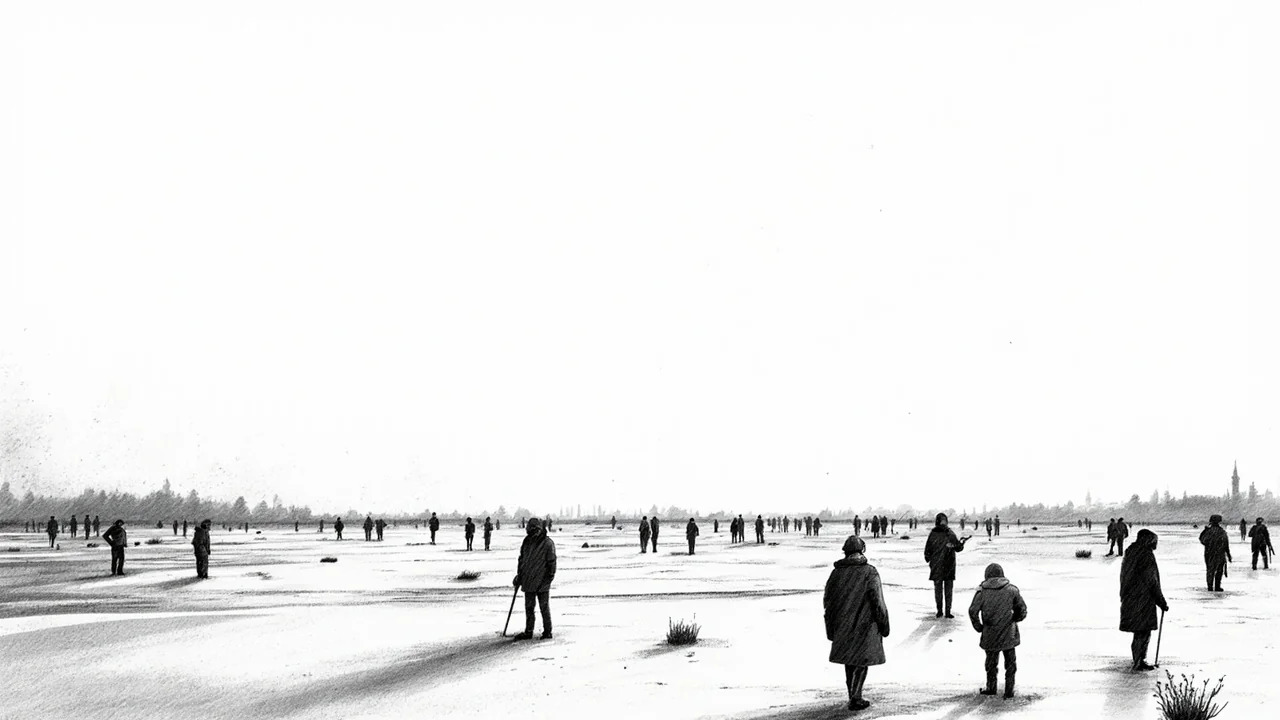
Hundreds of Copenhageners ventured onto the city's frozen lakes Sunday, ignoring police warnings that the ice has not reached safe thickness. The scene resembled a festive winter gathering, with people of all ages skating and walking across the seemingly solid surface. Some even pushed strollers onto the precarious ice, underestimating the hidden risks beneath their feet. Copenhagen Emergency Services issued its strongest possible warning, urging immediate return to shore.
Operations Chief Frederik Ryberg stated clearly that the ice lacks the approved thickness for such activity. "We can only warn against going out, as the ice has not yet reached the certified thickness," Ryberg said. "It can be difficult to see from above where the ice is thick enough and where it might give way, leading to a fall through." The capital's police hold authority to remove people from the ice, but on Sunday, warnings were disseminated primarily through social media channels.
A Collective Risk on Thin Ice
This widespread disregard for safety protocols presents a stark challenge for Danish authorities. The municipal guideline requires ice to be 16 to 18 centimeters thick before it is deemed safe for foot traffic. Currently, not a single lake in Copenhagen is on the approved list for such use. The visual allure of a sunny, frozen landscape often overrides public adherence to these technical standards. As a society reporter, I see this as a tension between individual freedom and collective responsibility—a recurring theme in Danish social policy.
Frederik Ryberg emphasized the severe physical consequences of a plunge into icy water. "When you fall in, we know what can happen," he explained. "You become cold very quickly, and it is difficult to get out if you don't have the right equipment." Hypothermia can set in rapidly, impairing motor function and decision-making ability. This reality is well-known to rescue professionals who train under controlled conditions, yet it seems distant to citizens caught up in winter's charm.
Authority Responses and Social Media Alerts
Copenhagen Police took to platform X to reinforce the danger. "The ice may look tempting—but it is dangerous," the post read. "Therefore refrain from moving on the ice. It is only permitted to walk on the ice where it is signposted that traffic is allowed." The police confirmed receiving numerous reports about people on the ice throughout the weekend. However, the scale of Sunday's crowd highlighted a gap between official communication and public behavior.
The response hinges on Denmark's welfare model, where public safety is a municipal priority. Copenhagen Municipality consistently monitors conditions and publishes guidelines, trusting citizens to comply. This incident tests that model, revealing how communal trust can falter when faced with immediate, visible pleasure. The Danish welfare system often relies on informed citizen participation, but here, participation turned perilous.
Cultural Drivers and Winter Traditions
Why do so many otherwise sensible people take such obvious risks? Danish culture has a deep-rooted appreciation for winter activities and outdoor life, often embracing the elements with enthusiasm. The sight of frozen lakes invokes a traditional nostalgia for skating and winter gatherings. There is an unspoken social permission that emerges when crowds gather, reducing the perceived individual risk. This group dynamic can override personal caution, creating a false sense of security.
From an integration perspective, this behavior cuts across demographic lines. Newcomers and long-time residents alike are drawn to these shared public spaces, seeking connection and leisure. The incident underscores how Danish societal norms around nature and community can sometimes conflict with established safety protocols. It is a moment where cultural practice meets regulatory framework, with potentially dangerous outcomes.
The Broader Safety Context in Danish Society
Denmark's approach to public safety typically involves prevention through education and clear regulation. The state invests in public awareness campaigns about seasonal hazards, from cycling in the dark to ice safety. Yet, as Sunday showed, knowledge does not always translate to action. This gap is a focal point for social policymakers who aim to protect citizens while preserving the Danish love for the outdoors.
Comparatively, Danish municipalities have effective systems for managing many social risks, from integration programs to educational support. However, managing spontaneous public behavior in response to natural phenomena remains a complex task. It requires continuous communication and, at times, direct intervention. The police's role here is not just enforcement but also public education—a dual responsibility embedded in Denmark's social contract.
Moving Forward: Vigilance in the Cold Months
The coming weeks will likely see repeated cycles of freezing temperatures and public temptation. Authorities must balance their response, ensuring warnings are heard without resorting to excessive measures that could alienate the community. Perhaps this event will spur renewed campaigns from Copenhagen's social centers and community groups, promoting ice safety as a shared responsibility.
As a journalist observing Danish society, I see this as a microcosm of a larger dialogue. It revolves around how a society built on trust and welfare navigates moments when individual actions threaten collective well-being. The frozen lakes of Copenhagen are more than a scenic backdrop; they are a test of communal judgment and institutional credibility.
Will this weekend's warnings lead to greater caution, or will the next sunny frosty day draw another crowd? The answer lies in the ongoing conversation between Danish authorities and the citizens they serve. For now, the message is unequivocal: the ice is not safe, and the risk is not worth taking. This simple directive must bridge the gap between policy and practice, ensuring that winter's beauty does not turn to tragedy.