
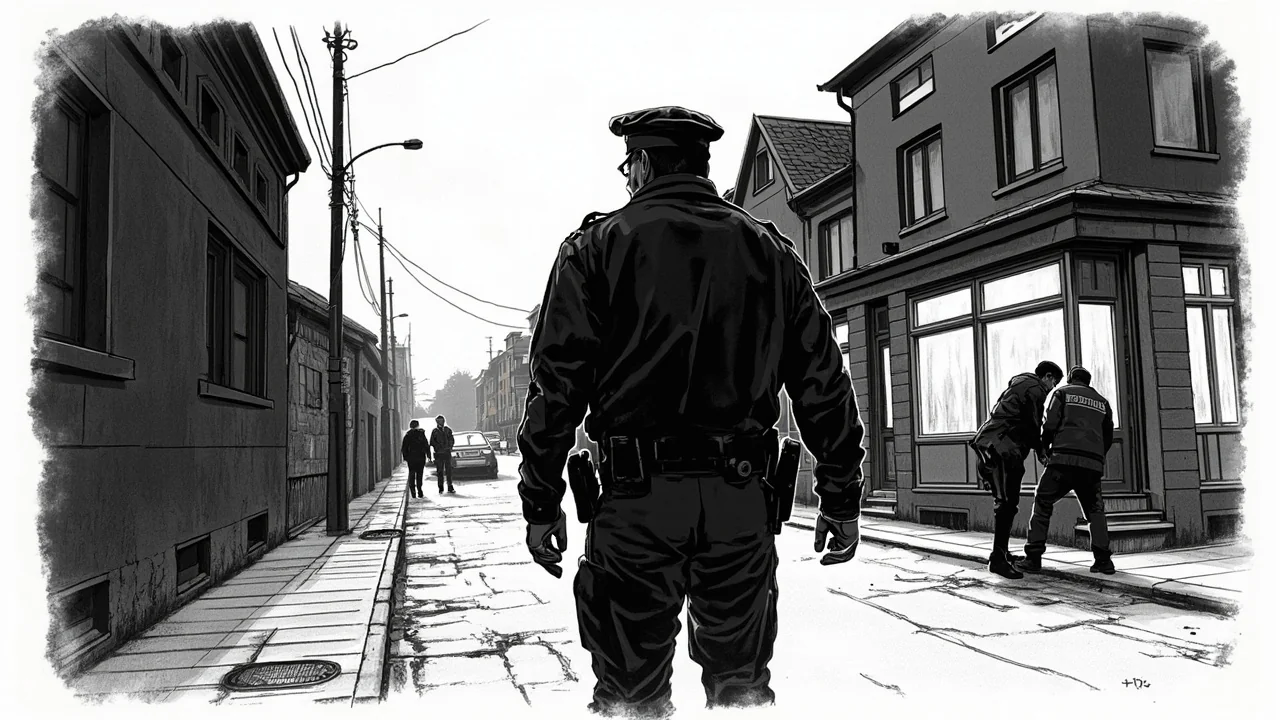
Denmark police in bulletproof vests arrested a 34-year-old man at Kennedy Arcade in Aalborg Saturday night. The dramatic operation followed reports of unrest and a man allegedly armed with a knife, highlighting ongoing public safety concerns in Danish urban centers. No one was physically injured, but the incident has sparked local debate about visible police responses and weapon possession in public spaces.
A Saturday Night Response
Nordjyllands Police received the alarm at 7:43 p.m. about potential unrest and a possible fight at or near the shopping arcade. Information suggested a man was in possession of a knife. Duty officer Jesper Sørensen confirmed the details, stating police responded with significant numbers while wearing protective gear. The swift, heavily equipped deployment led to the arrest of the man, a resident of Mariagerfjord Municipality. He was taken to the police station for questioning. Sørensen indicated the man would likely be charged with making death threats and violating weapons laws due to the knife. Authorities are now assessing whether he will be released after interrogation or brought before a custody hearing on Sunday.
The Human Impact of Visible Force
While the police operation was successful in making an arrest without physical injury, the image of officers in bulletproof vests in a shopping arcade affects public perception. For residents and shoppers, such a visible show of force can be both reassuring and alarming. It underscores a reality where police must prepare for potential violence during seemingly routine public order calls. The presence of a knife, a weapon increasingly cited in Danish crime reports, transforms a situation from a disturbance to a direct threat. The individuals who reported feeling threatened, though unharmed, now carry the experience of that fear. Their evening was disrupted not just by the initial incident, but by the jarring sight of a tactical police response in a familiar locale. This incident, while resolved, leaves a psychological imprint on the community, contributing to broader conversations about safety in city centers.
Legal Framework and Immediate Consequences
The charges being considered follow specific Danish legal statutes. Threatening someone's life is a serious offense under the Danish Penal Code. The violation of the Våbenloven, or Weapons Act, pertains to carrying a knife in a public place without a lawful purpose. Danish law is strict on this point, differentiating between tools carried for work or specific activities and weapons carried in urban settings. The decision to hold a grundlovsforhør, or custody hearing, hinges on the police's assessment of flight risk, risk of re-offending, and risk of evidence tampering. This legal process, a constitutional safeguard, must occur within 24 hours of arrest if the suspect is not released. The man's fate now rests on this judicial evaluation and the specific evidence gathered by police during the incident. The outcome will signal how the justice system weighs a single, albeit frightening, event against the individual's circumstances.
A Broader Context in Danish Society
This event in Aalborg does not occur in a vacuum. It touches on persistent themes in Danish society news: integration, urban safety, and the resources of the welfare state. While this incident involves a Danish citizen from a provincial municipality, discussions around public weapon possession often intersect with debates on social cohesion and gang activity. Danish social policy increasingly focuses on early intervention in marginalized communities to prevent a drift towards crime. Municipalities like Mariagerfjord and cities like Aalborg operate social centers and outreach programs aimed at addressing root causes. However, when prevention fails, the burden falls on police to manage the immediate crisis. The donning of bulletproof vests is a tangible sign of that shift from social worker to law enforcer. It represents the sharp end of a much broader societal challenge, where welfare models strain to meet complex, modern problems of alienation and violence.
Policing and Public Perception
The police response, described as "talstærkt" or numerically strong, reflects a calibrated approach to potential weapon threats. Danish police tactics have evolved in recent years, with officer safety becoming a paramount concern following several attacks. The sight of protective gear is now more common, a reality that changes the texture of public life. For some, it is a necessary adaptation to real dangers. For others, it can feel like an escalation that makes public spaces feel more militarized and less free. This tension lies at the heart of modern policing in Denmark. Officers must balance their duty to protect with the need to maintain public trust and a sense of normalcy. Saturday's operation in Kennedy Arcade will be internally reviewed for its proportionality and effectiveness. Was the show of force essential for safety, or did it risk inflaming the situation? These are the delicate calculations police commanders must make in real time.
Looking Ahead: Prevention and Enforcement
The path forward from such incidents involves two parallel tracks. The first is the judicial process, determining accountability for this specific act. The second, and more complex, is the societal response. Can Danish integration policy and social welfare interventions reach individuals before they arm themselves with a knife and threaten others in a public arcade? Statistics on integration and education show mixed results, with significant disparities in outcomes for descendants of immigrants and those in disadvantaged socio-economic groups. While this arrested man's background is not detailed, his actions feed into a wider pattern that policymakers struggle to address. Municipal social services, often the first line of defense, face budget constraints and high caseloads. The challenge for Denmark's social policy is to prove it can be as robust in prevention as its police are in reaction. The ultimate goal is a society where police in bulletproof vests are not a necessary sight on a Saturday night, because the underlying drivers of such confrontations have been effectively addressed. For now, that goal seems distant, as the events at Kennedy Arcade starkly remind us.