
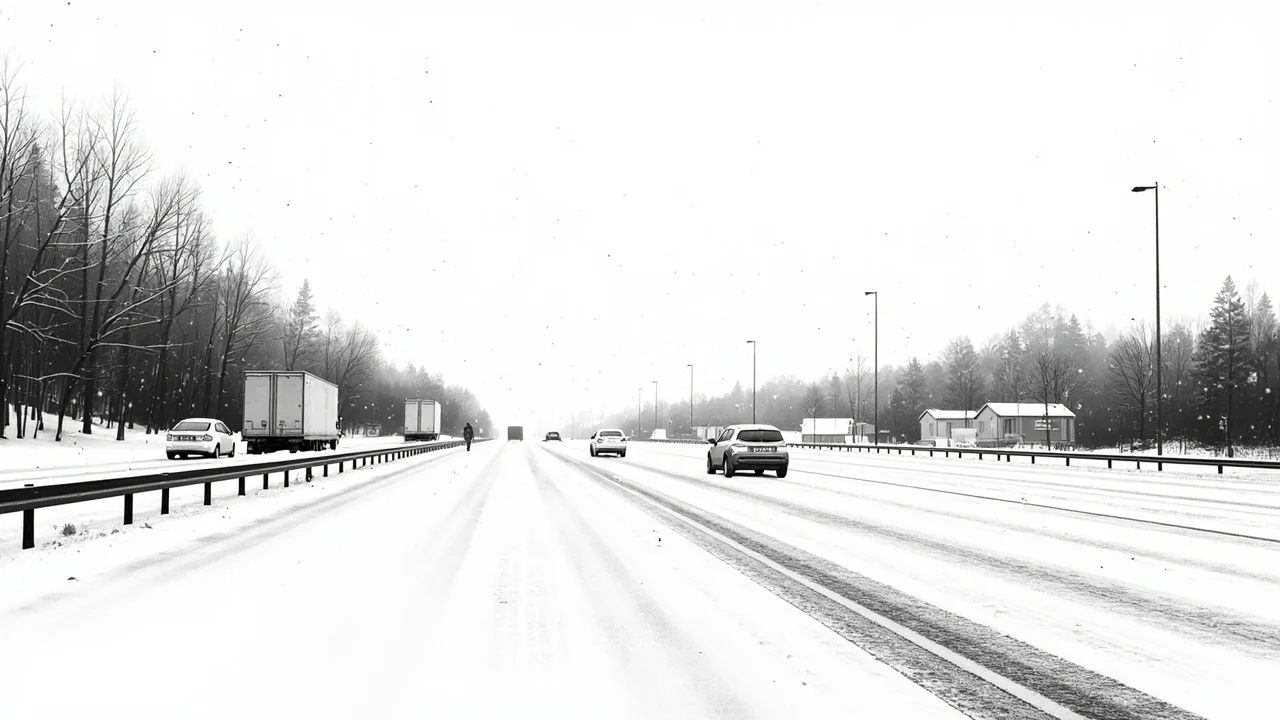
Denmark's motorways recorded zero serious accidents Saturday morning despite national warnings for snowdrifts and icy roads. This unexpected calm defied forecasts from the Danish Road Directorate and Meteorological Institute. It highlights a winter preparedness system that often works silently. As a society reporter, I see this as a testament to Denmark's integrated infrastructure and social policy. Efficient road management prevents disruptions that could ripple through communities, especially for vulnerable groups.
A Calm Morning Defying Forecasts
By 8:45 AM Saturday, the Road Directorate reported no issues with crashes or congestion on national motorways. This came after explicit warnings for 'snow and icy roads' across the country. The Directorate advised extra caution in open areas and monitoring weather updates. Meanwhile, DMI issued a snowdrift warning for southern Denmark, including Bornholm. Snowdrift warnings require wind over 10 meters per second and loose snow in freezing conditions. Bornholm faced heightened risk, leading police to discourage all unnecessary travel since Friday evening.
The contrast between stark warnings and peaceful motorways is striking. It suggests preemptive actions succeeded. On municipal roads, however, the Directorate could not guarantee similar safety. This divide between national and local road management is key. It reflects the layered responsibility within Danish public administration. Municipalities handle local veins while the state maintains arterial routes.
Bornholm's Isolated Challenge
The island of Bornholm experienced the weather's full force. Police maintained their advisory against non-essential trips through Saturday morning. This precaution had tangible effects. Twelve ferry passengers spent Friday night in the Rønne terminal with blankets and camp beds. They were expected to be collected by Saturday afternoon. Such incidents, while minor, show how isolated communities bear different burdens. Bornholm's reliance on ferries makes it sensitive to weather disruptions. This mirrors challenges in other peripheral Danish regions where geography tests the welfare system's reach.
Local police coordination here is a microcosm of Danish crisis response. It blends authority with care, ensuring no one is left stranded. In my reporting on integration, I've seen how such systems aim to include all residents. Effective communication in multiple languages during alerts is crucial. It ensures everyone, including immigrants, understands risks and resources.
The Machinery of Winter Readiness
Why did major roads remain incident-free? Denmark invests heavily in proactive winter maintenance. The Road Directorate coordinates salt spreading and snow clearing on motorways before storms hit. This system relies on precise weather modeling and real-time traffic data. It is a product of longstanding policy prioritizing public safety and economic continuity. The Danish welfare model extends to infrastructure, viewing reliable roads as a social good. They enable access to jobs, healthcare, and education for all citizens.
There are no recent major statistics on winter road accidents in this report. However, historical data shows Denmark has reduced traffic fatalities consistently over decades. This is due to integrated planning. Social policy experts often cite road safety as a silent achievement of the Nordic model. It requires cooperation across government levels and with the public. Saturday's calm suggests this cooperation worked. Citizens heeded warnings, and authorities executed plans.
Social Infrastructure in Focus
As a reporter on integration, I view such events through a social lens. Reliable infrastructure supports social cohesion. When roads are safe, people can participate in community life without fear. This is vital for newcomers building lives in Denmark. Winter crises can expose gaps in support networks. The fact that only ferry passengers needed emergency shelter indicates strong baseline preparedness. Danish municipalities and social centers often serve as hubs during disruptions. They provide warmth and information, acting as a first line of welfare.
Consider Copenhagen's approach. The city integrates weather alerts into its broader social services. This ensures elderly or isolated individuals are checked on during storms. While not detailed in this incident, such protocols exist nationwide. They represent the humane face of Danish administrative efficiency. This system isn't perfect, but Saturday's outcome shows its strength. It prevented accidents that could have overwhelmed hospitals and emergency services.
Personal Reflections on Preparedness
Having reported on Denmark's integration policies for years, I see parallels. Successful integration, like winter readiness, depends on foresight and investment. Both require clear communication and trust between authorities and the public. The lack of motorway incidents Saturday mirrors goals in social policy: to prevent problems before they occur. Denmark allocates significant resources to language education and job training for immigrants. Similarly, it funds road maintenance to avoid crises. This proactive stance defines much of Danish public life.
However, challenges persist. Municipal roads might have faced issues, hinting at inequalities in resource distribution. Wealthier municipalities often manage better than struggling ones. This disparity can affect residents' daily safety and mobility. In a broader sense, it tests the promise of equal access underpinning Danish society. The state's ability to protect major arteries is commendable. Yet, the local roads matter just as much for people's lives.
Looking to a Colder Future
Climate change may bring more frequent and severe winter weather to Denmark. Events like Saturday's test the resilience of current systems. The effective response on motorways is reassuring. But it must extend to all roads and communities. Danish policy makers should view this as a case study. It shows the value of maintained infrastructure and public advisories. For immigrants and vulnerable groups, consistent safety nets are essential during such events. The winter preparedness model could inform other areas of social policy, from housing to healthcare.
Saturday passed without major incidents on Denmark's motorways. This success story is worth examining. It reflects a society that plans, warns, and acts collectively. As winters potentially grow harsher, this approach will be even more critical. Will Denmark continue to invest in the social and physical infrastructure that keeps people safe? The calm roads this weekend suggest the answer, for now, is yes. But vigilance is always required, both on icy pavements and in policy rooms.