
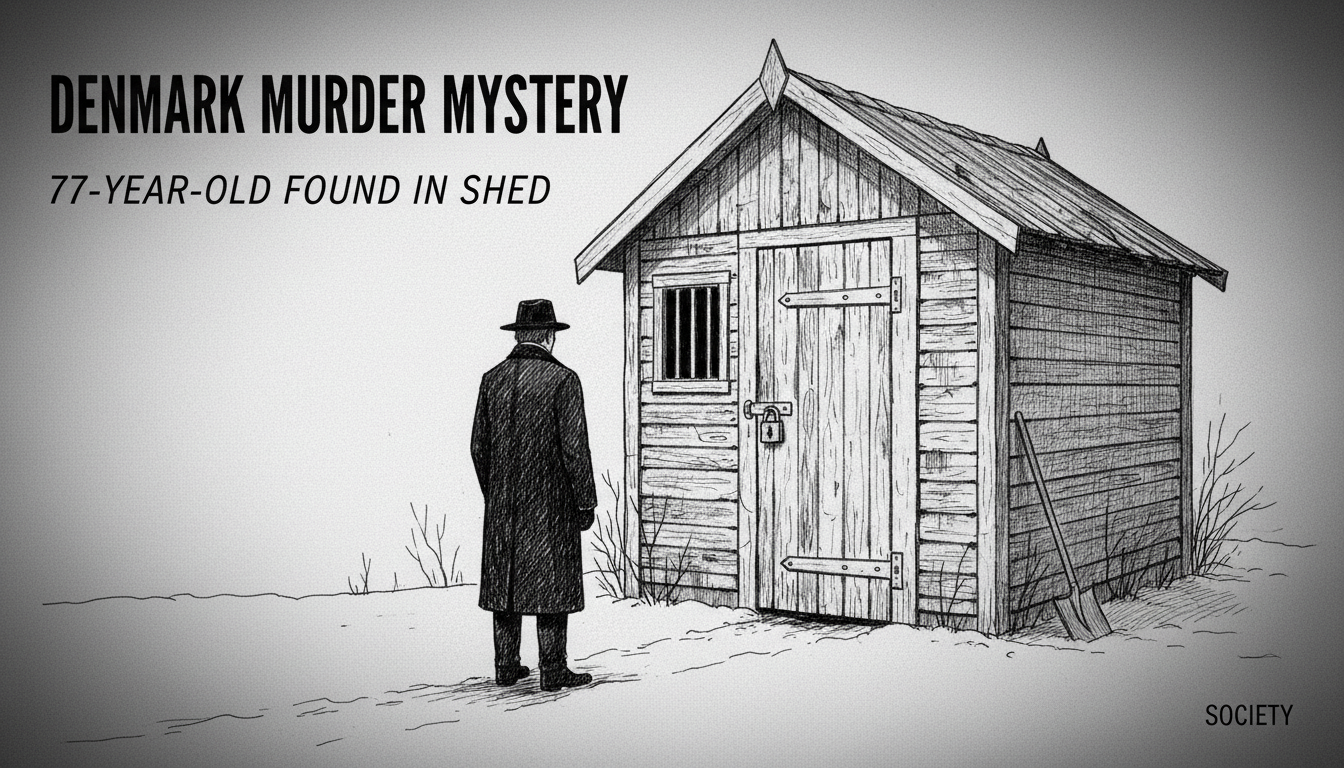
Denmark police are investigating the murder of a 77-year-old man found dead in a garden shed in Svendborg, a case that has unsettled a quiet neighborhood and challenged perceptions of safety. The discovery was made on Tuesday afternoon after concerned neighbors, who had not seen the elderly resident for an extended period, alerted authorities to his absence. The subsequent police operation transformed the peaceful terraced house area on Sanddalsvej into a major crime scene, cordoned off with forensic tents and illuminated by emergency lights well into the night.
A Community's Alarm
The investigation began with a welfare check, a routine procedure that quickly escalated. Officers sent to the man's home on Sanddalsvej in eastern Svendborg swiftly determined something was gravely wrong. The area was sealed, and a significant police presence descended, including dog patrols, detectives, and forensic technicians. A source described the scene as massive, with emergency services using light cannons to illuminate the entire evening for evidence collection. The focus soon narrowed to a specific blue-painted toolshed at the end of the row of identical terraced houses. A white tent was erected around it to shield the forensic work from public view, and neighbors reported being unable to leave their homes during the initial phase.
Local reports, which police have neither confirmed nor denied, suggest the victim was found under mysterious circumstances, rolled inside a blanket within the shed. By evening, the man's body was removed on a stretcher covered by a white cloth and taken away by a hearse. The shed door now bears a police seal, a stark reminder of the violence that penetrated this ordinary setting. The prolonged absence noticed by neighbors indicates the man may have lain undiscovered for weeks, adding a profound layer of tragedy to the investigation.
The Ripple Effect in a Quiet City
Svendborg, a historic city on the island of Funen, is not accustomed to violent crime of this nature. While Denmark enjoys a relatively low homicide rate compared to many Western nations, a murder like this—targeting an elderly person in a residential area—strikes at the core of communal trust. It disrupts the fundamental sense of security that defines daily life in such communities. The incident has undoubtedly sent shockwaves through the neighborhood, where the rhythm of life is typically marked by familiarity and quietude, not police tape and forensic tents.
Criminologists often note that crimes against the elderly in their own homes generate disproportionate fear and community impact. They violate the sanctity of the private sphere, a place assumed to be safest. The investigation now hinges on meticulous forensic evidence from the shed and witness statements from those who lived nearby. Every detail, from the timeline of the man's last sighting to any unusual activity on Sanddalsvej, becomes crucial. Police will be piecing together the victim's final days, his routines, and his connections, searching for a motive in what appears to be a deeply personal and localized crime.
The Danish Context of Violent Crime
Statistically, Denmark remains one of the safer countries in the world. According to recent data, the homicide rate typically fluctuates around 0.9 to 1.0 per 100,000 inhabitants, a figure far below the European Union average. Most violent crimes are not random but occur between individuals known to each other. This statistical reality, however, offers little comfort to the residents of Sanddalsvej. A single, severe act of violence can permanently alter a community's perception of safety, creating a lingering atmosphere of suspicion and anxiety that data cannot easily dispel.
The national police force is experienced in handling such investigations, but a case with potential weeks between crime and discovery presents significant challenges. Forensic evidence can degrade, and memories of potential witnesses can fade. The police's methodical approach—sealing the scene, gathering technical evidence, and conducting door-to-door inquiries—reflects standard protocol aimed at overcoming these hurdles. The success of this investigation will depend on both scientific analysis and the community's willingness to come forward with any fragment of information, no matter how insignificant it may seem.
Seeking Answers in the Aftermath
As the forensic work continues in the sealed shed, the human story resonates most deeply. An elderly man, likely enjoying retirement in a quiet neighborhood, met a violent end mere steps from his home. The neighbors who raised the alarm acted out of communal concern, a testament to the social bonds that still define many Danish residential areas. Their vigilance initiated the process, but now they are left with unanswered questions and a disrupted sense of peace. The psychological impact on immediate neighbors, particularly those who may have interacted with the victim regularly, is a significant, often overlooked, consequence of such crimes.
Local community leaders and municipal social services often play a vital role in the aftermath, offering support to residents struggling with fear or trauma. In Denmark, the welfare system extends beyond economics to encompass social well-being, and a crime of this magnitude can trigger a localized response from social centers and community police. Rebuilding a sense of security is a slow process that requires transparency from investigators and patience from the public. The police face pressure to provide answers, not just to solve the crime but to help a community heal and restore its fractured sense of normalcy.
A Look Ahead
The murder investigation in Svendborg is a stark reminder that profound tragedy can unfold anywhere. It challenges the narrative of uniform safety and highlights the vulnerability that can exist behind any door. For now, the residents of Sanddalsvej wait, their quiet row of blue sheds forever marked by one act of violence. The police investigation moves forward in silence, searching for the truth in the hope of providing closure. The ultimate question hanging over the peaceful street is not just who committed this act, but why—and what it says about the unseen fractures in a seemingly idyllic community. The answers, when they come, will determine how quickly the shadow over this neighborhood can lift.