
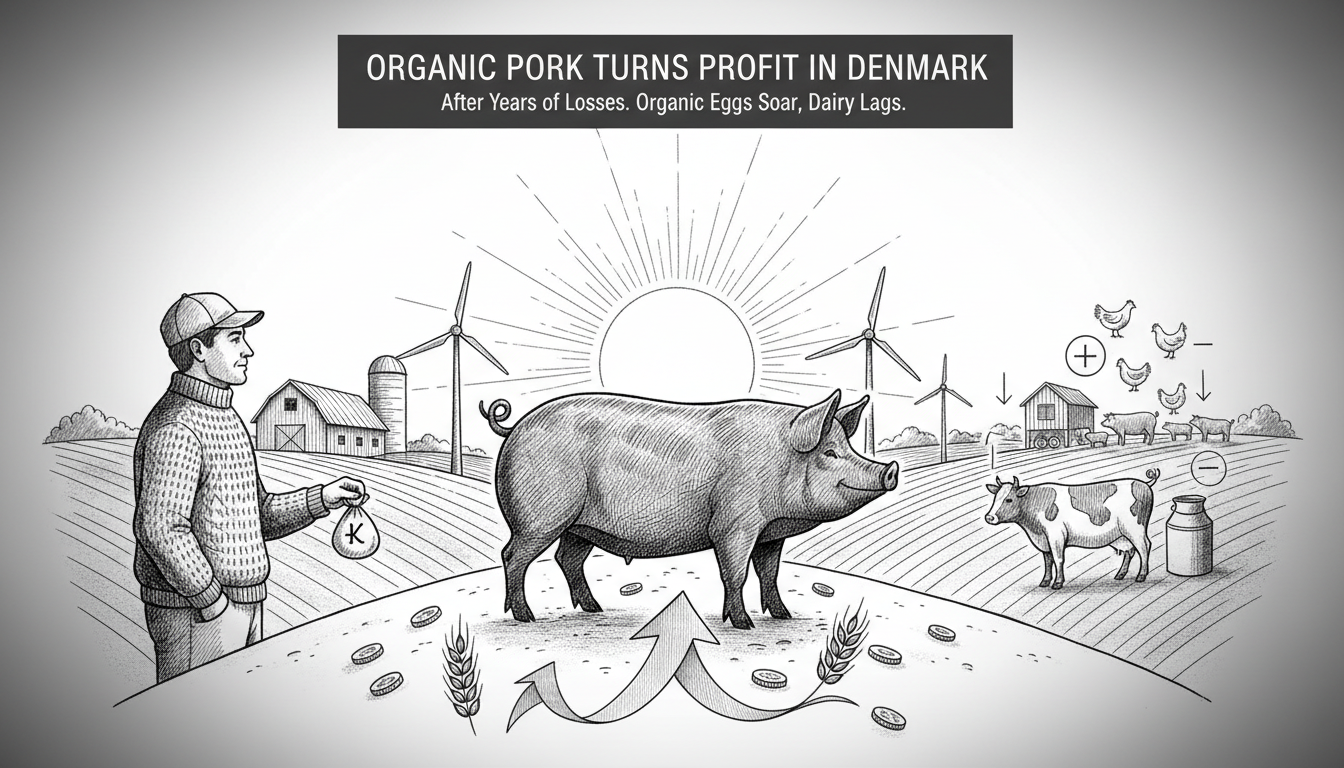
Danish organic pig farmers are back in the black. New data shows a net profit of 107 kroner per organic slaughter pig sold. This marks a sharp reversal after two consecutive years of losses. The conventional sector, in contrast, recorded a loss of 24 kroner per pig. The figures reveal a shifting economic landscape within Danish agriculture.
The turnaround is significant. In the two prior years, organic pig farmers faced net losses of 61 and 75 kroner per animal. During that same period, conventional producers were profitable. The current shift is partly attributed to high prices for piglets. Strong export prices made these young animals more expensive for conventional farmers to purchase.
Organic production follows stricter animal welfare standards. Pigs are often housed in stables but must have access to outdoor runs. This system typically incurs higher costs. The recent profit suggests market dynamics are now favoring this premium segment. It reflects changing consumer demand and potentially better price realization for organic meat.
However, the story differs for dairy. The average net profit per organic dairy cow remains 25 percent lower than for a conventional cow. The latest data shows an organic cow profit of 6,991 kroner, compared to 9,363 kroner for a conventional one. Profits have risen for both types from the previous year, but a notable gap persists.
The organic egg sector continues its strong performance. Profit per 100 organic laying hens reached 4,336 kroner. This outperformed the conventional sector's profit of 3,078 kroner. Organic egg production has now economically outperformed conventional production for four straight years. It currently constitutes about 30 percent of Denmark's total egg output.
This data from national statistics points to a fragmented organic market. Success is not uniform across all livestock categories. The pork sector's recovery is a positive signal for farmers who invested in organic conversion. It may encourage others to consider the switch, especially given the broader political push for greener farming in the EU. The sustained strength in organic eggs indicates a solid and growing consumer base for that product. The dairy gap, however, highlights ongoing challenges in that supply chain. For international observers, this report offers a microcosm of the complex realities facing European sustainable agriculture. Profitability remains volatile and heavily influenced by feed costs, export markets, and consumer trends.