
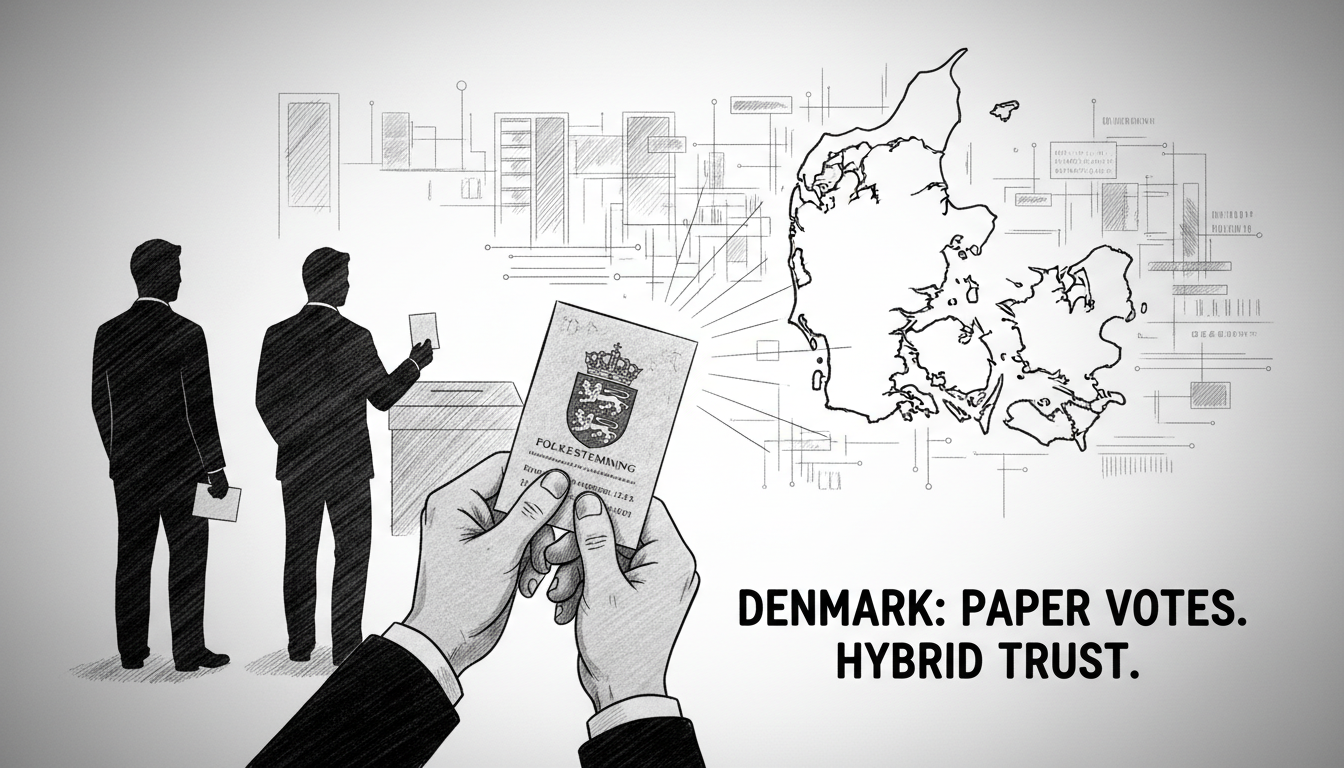
Nearly five million voting cards are arriving in Danish mailboxes this week. These small paper slips continue to play a crucial role in Denmark's electoral process. They defy the current trend toward complete digitalization in government services.
Danish authorities are distributing the physical voting cards to all eligible voters. The system maintains strong public trust despite the digital revolution transforming other aspects of daily life. Most Danes express full confidence in these traditional paper-based voting methods.
This persistence of physical voting materials reveals interesting insights about Danish society. The country ranks among the world's most digitally advanced nations. Yet it chooses to maintain paper-based elements in its democratic processes. This balance between technological progress and institutional stability characterizes the Nordic approach to digital transformation.
Denmark's voting system combines digital voter registration with physical voting cards. Voters receive these cards before elections. They then present them at polling stations to receive their ballots. The system prevents fraud while maintaining accessibility.
Why does this paper-based element survive in such a digital society? Security concerns provide one answer. Physical documents create audit trails that purely digital systems might lack. Cultural factors also play a role. Danes value tangible proof of their democratic participation.
The continued use of voting cards reflects broader Nordic attitudes toward technology. These countries adopt digital solutions pragmatically rather than dogmatically. They prioritize system reliability and public trust over technological novelty.
International observers might find this approach surprising. Many countries are rushing toward fully digital voting systems. Denmark demonstrates that hybrid models can offer the best of both worlds. The system maintains high voter participation rates and minimal election disputes.
What does this mean for the future of Danish democracy? The voting card system will likely continue for the foreseeable future. Danish authorities regularly review voting procedures. They balance efficiency against security and public confidence. The current system works well, so radical changes appear unnecessary.
The Danish example offers lessons for other democracies. Technological adoption in electoral systems requires careful consideration. The goal should be enhancing democracy rather than simply implementing the latest technology. Denmark shows that sometimes the best solution combines old and new approaches.
As other nations consider digital voting reforms, they might look to the Danish model. It demonstrates how traditional methods can complement digital infrastructure. This balanced approach maintains public trust while incorporating technological advances where they genuinely improve the system.