
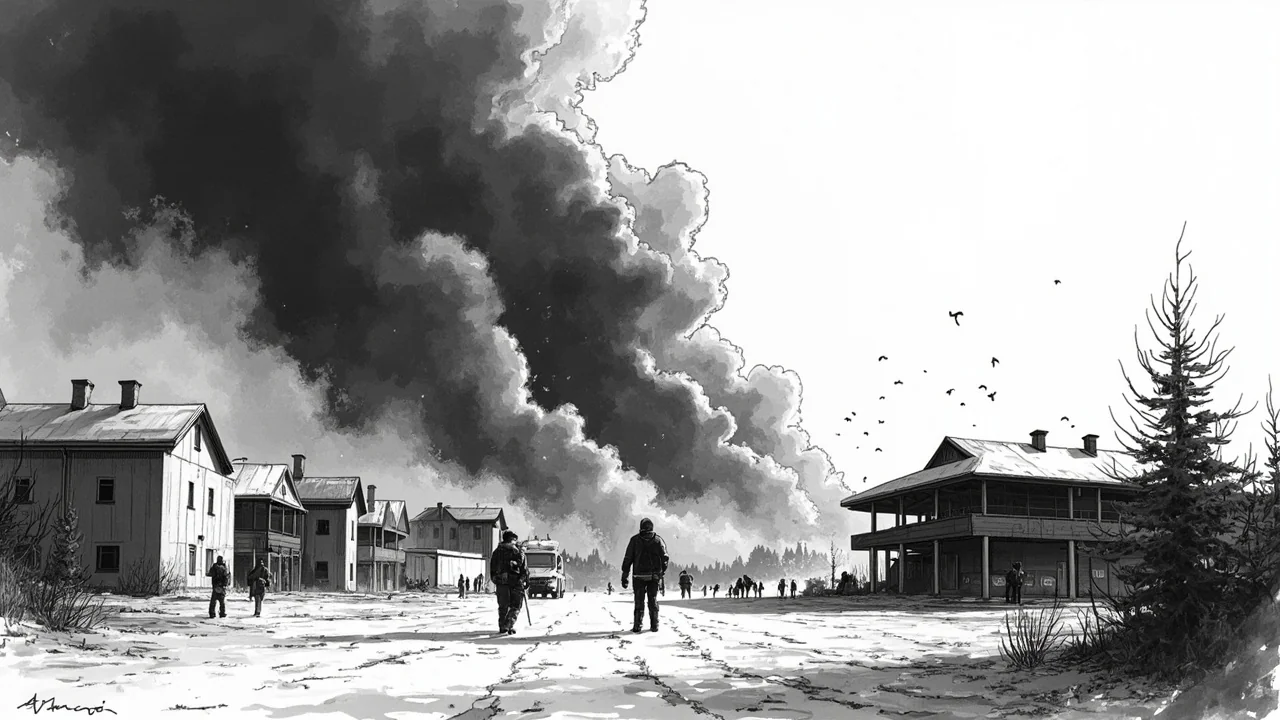
Denmark emergency services battled a dangerous fire in a residential parking garage in Herning Sunday evening, with toxic smoke from burning vehicles forcing evacuations and warnings. The alarm reached emergency services at 8:20 PM, with the blaze continuing to burn intensely for over an hour in the underground facility on Thyrasvej. Police described the situation as particularly hazardous due to the nature of the smoke, prompting a direct door-to-door warning campaign to protect residents.
"There is quite a lot of smoke down there, and the smoke is especially harmful since it comes from cars," said Simon Stage, the duty officer for Midt- and West Jutland Police. His stark warning underscored the unique dangers of modern vehicle fires, where synthetic materials and batteries can release a cocktail of toxic chemicals. Firefighters went to nearby homes, urgently advising people to close all doors and windows to seal out the poisonous fumes. The cause of the fire remains unknown, though authorities initially reported no immediate risk of personal injury.
A Community on Edge
The incident disrupted a quiet Sunday evening in the residential area, transforming a routine space for cars into a source of community-wide anxiety. Parking garages, often concrete and enclosed, can act like chimneys, trapping heat and smoke while complicating firefighting efforts. For residents, the sudden arrival of emergency vehicles and the acrid smell of burning plastic shattered the evening calm. The direct intervention by the fire service—knocking on doors—highlighted the perceived severity of the air quality threat, a measure not taken lightly in Danish emergency protocol.
This type of fire presents distinct challenges compared to a traditional house fire. Modern vehicles contain a vast array of plastics, foams, fluids, and, increasingly, lithium-ion batteries in electric or hybrid models. When these components burn, they can produce hydrogen cyanide, hydrochloric acid, and fine particulate matter capable of penetrating deep into the lungs. The police assessment of "especially harmful" smoke reflects this well-documented hazard. Community safety in such scenarios depends entirely on containing the smoke plume and preventing it from infiltrating ventilation systems in connected residential buildings.
The Hidden Dangers of Modern Fires
While the Herning fire was contained without reported injuries, it serves as a stark reminder of how evolving technology changes risk profiles. A car fire in an open car park is dangerous; a car fire in an enclosed, underground structure is a significant environmental health event. Fire departments across Denmark have had to adapt their strategies and equipment to handle the intense, hard-to-extinguish fires associated with electric vehicle batteries, which can require thousands of gallons of water and pose a risk of reignition.
The response protocol seen in Herning—isolating the area and sheltering residents in place—is a standard but critical tactic for toxic smoke events. It prioritizes preventing exposure over evacuation, which could move people directly through a contaminated atmosphere. The effectiveness of this response hinges on swift detection and public compliance, a testament to the high level of trust in public authorities that characterizes Danish society. Residents heeding the advice to close up their homes likely played a key role in ensuring no one was sickened by the fumes.
Investigating the Source
As the smoke cleared, the focus turned to investigation. Determining the origin of a garage fire is complex, with potential causes ranging from an electrical fault in a vehicle to a technical failure in the garage's own infrastructure or, less commonly, human activity. Forensic fire investigators will meticulously examine the scene, looking for burn patterns and points of origin. They will also likely seek any available security footage from the area to understand the fire's progression and rule out intentional causes.
The economic and logistical impact on residents can be substantial, even after the flames are out. Vehicles are often total losses after such fires, and the structural integrity of the concrete garage must be assessed for spalling—where heat causes concrete to explode and weaken. Soot and toxic residues require professional remediation before the space is safe for use again. For the car owners affected, it becomes a sudden and severe disruption, dealing with insurance and replacement while the investigation unfolds slowly.
A Broader Look at Safety Infrastructure
This incident prompts quiet reflection on the safety design of multi-story and underground car parks. Danish building codes are stringent, but fires like this test their limits. Questions arise about the adequacy of ventilation systems to clear smoke, the placement and type of fire suppression systems like sprinklers, and the protocols for emergency communication with residents. In a country renowned for its proactive welfare and safety systems, such events are scrutinized for lessons that could prevent or mitigate future occurrences.
It also highlights the interconnected nature of community safety. A fire in a privately owned vehicle in a communal space instantly becomes a public health concern. The response involves police, fire, and potentially environmental authorities, demonstrating the coordinated machinery of Danish municipal crisis management. The silent success of such operations is measured not in dramatic rescues, but in the injuries and illnesses that do not happen because of timely, professional intervention.
Moving Forward from the Smoke
The Herning garage fire, while ultimately a localized incident, encapsulates a modern urban safety challenge. As our vehicles and the materials around us become more complex, so do the threats when they fail. The Danish approach—methodical, communicative, and precautionary—aims to manage that complexity with calm efficiency. For the families on Thyrasvej, Sunday night was a frightening interruption, but one met with a clear and decisive protective response. The investigation will now work to provide answers, ensuring that if a similar danger emerges elsewhere, the response will be informed by what was learned in the dark, smoky confines of a Jutland parking garage. The true test of any society's resilience is not just how it fights the fire, but how it learns from the smoke.