
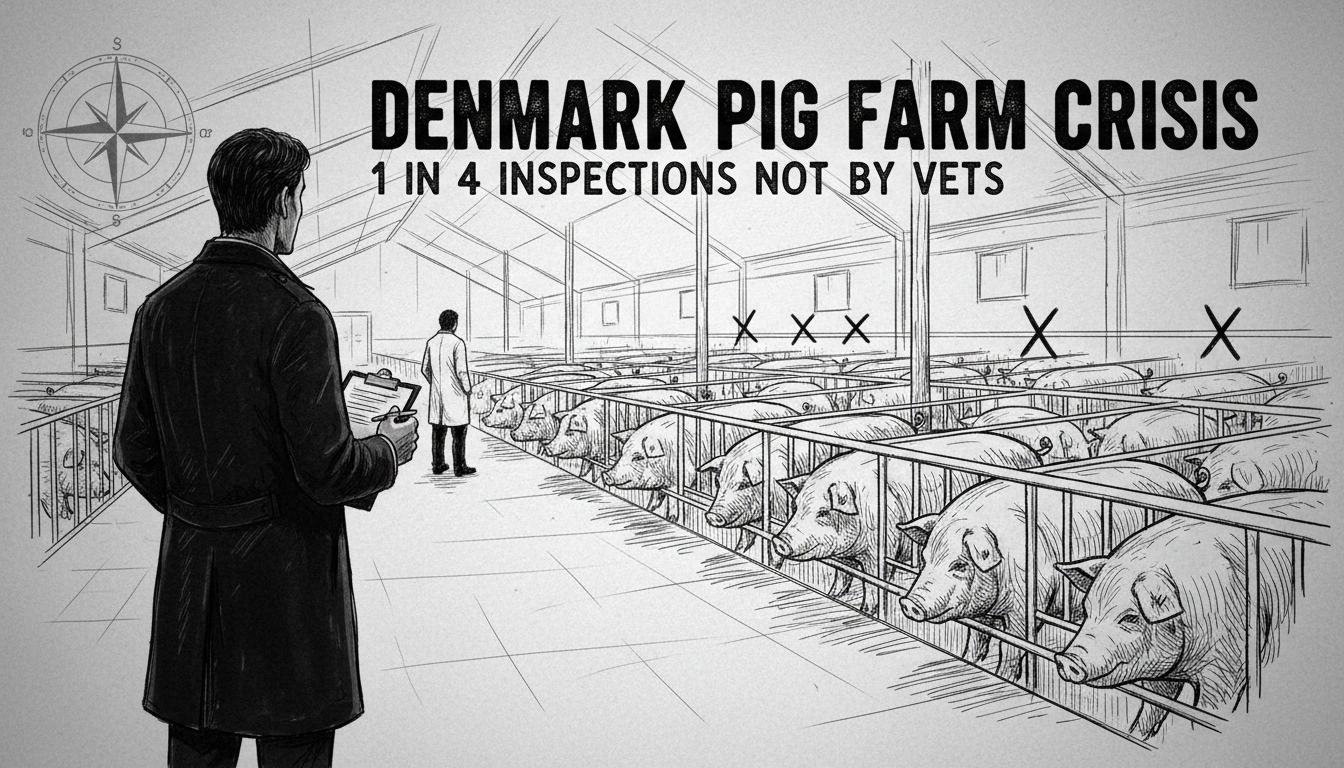
Denmark pig farming faces a critical oversight gap as veterinary authorities warn of a dangerous trend. More than one in four official animal welfare inspections on Danish pig farms are now conducted by personnel who are not qualified veterinarians. The Danish Veterinary Association has issued a stark warning, stating this practice risks creating a slippery slope that compromises animal welfare standards in a nation that prides itself on agricultural excellence. Disturbing documented evidence underpins their concern, showing dead piglets on stable floors, visibly undernourished and emaciated pigs wandering on unsteady legs, and piglets with visible hernia protrusions, tail biting, and deep body wounds.
A System Under Strain
The core of the issue lies in the delegation of inspection duties. While the Danish Veterinary and Food Administration (Fødevarestyrelsen) holds ultimate responsibility for farm oversight, resource constraints and logistical challenges have led to a system where non-veterinarians perform a significant portion of checks. These individuals, often agricultural consultants or trained technicians, may lack the specific medical expertise to diagnose subtle health issues, chronic pain, or complex welfare states. A veterinarian's trained eye can spot early signs of lameness in sows, identify the root causes of tail-biting outbreaks beyond mere symptom management, and assess overall herd health in a way that checklists cannot fully capture. The association argues that this gap allows preventable suffering to go unnoticed and unaddressed, undermining the legal and ethical standards Denmark has committed to uphold.
Economic Weight Versus Ethical Scales
This controversy sits at the heart of a persistent national tension. Denmark produced approximately 13 million pigs in 2022, exporting around 90% of its pork. The industry is a cornerstone of the agricultural economy and a major contributor to export revenue. There is constant pressure to maintain efficiency and competitiveness in a global market. Stricter enforcement and more frequent, higher-quality inspections inevitably carry cost implications. Agricultural economists often highlight that increased regulatory burdens can impact profit margins for farmers, potentially making Danish pork less competitive against producers from countries with lower welfare standards. This creates a powerful economic argument for streamlining inspection processes, sometimes at the expense of rigor.
However, animal welfare organizations and the veterinary profession counter that Denmark's market advantage is precisely its reputation for high quality and ethical standards. "Compromising on welfare inspections is a false economy," said a senior veterinarian familiar with the pig sector, who requested anonymity due to the sensitivity of the topic. "Our international brand is built on trust. If that trust erodes because we are not using the most qualified people to ensure animal well-being, the long-term economic damage could far outweigh any short-term savings on inspection costs." The visual evidence of neglect presented by the veterinarians threatens that very brand, suggesting that the current system is failing to catch significant welfare breaches.
The Human and Animal Cost of Inadequate Oversight
The documented cases are not mere statistics. They represent tangible suffering. Tail biting, a common welfare issue often linked to stress, inadequate environment, or nutritional deficits, can lead to severe infections and chronic pain. Sow lameness affects mobility and maternal care. High piglet mortality points to problems in farrowing unit management. Non-veterinarian inspectors might note the presence of a dead piglet or a bleeding tail, but a veterinarian is trained to investigate the why behind these symptoms. They can assess whether the flooring causes joint stress, if the stocking density triggers harmful behaviors, or if the climate control is inadequate. This diagnostic depth is what transforms a simple compliance check into a meaningful intervention for animal welfare.
Furthermore, the veterinarians' warning touches on a fundamental principle of Danish society: the rule of law and systematic governance. Denmark has detailed animal welfare legislation aligned with EU directives. If the enforcement mechanism is weakened by using inadequately trained personnel, the laws themselves become less effective. It creates a two-tier system where some farms receive expert evaluation and others do not, leading to inconsistent application of the rules and potential unfairness among producers. It also risks eroding public confidence in the state's ability to protect animal welfare, a subject of growing concern among Danish consumers.
A Path Forward for Danish Pork
The solution proposed by the Danish Veterinary Association is clear: reinstate the primacy of veterinary expertise in official welfare inspections. This would likely require increased public funding for the Veterinary and Food Administration to hire more veterinarians or contract their services sufficiently. It represents an investment in the integrity of the Danish agricultural sector. Some industry stakeholders suggest a hybrid model, where trained technicians conduct frequent preliminary checks, but veterinarians lead all formal inspections and investigate complex issues. This could balance coverage with expertise.
The Danish government and agricultural ministry now face a critical choice. They can continue to allow economic and logistical pressures to dilute inspection quality, or they can reaffirm a commitment to welfare by ensuring the most qualified professionals are at the forefront of enforcement. The global market is increasingly attentive to ethical production. For a country that exports 90% of its pork, maintaining an unassailable reputation is not just an ethical imperative—it is an economic one. The disturbing images from within some Danish stables are a wake-up call. They ask a difficult question: Is Denmark willing to protect the welfare standards that define its agricultural brand, or will it continue down a path where oversight is compromised? The answer will determine the future of its most iconic export industry and its standing as a nation that takes animal welfare seriously.