
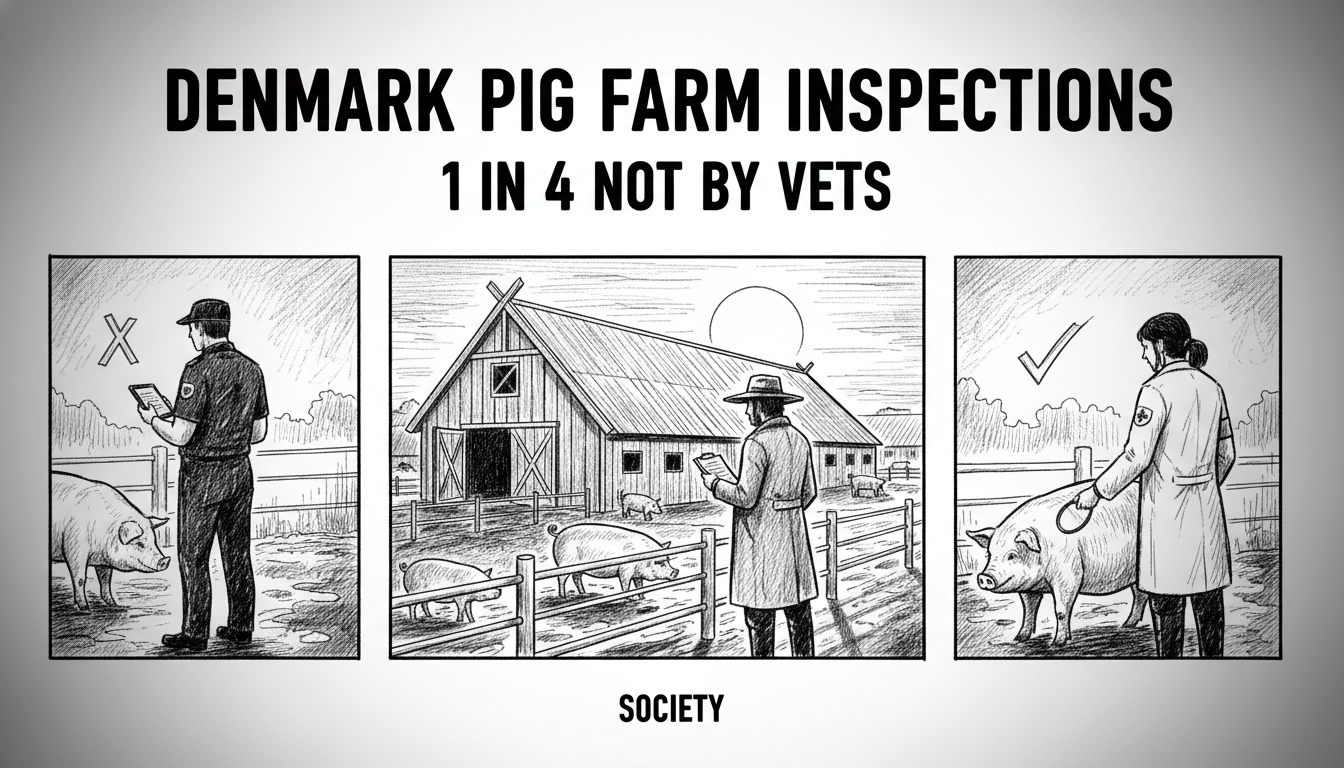
Denmark's pig farm inspections are increasingly conducted without veterinary oversight, raising serious animal welfare concerns. The Danish Veterinary Association estimates that more than one in four official checks on pig herds are now performed by non-veterinarians. This shift occurs within a sector producing roughly 30 million pigs annually, a cornerstone of the nation's agricultural exports and economy.
Disturbing images from recent inspections paint a grim picture. They show dead piglets on stable floors, clearly undernourished and emaciated pigs wandering on unsteady legs, and piglets with visible hernia protrusions, tail biting, and deep body wounds. These conditions, documented during official visits, highlight a potential systemic failure. The core issue is whether inspections led by agricultural consultants or other officials, rather than independent veterinarians, can adequately protect animal welfare.
A System Under Strain
The responsibility for these inspections falls to the Danish Veterinary and Food Administration, Fødevarestyrelsen. Their mandate is to ensure compliance with strict national legislation covering space, flooring, enrichment, and overall animal health. However, the association representing the country's veterinarians is sounding a loud alarm. They warn that the growing reliance on non-veterinary inspectors threatens the integrity of the entire control system.
Veterinarians argue their training is irreplaceable for spotting subtle signs of disease, chronic pain, or welfare deficits that others might miss. "A veterinary education provides a deep understanding of animal physiology, behavior, and pathology," said a senior veterinary advisor who wished to remain anonymous due to professional sensitivities. "You're not just checking a box for space per animal. You're assessing if an animal is in a state of suffering, which requires a specific diagnostic skill set."
The Economic Backdrop of Welfare
This debate sits uncomfortably against Denmark's proud agricultural identity. Pork is a flagship export, and the industry promotes high welfare standards as a key market advantage. The Danish pig sector often cites its strict national rules, which in some areas exceed EU minimums. Yet, the inspection findings suggest a troubling gap between regulatory ambition and on-the-ground reality.
Experts point to inherent conflicts of interest. When inspections are carried out by individuals whose primary background or network is within the agricultural production system, impartiality can be compromised. "The risk is one of familiarity and shared perspective," explains an animal welfare researcher at the University of Copenhagen. "An independent veterinarian brings an outsider's clinical eye, focused solely on the animal's condition, not the farm's operational challenges."
The Danish Veterinary and Food Administration maintains that all inspectors are thoroughly trained. They state that the use of different professional profiles is a necessary resource management strategy. However, they have not publicly released data breaking down inspection outcomes by the professional background of the inspector, a transparency gap critics are eager to see closed.
What the Images Reveal
The documented cases of neglect are not minor infractions. Dead piglets left among the living indicate a failure in basic husbandry and monitoring. Undernourishment points to potential problems with feed access, social competition, or underlying illness. Tail biting is a widely recognized welfare indicator, often stemming from stress, boredom, or inadequate environments. These are clear, observable issues that should be caught and corrected.
"The photographs tell their own story," said a representative from the Danish Veterinary Association. "They show problems that should be identified and acted upon immediately. The question we must ask is whether a system relying less on veterinary expertise is capable of the proactive, preventative oversight modern animal welfare demands." The association is calling for a formal review of inspection protocols and a recommitment to veterinary-led assessments.
The International Perspective
Denmark is not alone in grappling with inspection resource challenges. However, its position as a leading pork exporter places it under greater international scrutiny. Consumer markets, particularly in key regions like the United Kingdom and Germany, are increasingly sensitive to welfare credentials. Scandals or persistent concerns can directly impact brand Denmark and its premium positioning.
Animal welfare organizations have long called for more unannounced inspections and stricter penalties. This latest development adds a new layer: who is qualified to conduct those inspections. "Strong laws are meaningless without strong, independent enforcement," notes a policy officer from a Nordic animal protection NGO. "Skilled enforcement requires the right experts. For medical and welfare assessment of animals, that expert is a veterinarian."
The Path Forward for Danish Pork
The solution is not simple. Fully veterinary-led inspections for all Denmark's pig farms would require significant public investment. The state must balance welfare assurance with the practicalities and costs of oversight. Yet, the industry itself has a vested interest in maintaining consumer trust. A loss of reputation for high welfare standards could have severe financial consequences far exceeding the cost of more robust inspection regimes.
Some propose a hybrid model. This would involve veterinarians leading risk-based inspections of larger or historically problematic operations, while providing enhanced training and supervision for other inspectors. Increased use of technology, such as remote monitoring, could also assist. However, technology cannot replace the hands-on clinical assessment of an animal's health.
The core of the issue is a values question. Does Danish society want its massive pig production to be monitored by the highest professional standard available? The veterinary profession has drawn a line in the sand, backed by disturbing evidence from the stables. The response from regulators and politicians will define the future credibility of Denmark's animal welfare promises.
As one veteran farm veterinarian put it, "We have built a reputation for quality and care. That reputation is not maintained by paperwork and minimum standards. It is maintained by the animals' actual condition. To know that condition, you need a vet." The images from Danish stables suggest that, for a concerning number of pigs, that vital professional eye is absent.