
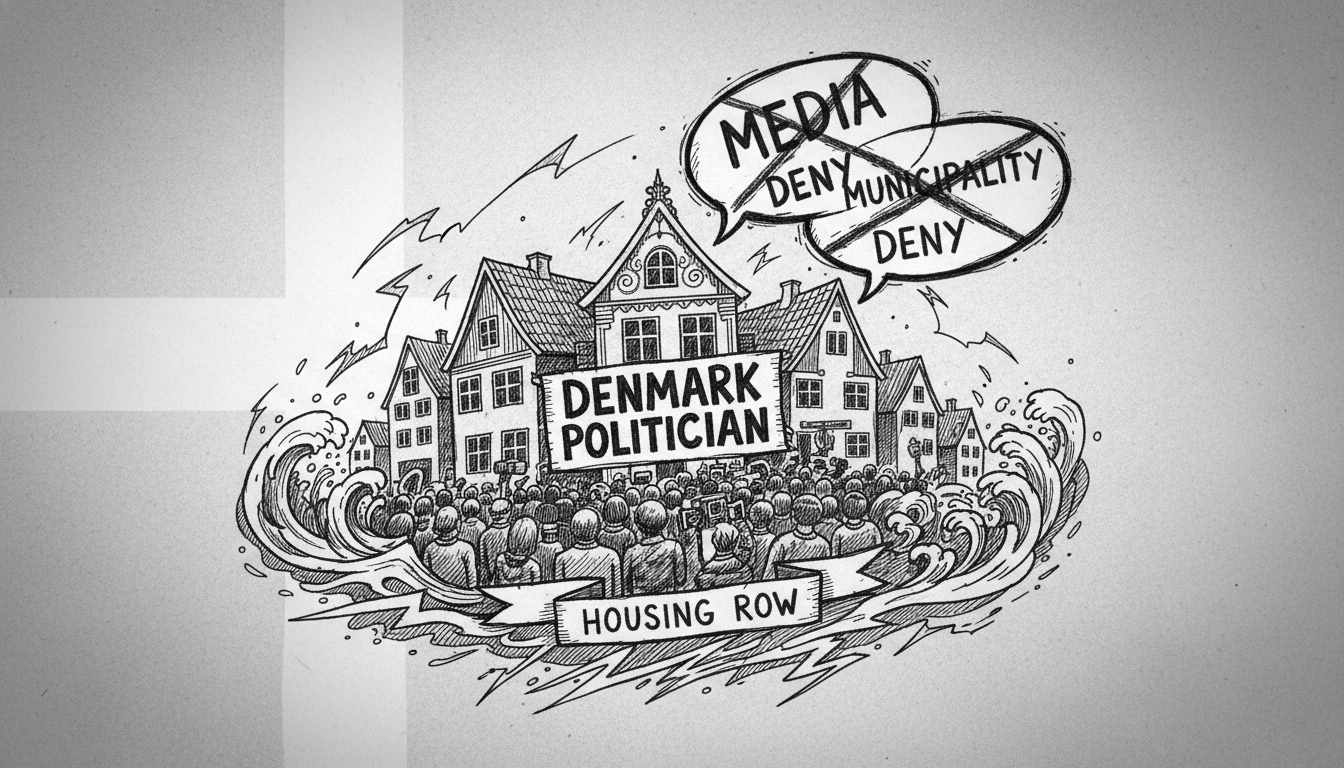
Denmark's housing rules for public figures are under fresh scrutiny after a political dispute in Copenhagen. Independent Green Party politician Sikandar Siddique has repeatedly accused the tabloid Ekstra Bladet of reporting him to Copenhagen Municipality over an ongoing housing case. Both the newspaper and the municipal authority have now formally denied this accusation, creating a complex story about political pressure, media ethics, and local governance.
This conflict highlights the intense public scrutiny faced by politicians regarding personal compliance with regulations. In Denmark, housing rules are administered locally, leading to potential variations in enforcement. The situation raises questions about the relationship between the press and public administration, and where the line is drawn between legitimate investigation and perceived harassment.
A Clash of Statements in the Capital
The core of the dispute is a direct contradiction of claims. Sikandar Siddique, a well-known figure in Danish politics, has stated that the newspaper actively triggered official scrutiny by reporting him to city authorities. Ekstra Bladet, a publication with a long history of aggressive investigative reporting, has explicitly rejected this. In a statement to the media industry publication Journalisten, the paper denied filing any report with Copenhagen Municipality.
The municipality itself has corroborated the newspaper's position. A spokesperson for Copenhagen Kommune confirmed to Journalisten that no report concerning Siddique's housing situation originated from Ekstra Bladet. This dual denial places the politician's assertion in a difficult position, shifting the focus to the origins of the municipal inquiry. The nature of the specific 'boligsag' or housing violation remains unclear, but such cases often involve subletting rules, primary residence requirements, or housing benefit regulations.
The Weight of Scrutiny on Public Figures
Experts note that politicians in Denmark implicitly accept a higher level of public scrutiny regarding their private affairs, especially those touching on welfare and rule compliance. "When you enter public life, your adherence to the rules that you help create or enforce is naturally of public interest," says Karen Lund, a professor of political communication at the University of Copenhagen. "However, the process by which potential violations are investigated must be transparent and fair. Accusations about who triggered an investigation can poison the well of public trust."
This incident is not isolated. Danish media frequently examine the housing and tax affairs of politicians, from local council members to national figures. The underlying social contract in Denmark's welfare model emphasizes fairness and collective contribution. Perceived misuse of public resources or special exemptions for elites can trigger significant backlash. For a politician from the Green party, which often champions social equity, such allegations carry particular weight.
Media Ethics and the Role of the Tabloid Press
Ekstra Bladet's role invites analysis of media ethics in a Scandinavian context. The paper is known for its populist approach and relentless pursuit of stories, often blurring the lines between journalism and activism. Its defenders argue it holds power to account where others fear to tread. Critics contend its methods can sometimes create the news rather than report it.
"A key ethical question is whether a newspaper should be a passive reporter of official investigations or an active catalyst for them," notes Lars Jensen, a media ethicist. "If a journalist uncovers evidence of wrongdoing, reporting it to authorities can be a civic duty. But doing so anonymously and then reporting on the investigation as if it emerged organically is problematic. The public deserves to know the provenance of a scandal." The paper's clear denial in this case suggests it is distancing itself from the role of instigator, framing its work as purely observational.
Local Power: The Municipality's Crucial Role
Copenhagen Municipality, like all 98 Danish municipalities, wields significant autonomous power in housing administration. They interpret national guidelines, handle complaints, and conduct investigations. This decentralized system can lead to inconsistencies, where a rule enforced strictly in one borough might be treated more leniently in another. The municipality's statement is therefore crucial; it is the ultimate source of truth regarding the origin of any complaint in its system.
The authority's decision to publicly deny Siddique's claim is a significant step. Municipalities typically avoid commenting on specific cases to protect privacy and due process. Their involvement in this public dispute indicates a desire to correct the record and perhaps protect their own procedural integrity. It underscores that the administration itself does not want to be seen as acting on a media tip-off, which could imply collusion or a lack of independent judgment.
The Personal and Political Fallout
For Sikandar Siddique, the denials represent a serious challenge. His political brand is built on challenging the status quo and advocating for transparency. Being at the center of a confusing dispute over who reported whom undermines that position. The ongoing housing case itself, separate from the meta-dispute about its origins, continues to cast a shadow. Political opponents may use the confusion to question his credibility, regardless of the eventual outcome of the housing investigation.
The story also reflects broader tensions in Danish society around integration, representation, and scrutiny. Siddique, as a politician with a minority background, may face a different level of media and public examination, a complex issue experts frequently debate. Whether this factor plays a role in the intensity of coverage is a question lingering beneath the surface of the formal statements.
A Question of Trust and Process
Ultimately, this dispute is about more than a housing violation. It is about trust in public institutions and the media. When a politician alleges misconduct by the press, and both the press and the relevant government body jointly refute it, public confidence can be strained. Citizens are left to parse conflicting narratives without access to the internal records of the municipality or the newspaper's editorial meetings.
The resolution hinges on the opaque internal processes of Copenhagen Municipality. Did a complaint come from a neighbor, a political rival, or an anonymous citizen? The municipality is unlikely to reveal this, citing data protection laws. This opacity is both a protection for whistleblowers and a potential shield for less savory motivations. The lesson for the public is clear: in the complex interplay between media, politics, and local government, definitive truths are often the first casualty. The saga of Siddique's housing case continues, but the chapter alleging media instigation appears to be closed by the very institutions he accused.