
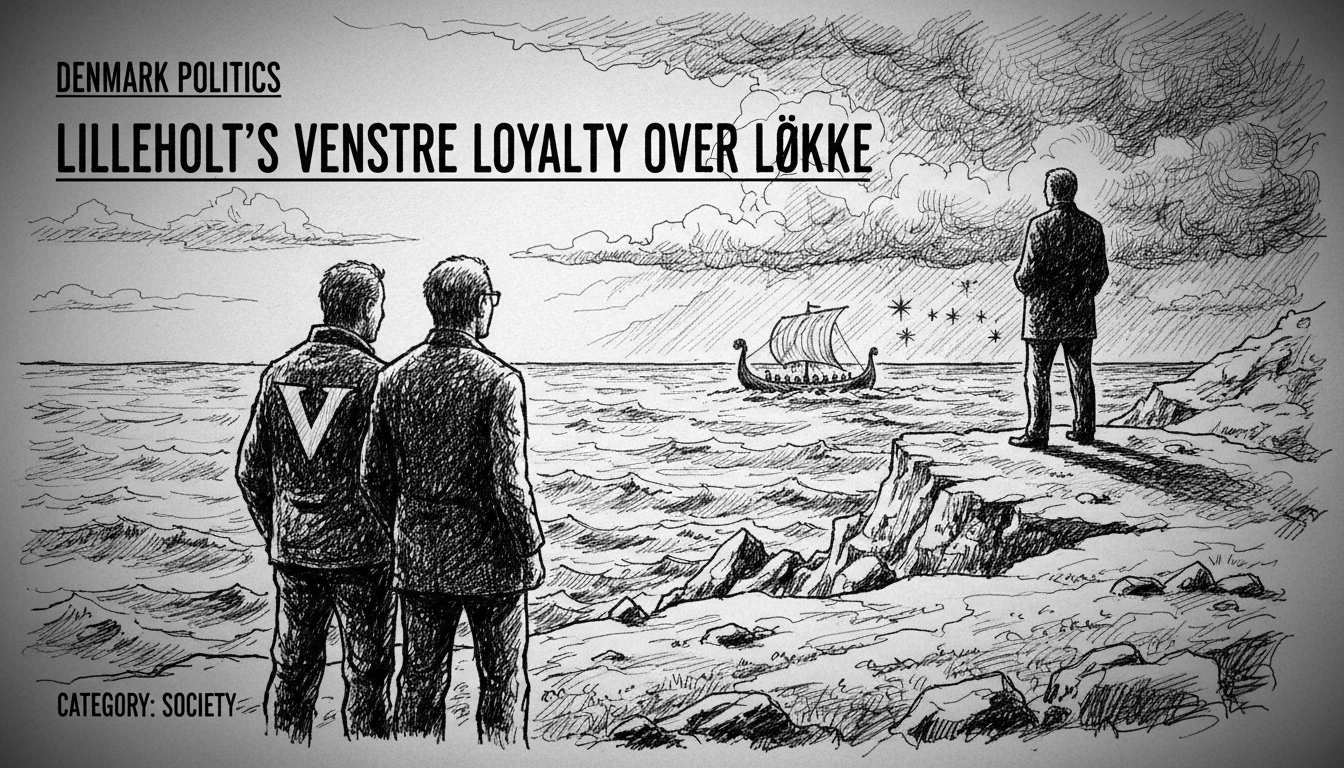
Denmark politics witnessed a defining moment of party loyalty this week as veteran Venstre MP Lars Christian Lilleholt publicly rejected his close friend, former Prime Minister Lars Løkke Rasmussen. Lilleholt, the man often described as the quiet force in Venstre's political engine room, is stepping down after 25 years in parliament. His final campaign push is for a Venstre victory in Odense, a direct challenge to Løkke Rasmussen's new party, Moderaterne. This personal and political divergence highlights the profound realignments reshaping Denmark's center-right landscape.
A Friendship Tested by Political Realignment
Lars Christian Lilleholt and Lars Løkke Rasmussen share more than a first name and a political history. They have been described as close personal friends, allies through numerous internal party battles and coalition negotiations. Their paths diverged sharply when Løkke Rasmussen, after losing the Venstre leadership, left in 2021 to found the centrist party Moderaterne. Lilleholt remained, a steadfast pillar of the party he has served for decades. His current mission to secure Odense for Venstre is not just a electoral goal. It is a direct rejection of his friend's new political project, placing party allegiance above personal bonds. This decision reflects a core principle in Danish politics where party discipline often trumps individual relationships.
Political analysts see Lilleholt's stance as both symbolic and strategically vital for Venstre. "This is about more than one seat in Odense," says a Copenhagen-based political scientist who focuses on party structures. "Lilleholt is demonstrating to the Venstre base and the party apparatus that loyalty is paramount. In the wake of Løkke's departure, figures like Lilleholt become the guardians of party identity and continuity." His long tenure gives him significant moral authority within Venstre, making his choice to confront Løkke Rasmussen's Moderaterne a powerful signal.
The Battle for Odense and the Center-Right
The electoral district of Odense, on the island of Funen, is a key battleground in this realignment. A Venstre victory here would be a significant morale boost for the party, proving its resilience and local appeal independent of its former star leader. For Moderaterne, making inroads in such areas is crucial to establishing itself as a broad, national party rather than a personal vehicle for Løkke Rasmussen. Lilleholt's deep local connections and reputation as a diligent, behind-the-scenes operator make him a formidable opponent, even in his final political act. This contest encapsulates the wider struggle for the soul of Denmark's moderate and liberal voters.
Lilleholt's career exemplifies the traditional Venstre path. He has held several ministerial portfolios, including Energy and Climate, and is known for his detailed grasp of policy rather than flashy rhetoric. His loyalty to Venstre's agrarian-liberal roots contrasts with Løkke Rasmussen's attempt to build a more personalized, centrist platform with Moderaterne. This fundamental difference in political vision has now ruptured their personal alliance. The situation is a classic case of Danish coalition politics, where former allies become competitors for the same pool of voters and parliamentary influence.
The Personal Cost of Political Principle
Behind the political strategy lies a human story of a fractured friendship. Such rifts are not uncommon in politics, but they are rarely so openly displayed in the Danish context, which often values consensus. Lilleholt's decision to prioritize his party's interests in Odense over his ties to Løkke Rasmussen speaks to a deep-seated belief in the Venstre institution. It suggests that for some politicians, the party is not just a platform but a political family with its own obligations and history. This move will likely cement Lilleholt's legacy within Venstre as a loyalist, but at a clear personal cost.
Observers note that this episode also reflects on Løkke Rasmussen's legacy. His departure fractured relationships and forced old colleagues to choose sides. "Løkke's project to redefine the center required breaking old molds," the political analyst notes. "That breaking process inevitably includes personal connections. Lilleholt's choice shows that for many, the old mold still holds value." The dynamic adds a layer of personal narrative to the upcoming electoral contests, making local races like Odense a microcosm of national political shifts.
What Lilleholt's Stance Reveals About Venstre's Future
As Lars Christian Lilleholt prepares to leave parliament, his firm stance against his old friend is a parting gift to Venstre. It reinforces a message of internal solidarity and distinct identity at a time when the party is navigating a challenging landscape. Venstre must define itself against both the rival Moderaterne and the governing Social Democrats, while maintaining its core liberal and agrarian support. Lilleholt's actions exemplify a traditionalist wing that believes Venstre's future lies in consolidating its base and remembering its roots, not in chasing a nebulous center.
This story is ultimately about the tensions between personal loyalty and institutional allegiance in modern democracy. Denmark's multi-party system intensifies these choices, as politicians frequently balance coalition partnerships with party dogma. Lilleholt's clear choice for Venstre over Løkke provides a textbook case. It underscores that in Danish politics, the party machine often has the final say, and even the closest friendships can be overruled by its demands. His farewell campaign in Odense is now more than a bid for victory. It is a statement of principle.
As the next election approaches, all eyes will be on contests like Odense to measure the success of Løkke Rasmussen's gamble and the resilience of Venstre's traditional appeal. Will voters reward Lilleholt's type of steadfast party loyalty, or will they be drawn to Løkke's new model? The answer will help determine the balance of power in Denmark's next parliament and define the legacy of both men. For now, Lilleholt's departure is marked by a definitive, and perhaps painful, act of political fidelity that will resonate long after he leaves Christiansborg.