
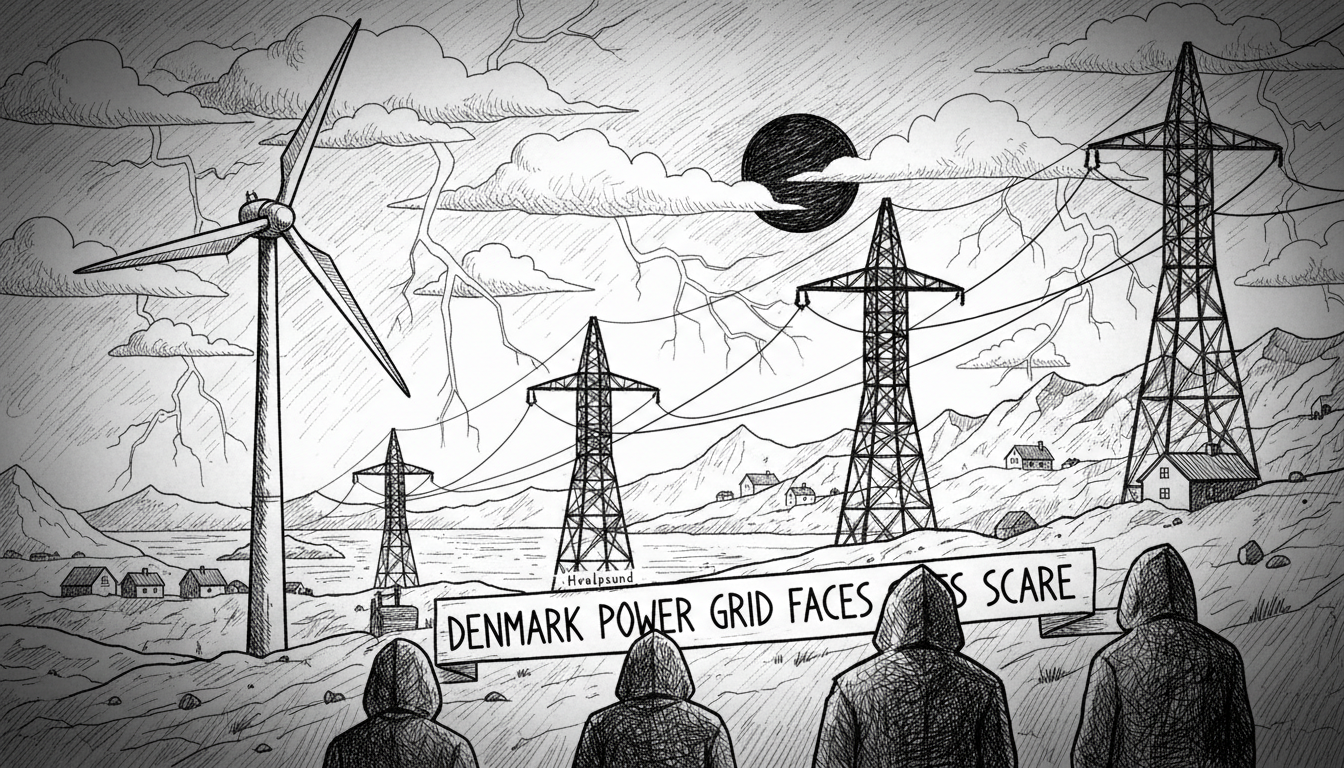
Denmark's electricity infrastructure faced a sudden test when loud bangs and smoke erupted from a transformer station in Hvalpsund. The dramatic incident in North Jutland on Saturday prompted an urgent emergency response, though it ultimately ended without a major fire. This event highlights the constant, unseen pressure on the national grid as Denmark pursues its ambitious green transition.
Station Farsø's fire department received the alarm shortly before noon. Initial reports described alarming sounds and visible smoke coming from the outdoor electrical installation at Fjordblink. Emergency protocols swung into action immediately. Fire crews rushed to the scene prepared for a significant electrical fire. Simultaneously, technicians from the local power company were dispatched to perform the critical task of disconnecting the power supply to the isolated transformer station.
A Contained Emergency
The response followed a well-established safety script. Power company personnel arrived to de-energize the equipment, a necessary first step before firefighters could safely approach any electrical fire. Upon assessment, however, the situation was less severe than first feared. Investigators found no active flames at the transformer station itself. The smoke and loud noises, likely caused by a fault or short circuit, did not escalate into a full-blown blaze. With the power cut and no fire to fight, the fire department's assistance was not required, and crews returned to their station.
Restoring power to affected residents became the next priority. Utility workers deployed generators to re-establish electricity to the local area while the damaged transformer station undergoes repair and investigation. This swift shift from emergency response to recovery underscores the built-in resilience of Denmark's system. The incident caused a localized disruption but was managed before it could cascade into a wider outage.
The Strain of a Green Transition
While this specific event appears minor, it occurs against a backdrop of significant strain on Denmark's power grid. The country is a global leader in wind energy, with renewables now constituting over 50% of its electricity consumption. This shift, while environmentally crucial, introduces new challenges for grid stability. Wind and solar power are intermittent—their output depends on the weather. This variability can cause voltage fluctuations and unexpected power flows that stress older equipment, like transformers and substations.
“Our infrastructure is being asked to perform in ways it wasn't originally designed for,” explains a grid reliability consultant who spoke on background due to client relationships. “Transformer stations are critical nodes. They adjust voltage from high-voltage transmission lines to lower levels for household use. Faults there can have disproportionate effects.” The consultant notes that while Denmark's grid is modern, the accelerating pace of the green transition, combined with increasing electrification of heating and transport, pushes existing assets hard. Proactive maintenance and strategic upgrades are constant necessities, not optional projects.
Local Impact, National System
The Hvalpsund incident is a microcosm of a national conversation. For the residents of North Jutland, it was a Saturday disruption, a jarring noise, and perhaps a few hours without power. From a systems perspective, it is a data point in the operational health of Energinet, the state-owned entity managing the transmission grid. Each such event triggers reviews: Was it equipment fatigue? A component failure? Or perhaps the result of a sudden power surge from renewable sources?
These questions matter for Denmark's social contract. Reliable, affordable electricity is a cornerstone of the Danish welfare model. It heats homes, powers public services, and drives industry. As the country phases out fossil fuels, maintaining this reliability is paramount. Investment in grid modernization is massive, but it must keep pace with demand. Incidents like the one in Hvalpsund serve as real-world checks on that progress. They test the coordination between municipal emergency services, private grid operators, and national authorities.
A Look Ahead for Denmark's Grid
No energy system is immune to faults. The true measure is in the response and the lessons learned. The Hvalpsund event demonstrated effective inter-agency cooperation, preventing a fault from becoming a disaster. Yet, it also whispers a warning. As Denmark continues to integrate vast offshore wind farms and encourages electric vehicle adoption, the grid's role becomes more critical than ever. The transition to renewables is not just about building turbines and solar panels; it is equally about reinforcing the miles of cables and hundreds of substations that form the circulatory system of modern society.
For communities across Denmark, the promise of a green future is intertwined with the mundane reality of a humming transformer in a field. This weekend’s loud bangs in Hvalpsund were a reminder that this infrastructure works under pressure every single day. The silent success is when nothing happens at all. The challenge for policymakers and energy planners is to ensure that as the demands on the grid grow louder, the system's foundations remain quiet and steady. Will the continuous investments in grid resilience be enough to handle the coming decade of electrification? The answer will determine the stability of Denmark's energy future.