
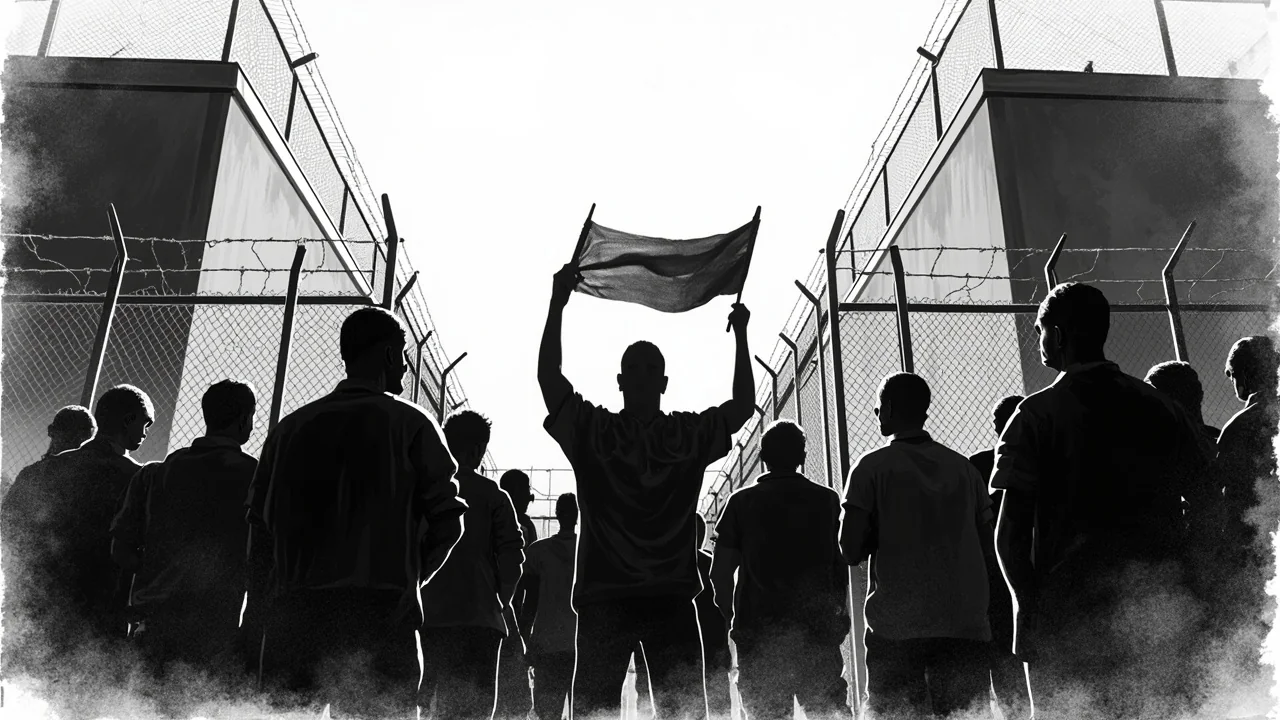
Denmark's prison system faces a crisis of confidence after an inmate death at Kragskovhede Prison sparked a peaceful protest by prisoners demanding better medical care. The incident occurred last Friday in North Jutland, creating what inmates describe as an atmosphere of deep unease and frustration. Prisoners plan to gather outside the open prison's main entrance to voice their concerns about healthcare access, framing their action not as a confrontation but as a plea for fundamental rights.
"We are well aware that we are not God's best children, and we have done something that has had consequences," inmate Nicki Andersen told media. "But that doesn't mean there shouldn't be access to medical help for everyone." His statement captures the protest's core message: punishment should not equate to neglect. Inmates claim the deceased man did not receive necessary medical attention, a concern they say they raised for days prior to his death. The exact cause of death remains unclear, with Denmark's Prison and Probation Service citing confidentiality rules.
A Protest Rooted in Fear and Frustration
The planned gathering at Kragskovhede is unusual. Prisoner protests in Denmark typically involve internal complaints or hunger strikes, not organized public demonstrations. This shift suggests a profound breakdown in trust within the institution. Inmates emphasize their action will be peaceful and respectful, aimed at highlighting systemic issues rather than attacking individual staff. Their goal is to draw public and political attention to what they perceive as dangerously inadequate healthcare protocols.
This incident touches a nerve in Denmark's social policy framework, where the welfare state's promise of universal care is tested within closed institutions. The Danish correctional system, overseen by the Ministry of Justice, is tasked with both enforcing sentences and ensuring humane treatment. When inmates feel that basic medical needs are ignored, it challenges Denmark's self-image as a society built on justice and welfare for all, regardless of status.
The Healthcare Challenge Behind Bars
Providing healthcare in prisons presents universal challenges, but the Danish model integrates medical services from the regional public health system. In theory, prisoners have the right to healthcare equivalent to that available to the general public. In practice, logistical hurdles, security concerns, and stigma can create barriers. Prison staff, not medical professionals, often make initial assessments of an inmate's health, which can lead to critical delays.
Kragskovhede is an "open prison," a facility with lower security for inmates nearing the end of their sentences or convicted of less serious crimes. These institutions are designed to promote reintegration. A death in such an environment is particularly jarring, as conditions are generally considered less restrictive and more focused on rehabilitation. The protest indicates that even in these settings, inmates feel their health concerns are not taken seriously until it is too late.
Voices from Within the System
While the Prison and Probation Service has not commented on the specific allegations, citing the ongoing investigation, the agency's standard protocols require staff to contact healthcare services or emergency services if an inmate is sick or injured. Independent oversight bodies, like the Parliamentary Ombudsman, often investigate deaths in custody to ensure procedures were followed. Past reports have occasionally criticized response times and documentation in Danish prisons.
"This is about dignity," says a Copenhagen-based social worker who has worked with former inmates, speaking on condition of anonymity due to professional sensitivities. "When society takes away someone's liberty, it assumes full responsibility for their wellbeing. That includes timely medical care. Incidents like this undermine the rehabilitative purpose of our system and breed resentment that makes everyone less safe." This perspective connects prison conditions to broader Danish society news, where successful reintegration reduces recidivism.
A Broader Conversation on Rights and Rehabilitation
The protest at Kragskovhede forces an uncomfortable question: where does the boundary lie between justified punishment and the inalienable right to health? Denmark's immigration policy and social policy debates frequently center on the rights afforded to different groups. The welfare system is a cornerstone of Danish identity, but its application within the penal system receives less public scrutiny. Inmates are a marginalized group, and their complaints rarely break into the public discourse.
This event may prompt a review of how medical complaints are escalated and addressed within Danish prisons. It also highlights the psychological impact on the prisoner community. The "pressured mood" described by inmates following the death speaks to a collective trauma and fear that they could be next. Ensuring transparent procedures after an in-custody death is crucial not only for justice but for maintaining order and a sense of basic humanity within the institution.
Looking Ahead: Accountability and Change
The coming days will be critical. The police and the Prison Service will continue their investigations into the death. The inmates' peaceful protest will be measured by its conduct and the official response it receives. Will it be dismissed as the complaints of criminals, or will it trigger a genuine examination of healthcare delivery in Danish prisons? The answer will say much about Denmark's commitment to its stated principles of justice and welfare.
For the inmates at Kragskovhede, the protest is a risk. It makes them visible, which can have consequences. Yet, their decision to proceed suggests the perceived risk of silence is greater. Their action is a stark reminder that the state's responsibility is at its highest when it has complete control over an individual's life. As Denmark continues to navigate complex issues of integration and social policy, the treatment of those it incarcerates remains one of the clearest tests of its societal values. The hope for reform now rests on whether anyone outside the prison walls is listening.
Ultimately, this tragedy is a human story before it is a policy one. A man has died in state custody. His fellow inmates, bound by shared circumstance and fear, are using their limited agency to demand that his death not be in vain. Their call for better healthcare is a minimal demand, a request for the system to uphold its own standards. How Denmark responds will be closely watched by human rights observers and will inevitably shape the Copenhagen integration and rehabilitation landscape for years to come.