
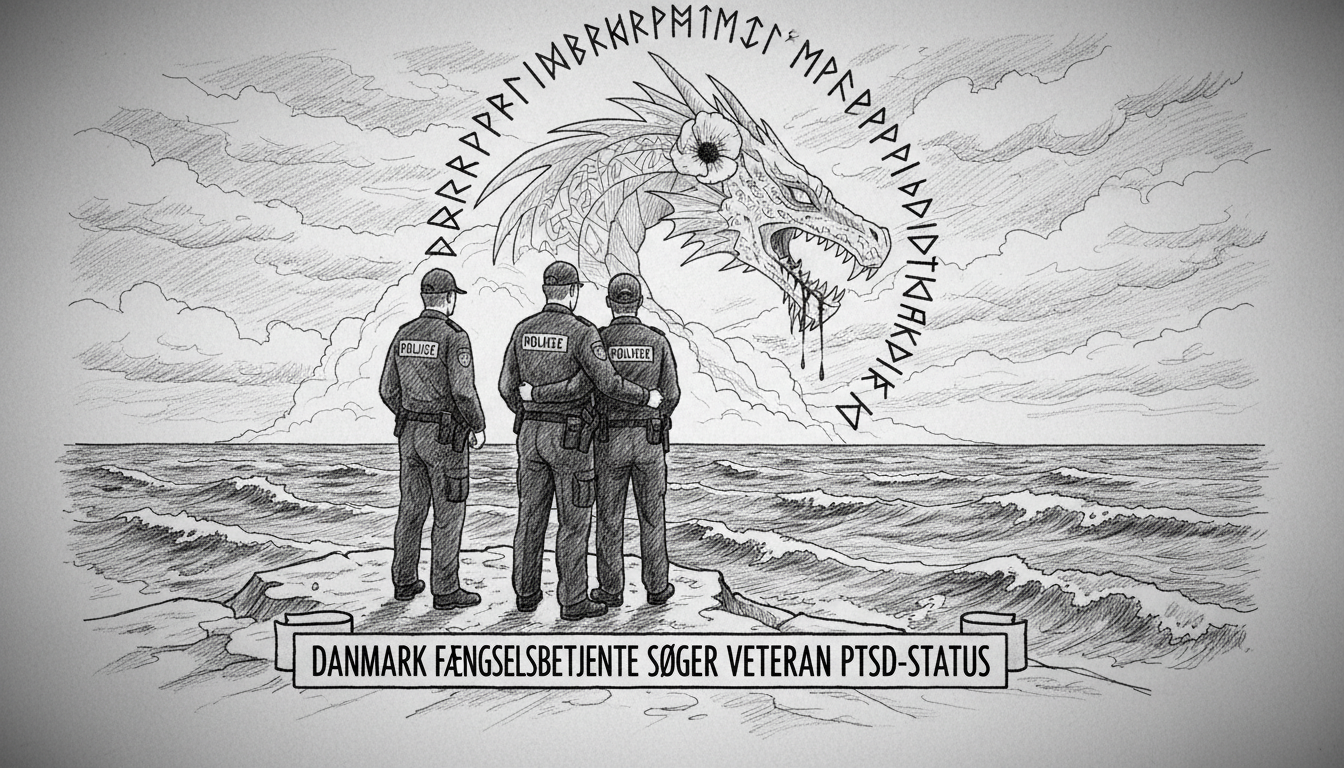
Denmark's prison guards face PTSD rates comparable to combat veterans, yet fight alone for recognition. Karsten Pedersen spent 21 years as a prison guard before a violent inmate riot ended his career and shattered his mental health. He now leads a fight with four major trade unions to have employees in high-risk jobs like his equated with military veterans. This push aims to shift the legal burden of proof so workers no longer must prove their PTSD is work-related.
The Breaking Point
Karsten can trace the collapse of his resilience to a specific, harrowing event. An inmate uprising left him and his colleagues facing extreme violence and threats for hours. The trauma embedded itself deeply, manifesting later as severe post-traumatic stress disorder. His story highlights a systemic issue within Danish social policy, where the welfare system's support structures differ dramatically between professions. While a soldier returning from deployment has a recognized path for mental health claims, a prison guard does not.
“You are in a constant state of alert, dealing with aggression, threats, and the potential for violence every single day,” Karsten explains. The psychological toll is cumulative. A 2018 study confirmed prison guards are in a high-risk category for developing PTSD, with stress and burnout levels far exceeding many other professions. Despite this data, the legal framework for compensation and support remains an uphill battle for individuals.
A System of Proof, Not Support
The core of the campaign is a fundamental change in the law. Currently, a worker like Karsten must legally prove their PTSD is directly caused by workplace incidents. This process involves revisiting trauma for evaluations, facing skepticism, and navigating complex bureaucratic systems. For someone with severe PTSD, this demand itself can be retraumatizing and a barrier to receiving help.
In contrast, Danish military veterans benefit from a presumption of service connection for certain conditions. The four unions backing this initiative argue that society asks similar sacrifices from prison staff, police, and firefighters. They contend the social contract should include comparable safety nets. The debate touches the heart of the Danish welfare model, questioning which professions society values enough to protect categorically.
Unions Mobilize for Recognition
The coalition of trade unions brings significant weight to Karsten’s personal fight. They represent thousands of workers in the penal system, police force, and emergency services. Their involvement shifts the issue from an individual case to a collective bargaining and political lobbying effort. They are not necessarily seeking the title “veteran,” but the substantive legal principle: automatic recognition that PTSD in these jobs is occupational.
This move mirrors ongoing discussions in Copenhagen and other municipalities about the hidden costs of integration and public safety. Frontline workers managing tense social environments bear the mental health consequences. Union representatives argue that failing to support them properly will lead to staff shortages and a loss of experienced personnel, ultimately weakening the system they serve.
Experts Point to Prevention and Early Aid
Occupational health psychologists stress that recognition is only the first step. They emphasize that high-risk professions need proactive, institutional mental health support to prevent PTSD from developing. This includes mandatory, routine debriefing after critical incidents, access to confidential counseling, and a workplace culture that destigmatizes mental struggles.
“The goal should be early intervention, not just compensation after breakdown,” says one expert familiar with the Danish context. They note that without structural prevention, recognition alone becomes a tragic marker of failure. Other countries have begun implementing peer support networks and psychological first aid training for first responders, models that Danish authorities could examine.
The Human Cost of Invisible Service
Karsten’s life today is a testament to the long-term cost. His severe PTSD forced him into early retirement, a personal and financial blow. The struggle for recognition has become part of his recovery, giving purpose to his experience. He speaks not just for himself but for colleagues who suffer in silence, afraid that admitting psychological injury will be seen as weakness or jeopardize their jobs.
The campaign raises profound questions about Danish society. It asks citizens and policymakers to look at who guards the guards and who heals the healers. As Denmark continues to navigate complex integration policies and social cohesion, the well-being of those enforcing the rules is paramount. Their ability to perform their duties with humanity and stability directly affects public trust and safety.
A Question of Social Priority
The political path forward is uncertain. Extending veteran-like benefits carries budgetary implications, requiring the Danish state to define which “high-risk” jobs qualify. Would it include social workers in vulnerable housing areas? Nurses in psychiatric wards? The debate forces a concrete ranking of which public services we value most highly.
For now, Karsten and the unions are building their case on hard data and harder stories. They are gathering testimonies and medical reports to present to politicians. The outcome will signal how Denmark chooses to honor the less visible forms of public service in the 21st century. It will show whether the renowned welfare system can adapt to protect the protectors, or if they remain casualties of their own duty.
The final question lingers: if society expects certain professionals to face trauma on its behalf, does it not have a duty to catch them when they fall? The answer will define the future for thousands of Danish families and the resilience of the public institutions that keep daily life running.