
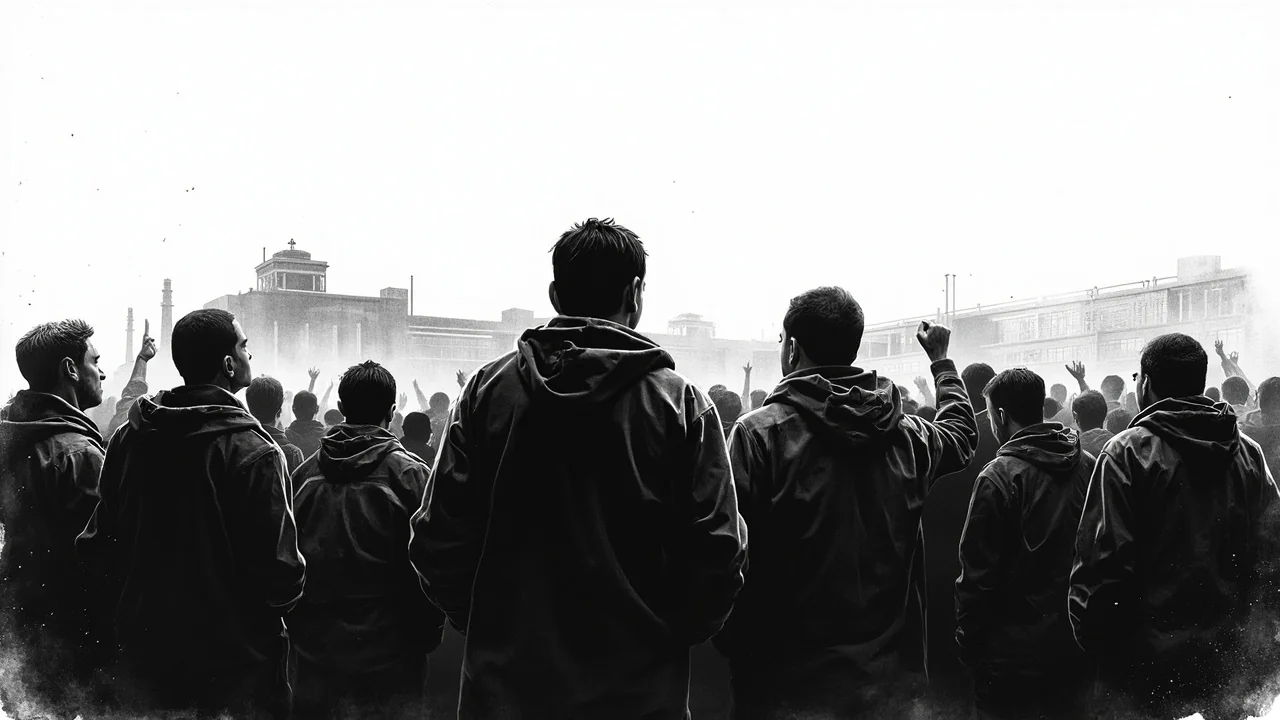
Danish prison authorities face intense scrutiny after the death of a 38-year-old inmate at Kragskovhede Fængsel sparked a prisoner protest and allegations of medical neglect. Inmates gathered at the prison gates on Saturday, shouting 'murderer' and honoring the deceased man, whose pleas for help they say went unanswered for days.
The protest marks a rare public eruption of grievances within the typically opaque Danish correctional system. It centers on claims that the man complained of severe abdominal pain and vomited blood in the days preceding his death, yet received only paracetamol and advice to rest. According to a fellow inmate who spoke on the condition of anonymity, the man screamed in pain at night, and multiple prisoners alerted guards out of concern.
'People are deeply affected because he complained about the pain for several days, but he was just told to rest and take a Panodil,' the inmate said. 'He screamed in pain at night, and several of us told the guards because we were worried.'
A Death Under Investigation
The Danish Prison and Probation Service (Danmarks Fængsler) has confirmed the death and stated that police are investigating the circumstances. The service also noted it is holding talks with affected inmates and staff. The central, unresolved question is how an inmate displaying acute symptoms could apparently die without receiving a medical examination.
Kragskovhede Fængsel, located in Northern Jutland, is a closed detention facility. Incidents of this nature trigger standard internal reviews, but the vocal protest from within its walls is highly unusual. It suggests a breakdown in trust and points to systemic pressures often discussed by reform advocates but rarely visible to the public.
'The guards came and went, but nothing happened. It felt like no one was listening,' the inmate source continued. This firsthand account challenges the official narrative of a well-functioning institutional healthcare protocol. It places human experience directly against procedural guidelines.
Systemic Strains and Human Costs
This tragedy occurs within a Danish penal system balancing rehabilitation principles with increasing operational strains. While Denmark is often praised for its humane prison conditions relative to other nations, incidents like this expose potential fault lines. Staff shortages, overcrowding in certain facilities, and the complex health needs of a prison population can create dangerous gaps in care.
The inmate's reported symptoms—severe abdominal pain and vomiting blood—are clear medical red flags. Their alleged dismissal raises immediate questions about the triage and emergency response protocols within the prison. Did the system fail to recognize the severity, or was there a procedural delay that proved fatal?
Danish law mandates that inmates receive necessary healthcare equivalent to that available outside prison. The Parliamentary Ombudsman (Folketingets Ombudsmand) routinely investigates complaints regarding public administration, including prison conditions. This case will likely draw its attention, focusing on whether this legal right was upheld.
Expert Analysis: A Crisis of Confidence
To understand the broader implications, I spoke with Karen P., a sociologist who has studied the Danish correctional system for over a decade. She requested her full name not be used due to the sensitivity of ongoing research.
'This protest is a significant event,' she stated. 'It's not just about one tragic death, but a signal of a deteriorating relationship between inmates and the institution. The cry of 'murderer' is an accusation of systemic abandonment, not necessarily of direct violence.'
She explained that the Danish model relies heavily on normalized relations and mutual respect to function smoothly. When that contract breaks down, security and care models collapse. 'Prison healthcare is a major challenge globally. In Denmark, it's often outsourced or relies on visiting medical staff. An inmate's complaint can be easily misinterpreted as drug-seeking behavior or malingering, leading to tragic underestimation.'
Karen points to the broader context of an overburdened welfare state. 'We see similar strains in eldercare homes and psychiatric facilities. The most vulnerable in society's closed institutions are at the highest risk when protocols become overstretched and reliant on individual judgment calls. This case will force a review of how pain complaints from inmates are escalated to medical professionals.'
The Path Forward: Transparency and Accountability
The immediate next steps lie with the North Jutland Police investigation. They will determine if there is evidence of criminal negligence. Simultaneously, Danmarks Fængsler will conduct its own administrative review. The outcome of these parallel processes will determine if individuals face charges or if procedural changes are mandated.
However, true accountability must address the deeper issues highlighted by the protest. It requires transparent communication about the findings and concrete changes to medical response protocols in all Danish prisons. The parliamentary committee on legal affairs will likely demand answers from the Minister of Justice.
For the inmates at Kragskovhede, the death and protest have irrevocably changed the institution's atmosphere. The act of collective mourning at the gate was both a tribute and a powerful act of testimony. It ensured their fellow inmate's death was not silently processed as a mere statistic.
A Reflection on Society's Margins
As a reporter focused on integration and social policy, I see this incident as a stark reminder of how a society treats its confined citizens. The Danish welfare model is built on a promise of care and dignity for all. This promise is most critically tested behind locked doors, where society's oversight is weakest.
The protest at Kragskovhede is a desperate form of citizen journalism—a report from a place we seldom see. The inmates have borne witness. The question now is whether the authorities and the public will listen and act, or if the gates will close on this story once the investigation concludes. The integrity of Denmark's celebrated correctional philosophy may depend on the answer.