
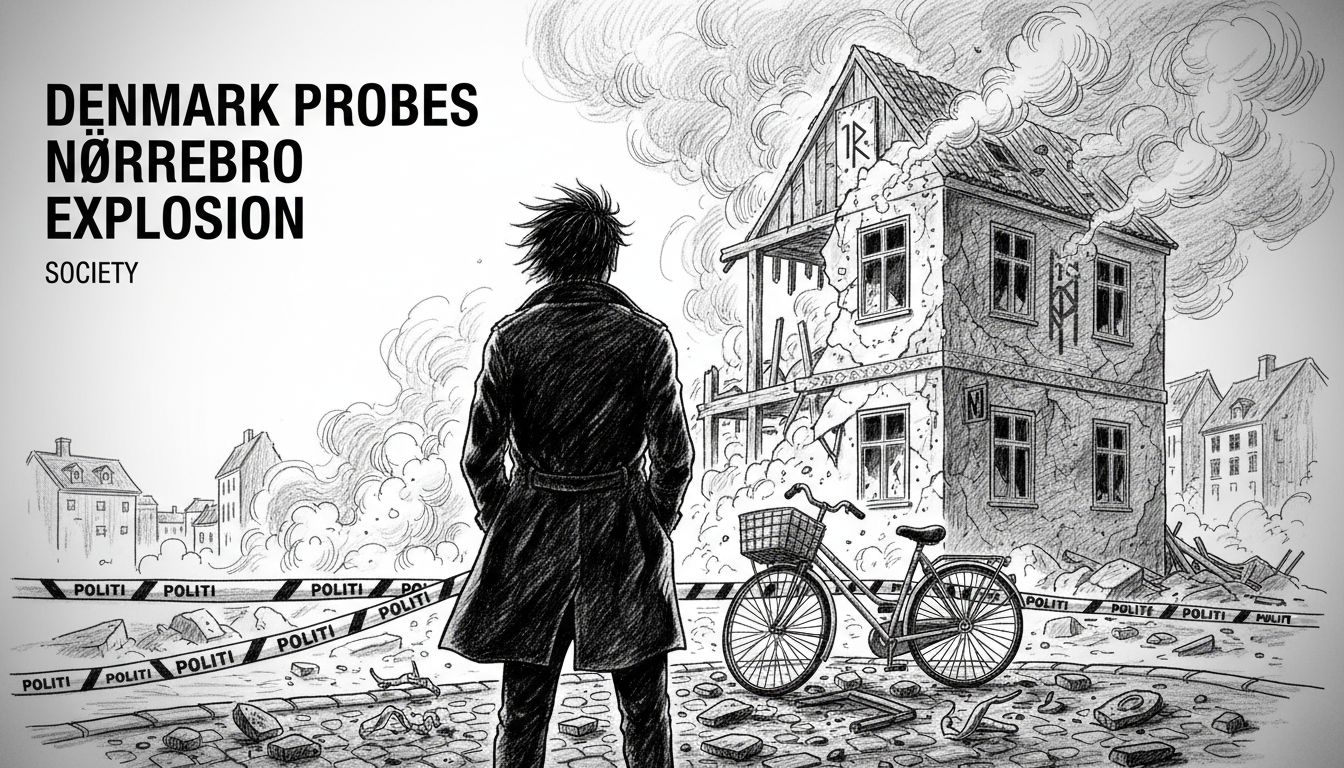
Copenhagen's Nørrebro district, home to over 80,000 residents in one of Denmark's most densely populated urban areas, was shaken by a sudden detonation Wednesday afternoon. Police swiftly cordoned off Guldbergsgade, a central street, launching an investigation into what they termed a 'suspicious' explosion. No injuries were reported, but the incident sent ripples of concern through a neighborhood familiar with sporadic tensions. As a reporter covering Danish society, I see this event not just as a police matter but as a test for community trust and safety protocols in a diverse area.
The Scene on Guldbergsgade
Patrol cars and forensic technicians descended upon Guldbergsgade shortly after the blast was reported. Witnesses described a rapid police response, with the street closed to pedestrians and traffic. Knud Hvass, head of the organized crime unit for Copenhagen Police, confirmed the detonation to media but declined to specify the explosive material used. He stated that the investigation is ongoing and that no further details are available. The police presence remained heavy into the evening, with officers collecting evidence and interviewing local residents. This swift action underscores the seriousness with which authorities are treating the incident.
Officials have not disclosed whether the explosion was triggered by police activity or other actors. The lack of immediate information is standard procedure in active investigations, but it leaves a vacuum filled by community anxiety. Guldbergsgade is lined with cafes and small businesses, typical of Nørrebro's vibrant, mixed-use character. On Wednesday, that normalcy was disrupted by crime scene tape and the hum of police radios. For longtime residents, such scenes are rare but not unheard of, recalling past instances of unrest in the district.
Nørrebro's Complex Social Fabric
Nørrebro is a microcosm of modern Danish society, celebrated for its cultural diversity and grappling with integration challenges. The area has a history of social activism and occasional clashes, often linked to broader debates on immigration and inequality. According to Copenhagen Municipality data, over 40% of Nørrebro's population has a non-Danish background, contributing to its dynamic spirit but also to occasional friction. Local social centers work tirelessly to bridge gaps, offering language classes and youth programs aimed at fostering cohesion.
The Danish welfare system is designed to support such neighborhoods, but resources are sometimes stretched thin. Incidents like the explosion risk undermining the sense of security that is fundamental to social policy success. Jens Larsen, a community leader at Nørrebro's main social center, told me that residents are resilient but weary. 'We've seen progress in community policing and dialogue, but every incident like this sets back trust,' he said. His words echo the delicate balance between maintaining order and preserving the district's open, inclusive identity.
Expert Perspective on Criminal Activity
I spoke with security analyst Maria Falk, who has studied organized crime in Scandinavia for over a decade. She noted that explosive devices are uncommon but not unprecedented in Danish criminal circles. 'The use of explosives often signals organized crime involvement, possibly related to gang disputes or intimidation,' Falk explained. Denmark has seen a rise in gang-related violence in recent years, with police reporting over 200 serious incidents annually in major cities. However, Falk cautioned against jumping to conclusions without more evidence from the Guldbergsgade scene.
The Copenhagen police's organized crime unit, led by Hvass, has been active in monitoring such groups. Their strategy involves a mix of surveillance and community engagement, a model praised for its preventative approach. Yet, Falk pointed out that explosives pose a unique threat due to their potential for collateral damage. 'Even a small device can cause significant fear and property damage, which is why police respond with such intensity,' she said. This incident will likely prompt a review of security measures in vulnerable neighborhoods across Copenhagen.
Community Impact and Immediate Reactions
On the ground, residents expressed a mix of concern and frustration. A shop owner on Guldbergsgade, who asked not to be named, said business slowed abruptly after the explosion. 'We rely on foot traffic, and when police block the street, it hurts our livelihood,' he shared. Others emphasized the need for calm, hoping the investigation would be transparent. The absence of injuries is a relief, but the psychological impact lingers, especially for families with children who witnessed the police activity.
Local politicians have called for updates to reassure the public. Mette Frederiksen, a city council member representing Nørrebro, issued a statement urging cooperation with police. 'Safety is a right for all in Copenhagen, and we must support thorough investigations while maintaining open communication,' she said. This sentiment is crucial in a district where historical tensions between youth and authorities have flared in the past. The police's decision to withhold details may be necessary for the probe, but it also risks fueling speculation.
Historical Context and Comparative Insights
Nørrebro has been a focal point in Denmark's immigration policy debates, often cited in discussions about integration success and challenges. The area experienced riots in the 1990s and early 2000s, linked to social marginalization and protest movements. Since then, substantial investments in urban renewal and social programs have improved conditions, yet underlying issues persist. Crime statistics from the Danish National Police show that Nørrebro has a higher rate of reported incidents than the Copenhagen average, though violent crime remains relatively low compared to other European capitals.
This explosion invites comparisons to past incidents, such as the 2015 shooting at a cultural center elsewhere in Copenhagen. That event led to enhanced police training and community outreach efforts. Today, Denmark's social policy emphasizes early intervention, with municipalities like Copenhagen allocating funds for youth engagement and crime prevention. However, as this case shows, unexpected events can test these frameworks. The response will be watched closely by other Nordic cities facing similar integration dynamics.
Broader Implications for Danish Society
As a journalist covering integration, I see this investigation as a lens into larger questions about safety and belonging in Denmark. The welfare system is built on trust, and incidents that erode that trust can have ripple effects on social cohesion. Police work in tandem with social services to address root causes of crime, but when explosives enter the picture, the focus shifts to immediate threat containment. This balance between enforcement and support is a constant challenge in diverse urban areas.
Education plays a role here; statistics from the Danish Ministry of Education indicate that youth in Nørrebro have lower graduation rates than the national average, a factor linked to socioeconomic disparities. Community leaders argue that improving educational outcomes is key to long-term crime reduction. The explosion, while isolated, highlights the urgency of these efforts. If linked to organized crime, it could prompt policy reviews on gang enforcement and resource allocation for at-risk neighborhoods.
Looking Ahead: Next Steps in the Investigation
The Copenhagen police have promised updates as the investigation progresses. Forensic analysis of the explosive material will be critical in determining motives and potential suspects. Experts like Falk suggest that the findings could influence national strategies on combating organized crime. In the meantime, residents of Nørrebro are left waiting, their daily lives punctuated by unanswered questions.
For Denmark, this event is a reminder that even in a society known for its low crime rates and effective welfare system, vulnerabilities exist. The integration model, while largely successful, requires constant nurturing. As police work to unravel the mystery of the Guldbergsgade explosion, the community's resilience will be tested. Will this incident lead to renewed dialogue or deepened divides? The answer lies in how authorities and citizens navigate the days ahead, with transparency and mutual respect as guiding principles.