
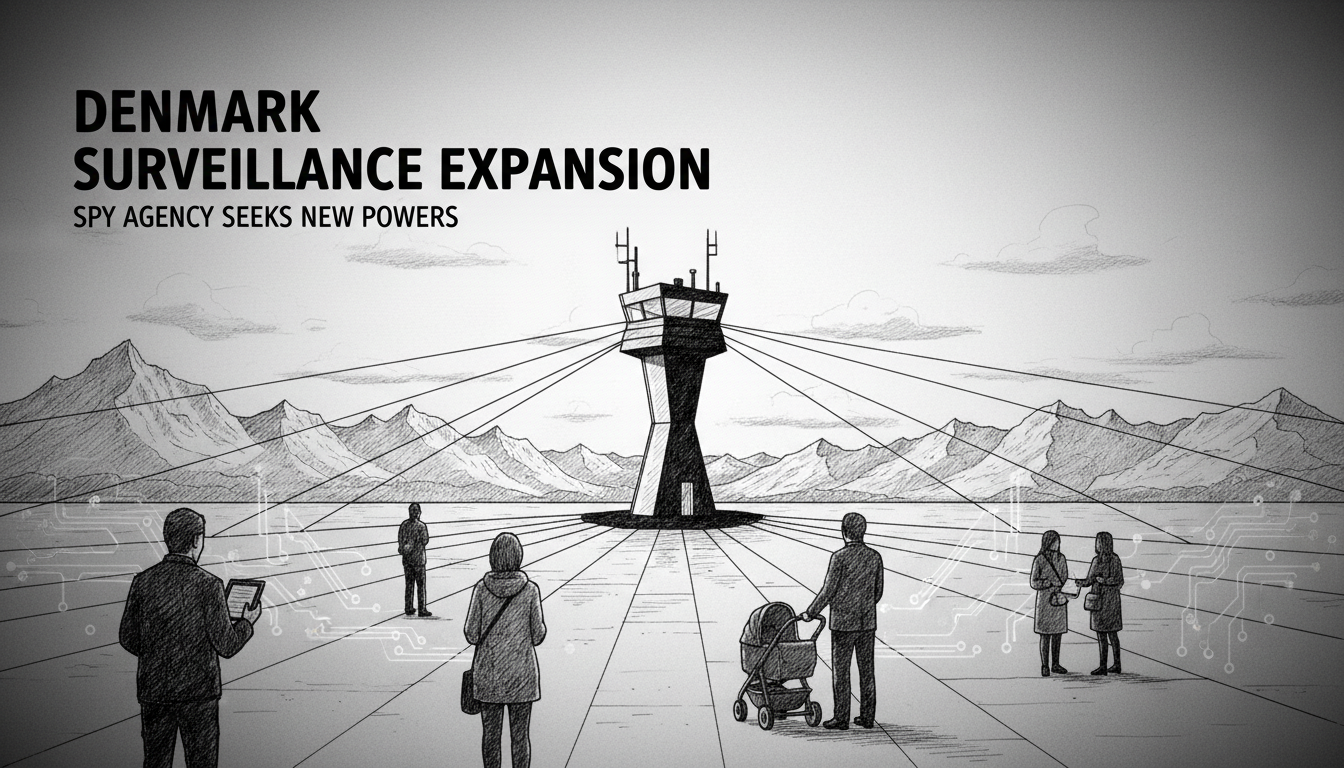
Denmark's military intelligence service wants unprecedented access to monitor nearly all digital communication in the country. A new government proposal would allow the Forsvarets Efterretningstjeneste (FE) to install its own surveillance equipment directly inside the nation's telecommunications companies. This move, described by proponents as vital for national security and by critics as a severe privacy threat, could fundamentally alter the balance between security and civil liberties in one of the world's most digitally connected societies.
Imagine every text you send, every call you make, and every website you visit could be filtered through a military intelligence system. For Copenhagen residents like software developer Markus Nielsen, that potential reality shifts a theoretical debate into a personal concern. “We trust these companies with our data under certain rules,” Nielsen told me at a café in Nørrebro. “The idea that a military agency could have a direct pipeline into that flow is unsettling. Where does national security end and mass surveillance begin?” His question lies at the heart of a fierce political and legal debate now unfolding.
The Technical Reach of Proposed Powers
Currently, FE operates under a legal framework that requires specific warrants for surveillance, often targeting external threats. The proposed change is technical yet profound. It would grant FE the legal authority to place its own hardware and software—often called “black boxes”—within the physical infrastructure of telecom providers. This equipment could potentially intercept, filter, and analyze data on a vast scale. The agency argues this direct access is necessary to keep pace with modern encryption and sophisticated cyber threats from foreign states and terrorist groups.
The government has labeled the potential powers “very far-reaching.” In practice, it would streamline the process for FE to gather signals intelligence (SIGINT) by bypassing some of the current procedural hurdles that involve requesting data from companies. Legal experts point out that while warrants would still be required for targeting specific individuals, the infrastructure for bulk data collection would be embedded directly into the national communication grid. This represents a significant shift in capability and oversight.
Security Arguments and the Shadow of History
Defense officials and some political parties frame the proposal as a necessary evolution. The global security landscape, they argue, is dominated by hybrid threats, cyber-espionage, and encrypted communication channels used by hostile actors. “Our existing tools are from a different technological era,” a security source familiar with the discussions explained, speaking on condition of anonymity. “To protect Denmark, we need to be able to operate effectively within the digital environment where threats are born and move.” Proponents point to terror plots thwarted across Europe thanks to surveillance, though specific Danish cases are rarely detailed in public.
However, Denmark's own history with intelligence services casts a long shadow. The FE was embroiled in a major scandal in the 1970s and 80s over illegal surveillance of Danish citizens. This legacy makes many Danes and politicians cautious about expanding powers without what they see as ironclad, transparent safeguards. “History should teach us that giving intelligence agencies broad, secretive powers requires the strongest possible democratic control,” said a legal scholar from the University of Copenhagen, who is analyzing the proposal. “The question is whether the proposed oversight mechanisms match the scope of the new capabilities.”
The Privacy Counterweight and EU Concerns
Civil liberties organizations and privacy advocates are sounding alarms. They argue that enabling direct access to telecom infrastructure creates a risk of function creep, where tools intended for foreign espionage are gradually used for broader domestic monitoring. “This isn't just about tracking a specific suspect,” said a director at a prominent Danish digital rights foundation. “It's about building a system with the capacity for mass data interception. The potential for abuse or mission creep is inherent in such a powerful system.”
These concerns connect to larger European debates. The European Court of Justice has previously struck down mass data retention laws, emphasizing the need for proportionality and specific safeguards. Any new Danish law must navigate these EU legal boundaries, balancing national security prerogatives with the fundamental right to privacy enshrined in the EU Charter. Furthermore, trust in public institutions, a cornerstone of the Danish welfare model, could be eroded if citizens perceive overreach. The integration of diverse communities in cities like Copenhagen relies heavily on this trust, which some community leaders warn should not be taken for granted.
A Political and Public Crossroads
The proposal now enters a charged political arena. It will require a broad parliamentary majority to pass, meaning the government must negotiate with multiple parties. Supporters of strong state powers, like some conservative and liberal parties, may back the changes. Parties on the left and libertarian-leaning factions are likely to demand stricter limitations, judicial oversight for each intervention, and sunset clauses requiring parliamentary renewal of the powers. The final legislation will be a product of intense compromise.
For the average Dane, the debate is complex. Polls often show a public willing to trade some privacy for security, but the details matter immensely. The coming months will involve committee reviews, expert testimonies, and, inevitably, media scrutiny. The outcome will define Denmark's digital sovereignty and the privacy of its citizens for years to come. As one Member of Parliament put it, “We are deciding not just what our spy agencies can do today, but what kind of digital society we want to be tomorrow.” The path Denmark chooses will be closely watched across the Nordic region and beyond, testing the resilience of liberal democracy in the age of ubiquitous data.