
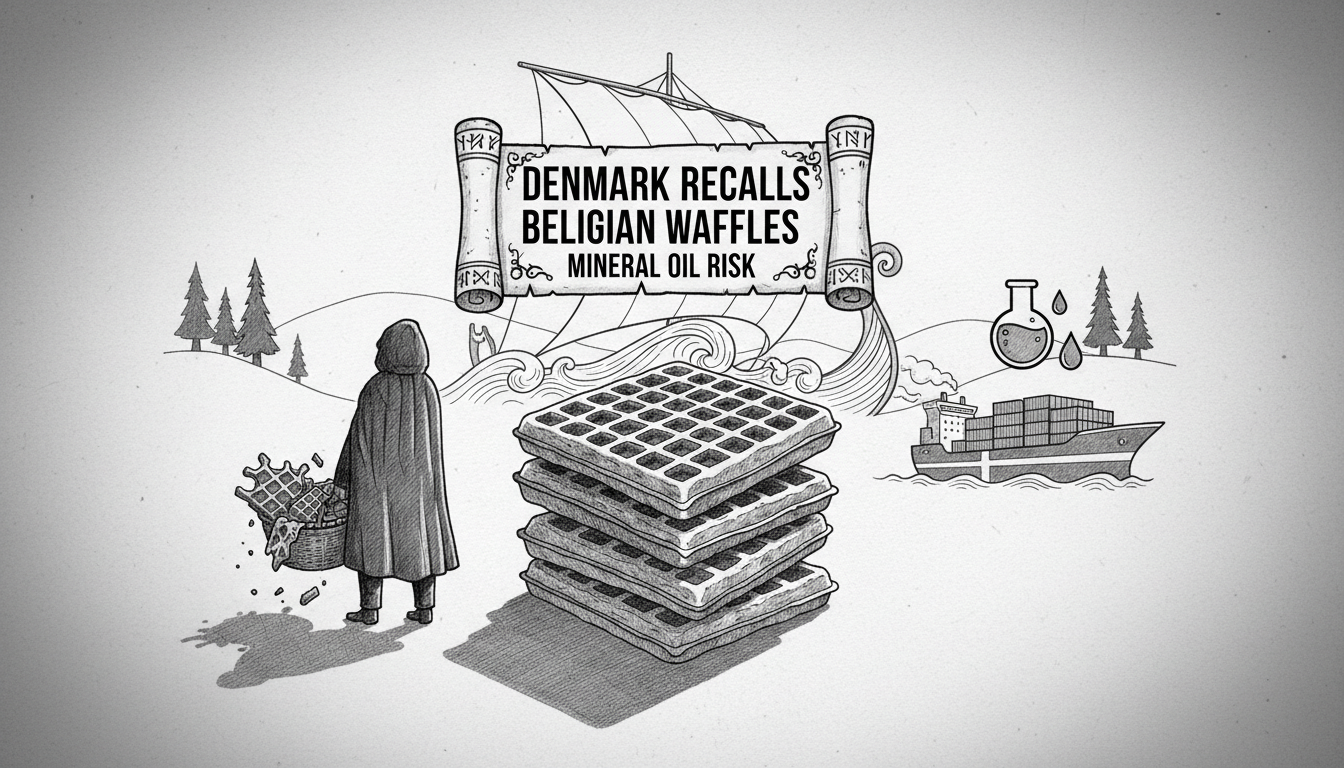
Denmark food recall authorities have issued a warning for a popular supermarket snack. The Danish Veterinary and Food Administration, Fødevarestyrelsen, has announced a nationwide recall of Fintons Belgian waffles sold in Netto stores. The 275-gram packages, sold under the Salling Group's own brand, may contain high levels of mineral oil aromatic hydrocarbons (MOAH). This recall highlights the quiet, constant work of food safety monitoring in a country with high consumer trust.
Consumers who have purchased the product are instructed to discard it or return it to any Netto store for a refund. The agency states the substances are not acutely toxic but can cause effects from long-term exposure. This incident raises questions about supply chain controls for supermarket own-brand products, a dominant feature of the Danish grocery landscape. For many Danish families, these affordable waffles are a staple treat, making the recall personally relevant across social strata.
A Routine Alert in a High-Trust System
Food recalls in Denmark are not uncommon, yet they rarely cause public panic. The system operates on a foundation of high consumer confidence in both authorities and major retail chains. Fødevarestyrelsen routinely screens products for contaminants ranging from pesticides to heavy metals and, in this case, mineral oils. The recall notice is characteristically direct, offering clear instructions without sensationalism. This reflects a broader Danish societal approach to risk communication: factual, transparent, and solution-oriented.
The affected product is a classic example of a 'private label' or own-brand item. Salling Group, which owns Netto, uses its manufacturing and sourcing networks to produce these waffles. The discovery of MOAH suggests a potential breakdown in quality control, possibly originating with a specific ingredient or packaging material. Mineral oils can migrate into food from recycled cardboard packaging, printing inks, or lubricants used in processing machinery. Identifying the precise source will require trace-back investigation by both the retailer and the authorities.
Understanding the Risk: MOAH and Long-Term Health
The recall notice specifically mentions mineral oil aromatic hydrocarbons (MOAH). These are a group of chemical compounds derived from crude oil. Food safety experts globally have increased scrutiny of these substances in recent years. While not causing immediate illness, their concern lies in potential carcinogenic and mutagenic effects with prolonged dietary exposure. The European Food Safety Authority (EFSA) has repeatedly stated that MOAH presence in food is undesirable and exposure should be reduced as much as possible.
“The key message here is one of precaution,” says a food toxicologist from the University of Copenhagen, who preferred not to be named as the investigation is ongoing. “Acute poisoning is not the worry. The principle is to minimize chronic exposure to substances that may pose a cumulative risk over decades. For an individual eating a single package, the risk is negligible. The recall is a systemic measure to prevent these compounds from entering the food chain consistently.” This aligns with the Danish welfare model’s preventive focus, aiming to protect population health through regulatory intervention.
The Supermarket's Response and Consumer Duty
Salling Group, as the responsible retailer, is obligated to manage the recall process efficiently. This includes removing all remaining stock from shelves, notifying customers through in-store posters and digital channels, and processing refunds. The ease of returning a product to any Netto store without a receipt is a standard part of Denmark’s consumer protection culture. It places the burden of action on the retailer, not the individual, to rectify the safety issue.
For Danish consumers, the expectation to act on such recalls is high. There is a social contract underpinned by trust: the authorities and companies identify the problem, and the public follows the guidance. This collective compliance is what makes the system effective. Ignoring a recall notice is seen not just as a personal risk, but as a failure to participate in a shared societal safety net. In a digital age, many Danes subscribe to official food safety alert feeds, viewing it as a civic responsibility.
A Look at the Broader Food Safety Landscape
This single waffle recall opens a window into the complex, globalized nature of modern food production. A Belgian-style waffle, sold under a Danish retailer’s brand, potentially contaminated by mineral oils that could originate from anywhere in the supply chain. Denmark’s food safety authorities are considered robust, but they are monitoring a system with countless entry points for contamination. Their work often involves reacting to issues identified by rapid alert systems across the European Union.
The incident also touches on the economics of food. Own-brand products are typically cheaper than name-brand equivalents, offering value to consumers. This cost-saving pressure can sometimes strain quality assurance protocols, though major chains like Salling Group stake their reputation on their brand’s safety. The recall is a costly event for the retailer, involving lost sales, logistics, and potential reputational damage. It serves as an expensive reminder of the non-negotiable priority of safety.
What Happens Next and Lessons Learned
The immediate steps are clear: remove the product, inform the public, and investigate the source. Fødevarestyrelsen will likely work with Salling Group to audit the production line, test ingredients, and review packaging suppliers. The findings may lead to changes in supplier contracts or quality checks for the entire product category. For the public, the episode will soon fade, another minor alert in the daily news flow.
Yet, it reinforces important pillars of Danish society. It demonstrates a regulatory system that functions proactively, even for non-acute risks. It shows a retail sector that, while competitive, must adhere to strict public health standards. And it relies on a populace that generally trusts and heeds official advice. In a world where food scares can erupt into crises, Denmark’s model is one of calm, systematic management. The final question is not about the risk from one pack of waffles, but about how to maintain vigilance in an ever-more complex global pantry. The answer, as this recall shows, lies in constant monitoring, clear communication, and a shared commitment to collective well-being.