
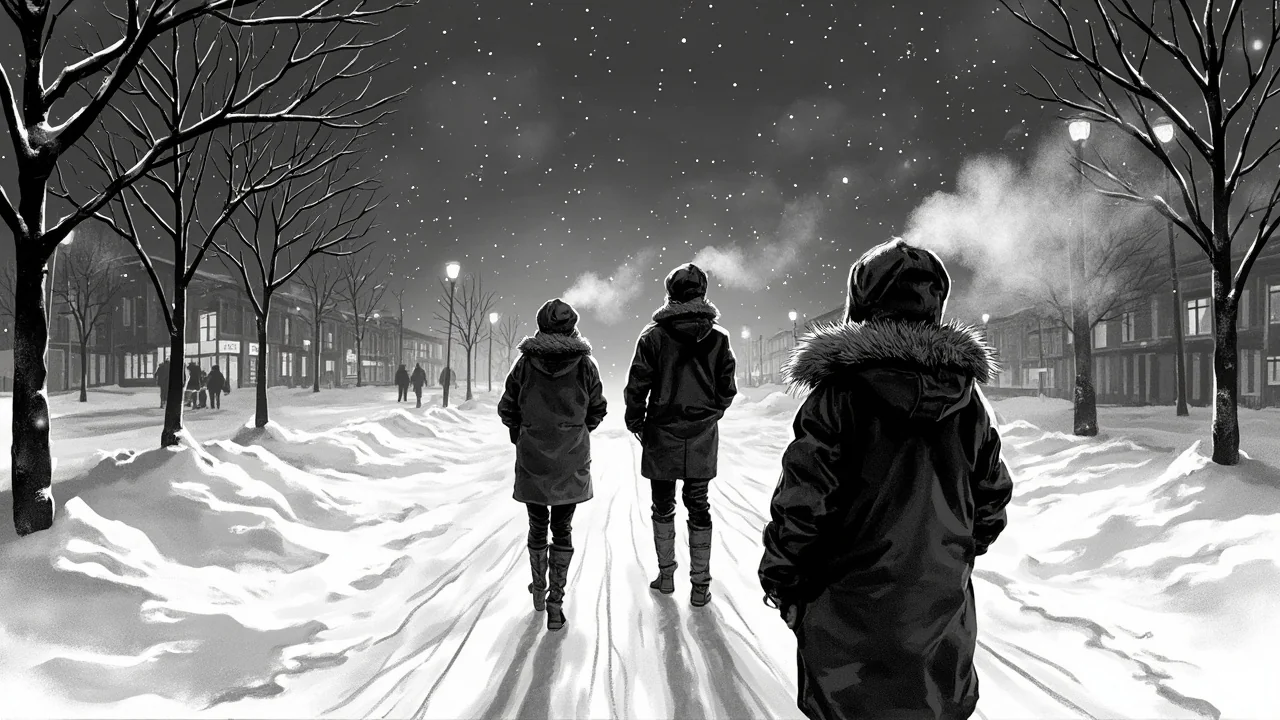
Denmark's meteorological institute confirmed the coldest night in five years early Sunday, with temperatures plunging to -19°C in Isenvad, central Jutland. The extreme cold, which saw widespread readings between -12°C and -17°C across Jutland, marks the lowest January temperature recorded in the country in 23 years. Meteorologist Martin Lindberg stated that one must look back to February 2021, when -21.7°C was recorded, to find a colder Danish night.
"When the ground is snow-covered, no heat comes from the earth," Lindberg explained in a statement. "And with calm winds, the air isn't mixed with warmer air." This precise combination of a thick snow blanket, clear skies, and windless conditions created the ideal environment for the intense cold to settle across the entire nation. The entire country was under snow cover Sunday morning, with only light winds in western regions.
A Nation in a Deep Freeze
The record-breaking low in Isenvad was not an isolated event. In Billund, a major transport hub, temperatures dropped to -17.6°C. The Danish Meteorological Institute (DMI) reported that the mercury continued to fall into Sunday morning, solidifying the extreme weather event. For many Danes, the cold snap represents a significant test of the nation's infrastructure and personal preparedness after several relatively mild winters. The sudden deep freeze follows a week of disruptive snowdrift across the country, which had already led police to advise against all non-essential travel in affected areas.
This kind of weather forces a societal pause, impacting everything from public transportation schedules to energy consumption patterns. While Denmark's welfare system and robust building codes generally protect citizens from the worst effects, such cold highlights vulnerabilities, particularly for the elderly and homeless populations. Community centers and municipal services often activate cold weather protocols, though the immediate, acute nature of this snap tests response times.
The Science Behind the Sudden Chill
Meteorologist Lindberg's explanation points to a straightforward yet powerful atmospheric recipe. A persistent snow cover acts as an insulating layer, preventing geothermal warmth from the ground from moderating air temperatures at the surface. Concurrently, clear skies allow heat to radiate freely from the Earth's surface out into space, a process known as radiative cooling. The critical third ingredient is the absence of wind. Without wind to create turbulence and mix the frigid surface air with slightly warmer air above, a pool of intensely cold air develops and settles.
This phenomenon is common in continental climates but can feel particularly severe in Denmark, a country more accustomed to the moderating influence of the surrounding seas. The current weather pattern shows how susceptible the region remains to outbreaks of Arctic air when wind patterns align. DMI forecasts suggest the clear, cold weather will continue for most of the country through Sunday, with plenty of sunshine but little warmth.
Ongoing Disruption and Future Warnings
The extreme cold is not the end of the disruptive weather. Bornholm, Denmark's eastern island, continues to experience steady to strong winds, leading to ongoing snowdrift. DMI has extended its snowdrift warning for the island until 6 p.m. Sunday. More significantly, a new front of snow is expected to approach Jutland from the west on Monday. This system will bring increasing winds, creating a high risk of renewed and widespread snowdrift.
DMI has already issued a formal warning for snowdrift from North Julland down to Djursland, effective from Monday morning through to 1 a.m. Tuesday. The criteria for snowdrift—at least ten centimeters of loose snow combined with average wind speeds exceeding ten meters per second—are likely to be met across much of Jutland. This presents a continued risk for road safety, potentially stranding vehicles and demanding significant resources from road clearance teams and emergency services.
These repeated episodes test the coordination between Denmark's municipalities and central agencies. The social impact extends beyond travel, potentially affecting school openings, public sector staffing, and deliveries of essential goods. For the integration community, such weather can be doubly isolating, cutting off access to language classes, community meetings, and social support networks that are often lifelines.
Navigating the Deep Freeze in Danish Society
From a social policy perspective, a cold snap of this magnitude acts as a stress test. Denmark's renowned welfare model is built on the premise of security and support for all citizens. Municipalities are responsible for ensuring vulnerable citizens, including elderly pensioners living alone and socially marginalized individuals, are checked on during extreme weather. The rapid onset of this cold wave challenges the proactive reach of those social safety nets.
Furthermore, the energy cost of heating homes to combat -19°C temperatures is substantial. This comes at a time when energy prices, though stabilized from recent peaks, remain a sensitive political and household budget issue. The cold underscores the tension between climate goals for reduced consumption and the immediate, non-negotiable human need for warmth in a Nordic winter. It raises practical questions about housing insulation standards, particularly in older building stock, and the real-world affordability of keeping comfortable.
For newer residents and immigrants from warmer climates, such extreme cold is more than an inconvenience; it can be a genuine health hazard and a shocking introduction to Nordic living. Local integration efforts often include practical advice on winter preparedness—dressing in layers, understanding heating systems, recognizing signs of hypothermia—which becomes critically relevant during an event like this. The weather, in a very tangible way, highlights a fundamental aspect of Danish life that requires adaptation.
A Look Ahead at a Frosty Pattern
As Denmark endures its coldest night in half a decade, the immediate forecast offers little respite. The promise of sunshine on Sunday provides light but not warmth. The advancing snow front on Monday threatens to replace the still, deep freeze with a more active and blustery winter hazard in the form of snowdrift. This sequence—intense cold followed by disruptive snowfall—is a classic and challenging Nordic winter scenario.
The event serves as a reminder of nature's power to dictate daily life, even in a highly organized and technologically advanced society. It tests infrastructure, social cohesion, and personal resilience. As climate change leads to greater weather volatility globally, understanding and adapting to these extreme cold events remains a key part of Denmark's future. The quiet, frozen landscape across Jutland this Sunday morning is a stark and beautiful testament to a winter that still holds formidable power. Will this mark the beginning of a sustained colder period, or is it a last gasp of a fading winter? Only the coming days will tell, but for now, Denmark is firmly in the grip of the freeze.