
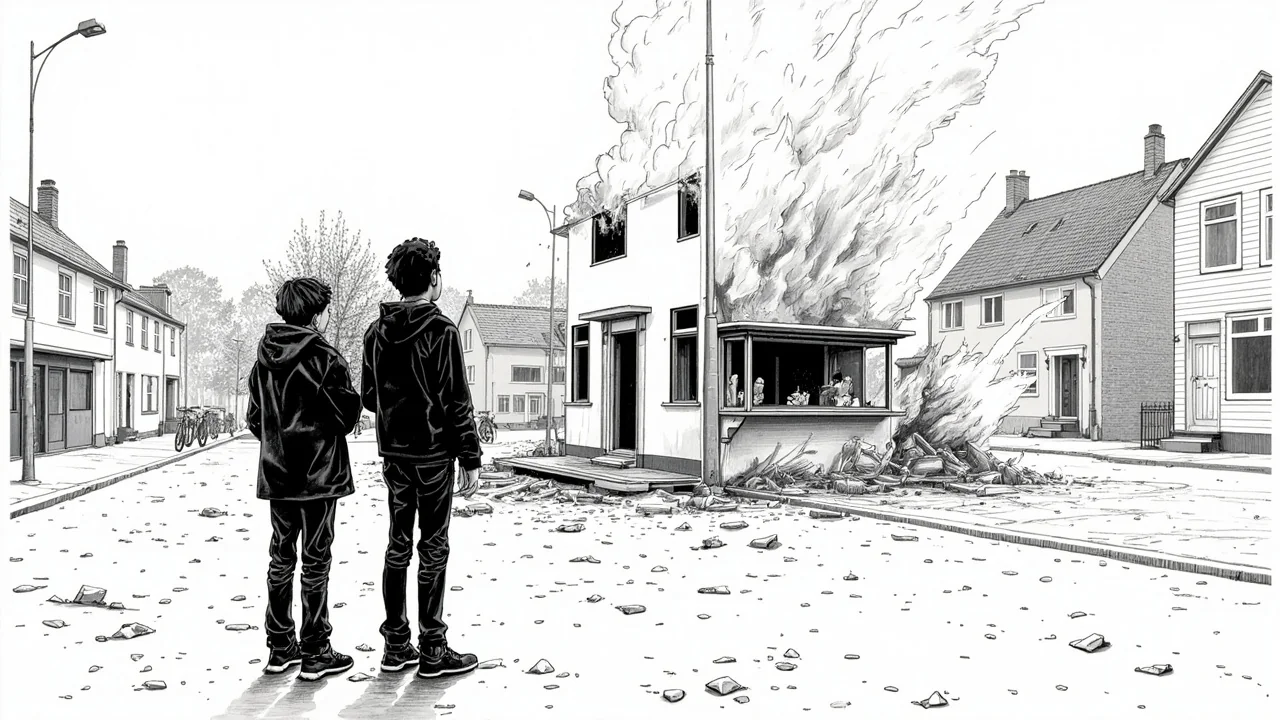
Two young suspects have been remanded to a closed institution in Denmark after a violent explosion targeted a kiosk on Copenhagen's Istedgade. This incident underscores persistent challenges in youth crime and integration within Danish society. As a Danish society reporter, I see this event as a microcosm of broader social policy debates. The explosion occurred last Thursday around 7:40 PM, causing significant damage to the kiosk's facade and shattering windows. Flames engulfed the small business, located in a densely populated area with residential and commercial buildings. Fortunately, no injuries were reported, according to police statements. The kiosk owner described hearing a loud bang while inside the shop, a sudden disruption to the community's daily life.
Immediate Legal Response and Youth Justice
Three individuals were presented for constitutional hearings, which lasted several hours. Two of them, both young, have been remanded in custody at a closed institution for youths until January 26. The third person was released without charges. Remand to a closed institution, rather than a standard prison, is a measure used for younger suspects under Danish law. It reflects a focus on rehabilitation within the welfare system. Prosecutor Astrid Hellsten confirmed the decisions, highlighting the legal system's tailored approach to youth offenders. This case now moves through Denmark's justice framework, which emphasizes supervision and support for young people in conflict with the law.
Integration and Social Policy Context
Copenhagen's Istedgade is a vibrant yet complex street, often cited in discussions about integration and urban diversity. The explosion here raises questions about social cohesion and youth engagement in marginalized areas. Denmark's social policy aims to prevent crime through education and community initiatives. However, incidents like this reveal gaps in execution. From my perspective, having covered integration for years, such events can strain trust between residents and authorities. Municipalities in Copenhagen, such as Vesterbro District, run social centers offering youth programs. Yet, statistics show that participation rates vary, with some young people feeling disconnected from mainstream society. This disconnection can sometimes manifest in criminal behavior, challenging the Danish welfare model.
Expert Insights on Youth Rehabilitation
I spoke with community leaders and officials to understand the broader implications. A social worker from a Copenhagen municipality, who asked not to be named, noted that closed institutions are designed for rehabilitation. "These institutions provide structure and counseling, aiming to reintegrate youths into society," they said. However, critics argue that more preventive measures are needed. Lars Jensen, a policy analyst at a Danish think tank, emphasized education's role. "Data indicates that early school dropout rates correlate with higher risk of youth crime. Strengthening vocational training and mentorship in areas like Istedgade is crucial," he told me. This analysis aligns with Danish social policy goals, which prioritize inclusion over punishment for young offenders.
Broader Trends in Danish Society
Denmark's approach to youth crime balances justice with welfare principles. The closed institution system is part of a larger framework that includes parental involvement and psychological support. Compared to other Nordic countries, Denmark has a relatively high use of remand for youths, reflecting proactive intervention. Recent years have seen debates on immigration policy's impact on integration, with some linking crime to failed assimilation. However, as a reporter, I caution against simplistic narratives. Many young people in these institutions are Danish-born, and factors like socioeconomic status play significant roles. Copenhagen integration efforts focus on language courses and job placement, but outcomes depend on individual circumstances. This case reminds us that policy must address root causes, not just symptoms.
Looking Ahead: Community and Policy Responses
The remand until January 26 allows for further investigation into the explosion's motives and connections. Police are examining whether this was an isolated incident or part of larger criminal activity. Community reactions on Istedgade have been mixed, with some residents calling for increased police presence, while others advocate for more youth clubs. Danish municipalities often collaborate with social organizations to foster dialogue. For instance, Copenhagen's integration department funds projects that bring together diverse groups. Moving forward, this case will test the effectiveness of Denmark's social policy in preventing recidivism. It also highlights the need for continuous evaluation of youth programs within the welfare system.
Personal Reflection and Conclusion
As Fatima Al-Zahra, I have witnessed how Danish society navigates the delicate balance between security and compassion. The remand of these two youths is not just a legal procedure; it reflects deeper societal values. Denmark's welfare system is admired globally, yet it faces internal challenges like any other. This explosion on Istedgade serves as a stark reminder that integration and social policy require constant attention. We must ask ourselves: Are we doing enough to support young people at risk? The answer lies in community engagement, data-driven policies, and empathetic justice. Only then can we hope to reduce such incidents and build a more cohesive society for all residents.