
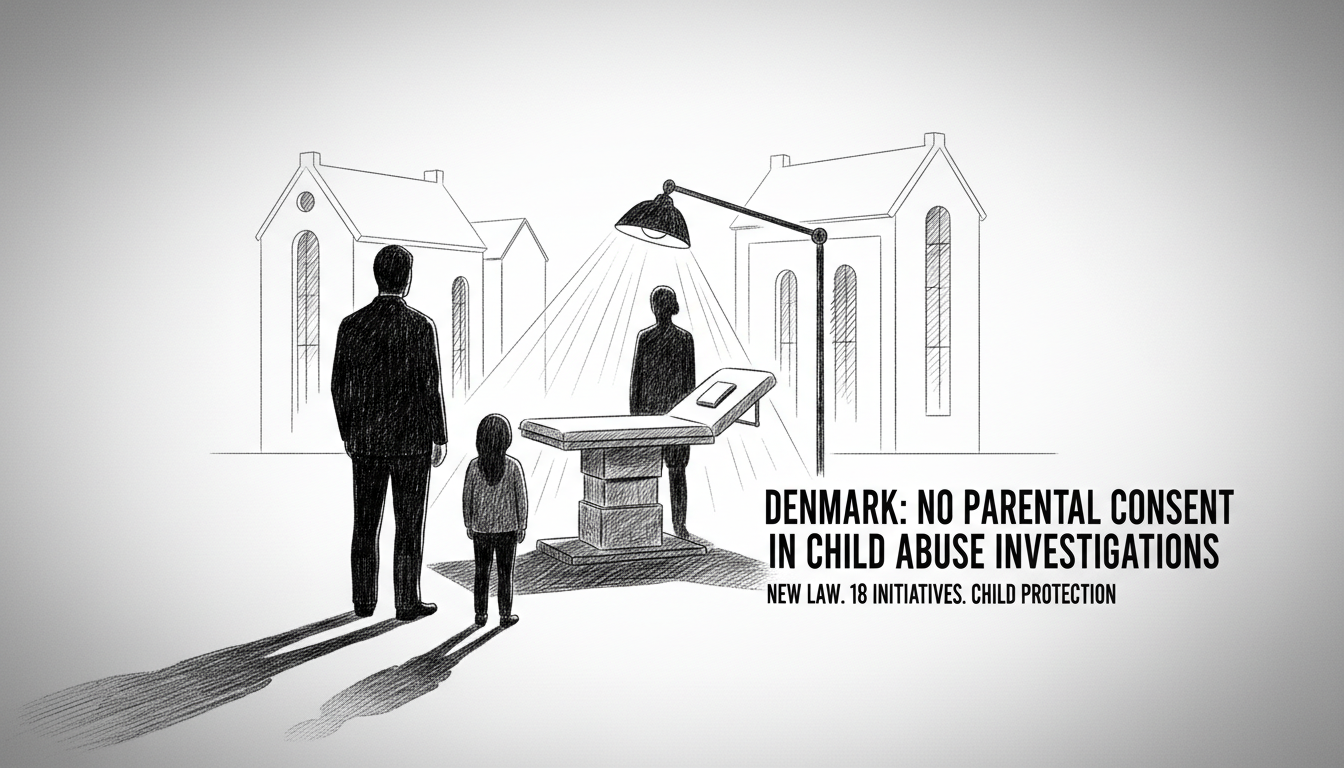
Denmark's government has unveiled a new action plan to combat domestic violence against children. The 'Safe Childhood' initiative contains 18 specific measures designed to protect young victims.
A key change will prevent parents from blocking medical examinations when they face abuse allegations. Justice Minister Peter Hummelgaard explained this addresses situations where authorities face obstruction from families.
He stated, 'This is an important tool for families who actively work against authorities. It essentially frees the child for examination.'
The minister emphasized this recognizes children as individuals with rights. 'A child in a family is a person in their own right,' Hummelgaard said. 'They deserve to grow up without violence, neglect, or abuse.'
Denmark banned corporal punishment in 1997, but violence against children persists. Earlier this year, a survey of 1,410 eighth-graders revealed troubling findings.
Sixteen percent reported experiencing physical violence from a parent or guardian within the past year. The study was conducted by children's rights organization Børns Vilkår.
Hummelgaard has personal experience with this issue, having written about growing up with a violent father. He described the old consent requirement as outdated.
'This rule was a relic from a different cultural understanding of children's position in families,' the justice minister noted.
He added, 'Parents who commit violence against their child shouldn't need to give consent before authorities can assess the situation.'
The action plan emphasizes early detection and prevention. Authorities acknowledge shortcomings in identifying domestic violence cases.
'We know we're far from as good as we should be at detecting violence in homes,' Hummelgaard admitted. 'We're particularly bad when it comes to children with non-Western backgrounds.'
The justice minister identified specific gaps in the current system. 'We're bad at detecting these cases, and we're bad at seeing these children,' he said. 'We struggle to help them break patterns of violence or rescue them from abusive homes.'
The government now focuses heavily on early detection and intervention in families. This represents a significant shift in Denmark's approach to child protection.
Despite Denmark's progressive reputation, child abuse remains a serious problem. The new measures acknowledge that legal protections alone haven't solved the issue.