
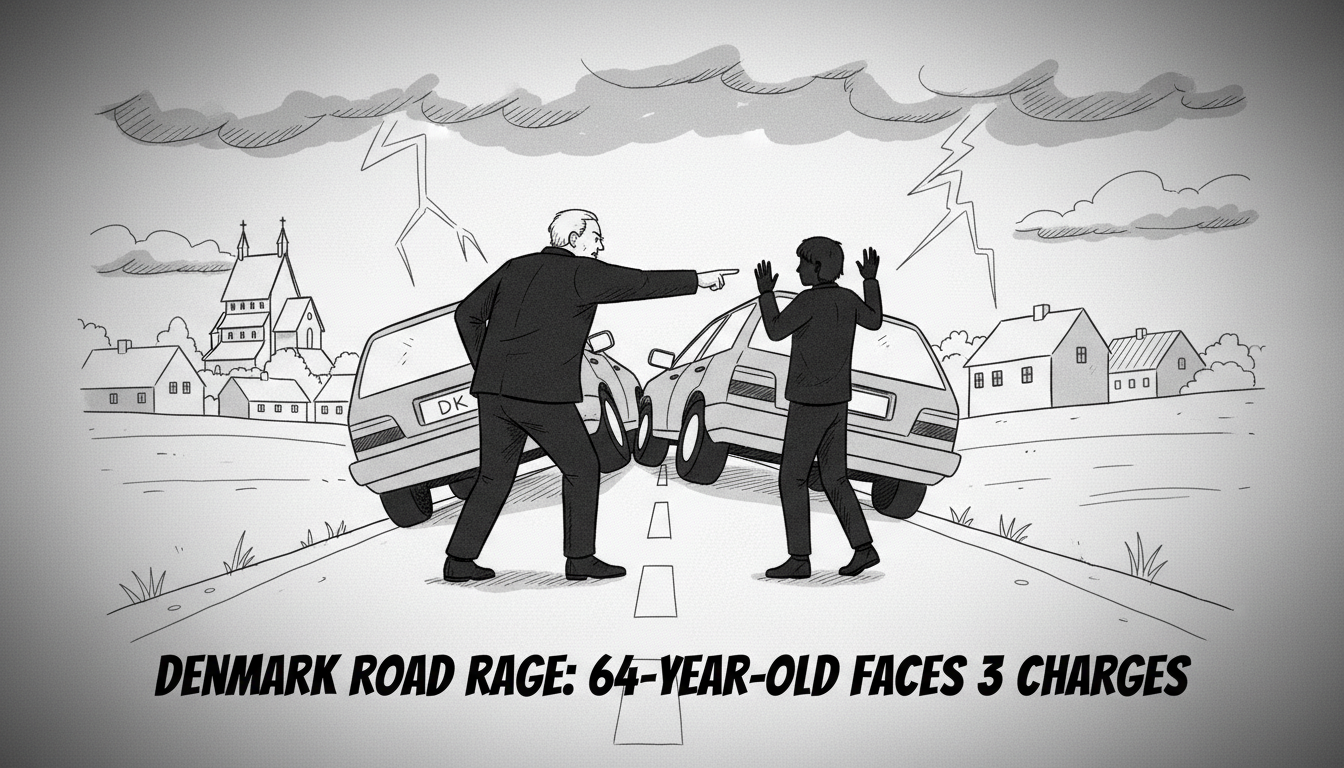
Denmark road rage incidents are rising, with a 64-year-old Aarhus driver now charged for vandalism after a violent outburst. This case highlights growing tensions on Danish roads and tests the nation's commitment to non-violent conflict resolution. As a reporter focused on integration and social policy, I see such events as windows into societal stress and the effectiveness of legal frameworks.
The Incident Unfolds in Aarhus
Monday afternoon turned chaotic at the intersection of Randersvej and Nordre Ringgade in northern Aarhus. A 64-year-old driver attempted an illegal overtaking maneuver, squeezing past a 35-year-old motorist. When he pulled back into the lane, their vehicles collided at low speed. Witnesses described the older man's sudden explosion of anger. He leapt from his car, shouted aggressively at the younger driver, and violently yanked the side window of the other vehicle. The glass shattered into pieces under the force. The 64-year-old then fled the scene, leaving behind a stunned victim and damaged property.
The 35-year-old driver demonstrated quick thinking amidst the confrontation. He secured a photograph of the aggressor's car and its license plate. This evidence proved crucial for law enforcement. East Jutland Police tracked down the suspect rapidly based on this information. Officers reported that the 64-year-old man admitted to the acts and expressed regret. His apology, however, does not negate the legal consequences now unfolding.
Legal Repercussions Under Danish Law
Danish authorities have charged the man with three specific offenses. The charges are vandalism (hærværk), illegal overtaking (ulovlig overhaling), and fleeing the scene of an accident (at stikke af fra et uheld). Hærværk is a serious crime in Denmark, often carrying fines or imprisonment depending on the damage value. The Danish legal system emphasizes personal responsibility and the principle of proportional response. Fleeing an accident scene typically aggravates the situation, leading to harsher penalties. This case will likely proceed through the municipal court system, with sentencing influenced by the driver's admission of guilt.
Danish traffic laws are designed to promote safety and calm. The country has strict penalties for aggressive driving behaviors. This incident serves as a stark reminder that even minor disputes can spiral into criminal acts. The police response was efficient, showcasing the system's ability to act on citizen-provided evidence. Community cooperation remains a cornerstone of public safety in Denmark.
Expert Insights on Aggressive Driving
Traffic psychologists point to several factors that fuel road rage. Stress, perceived injustice, and the anonymity of being inside a vehicle can lower inhibitions. Dr. Lars Jensen, a Copenhagen-based traffic psychologist, explains that such incidents often stem from a sense of territorial violation. "When a driver feels their space or right of way is infringed, it can trigger a primitive defensive reaction," he said in a statement. "In a high-trust society like Denmark, these breaches feel particularly personal."
Legal analysts note the predictable trajectory of this case. "The charges are standard for this type of escalation," says Marie Toft, a legal commentator. "Vandalism resulting from road conflict usually leads to compensatory damages for the victim and a driving license sanction. The court will consider his clean record or past behavior." Penalties can include thousands of kroner in fines and mandatory participation in anger management courses. The Danish welfare system occasionally intersects with justice through such rehabilitative measures.
Broader Implications for Danish Society
This event raises questions about stress levels in Danish society. As someone who reports on integration, I observe how daily pressures affect behavior. The incident occurred not in isolation but within a culture that values order and social harmony. Denmark's high quality of life can sometimes mask underlying frustrations that erupt in unexpected ways. The driver's age, 64, challenges stereotypes about aggression belonging only to the young. It suggests that stress knows no demographic boundaries.
Municipal social centers in cities like Aarhus often run programs on conflict de-escalation. Could such resources be more actively promoted among drivers? The Danish government invests heavily in preventative social policy. This case might spark discussion about extending these principles to road safety education. Integration policies often teach newcomers about Danish norms of non-confrontation. Yet, this incident shows that native Danes can also struggle with these standards.
Statistics on road rage are not systematically collected nationwide, but police reports indicate intermittent spikes. Each case pressures the justice system and community trust. The victim's proactive role in documenting the crime is a positive example of civic engagement. It reflects a society where individuals feel empowered to uphold the law. This dynamic is crucial for maintaining the social contract in Denmark's welfare system.
A Look at Prevention and Resolution
Preventing similar incidents requires a multi-faceted approach. Enhanced traffic monitoring and public awareness campaigns could help. Danish drivers' education already includes modules on patient driving, but perhaps more focus on emotional regulation is needed. Community policing initiatives that build rapport between officers and neighborhoods might also deter aggressive behavior. The swift police action in this case demonstrates the system's capacity for response.
For the individuals involved, the path forward involves legal accountability and personal reflection. The 64-year-old driver's apology is a first step, but restitution and legal penalties will follow. The victim must deal with repair costs and the psychological impact of the confrontation. Danish social services can provide support for such trauma, though many are reluctant to seek help.
This Aarhus vandalism case is a microcosm of wider societal challenges. It tests the resilience of Danish values like calm deliberation and mutual respect. As road density increases and urban life accelerates, such tests may become more frequent. The true measure of society will be how it learns from each outburst to strengthen community bonds and legal frameworks. Will Denmark's famed social stability hold firm against the pressures of modern life?