
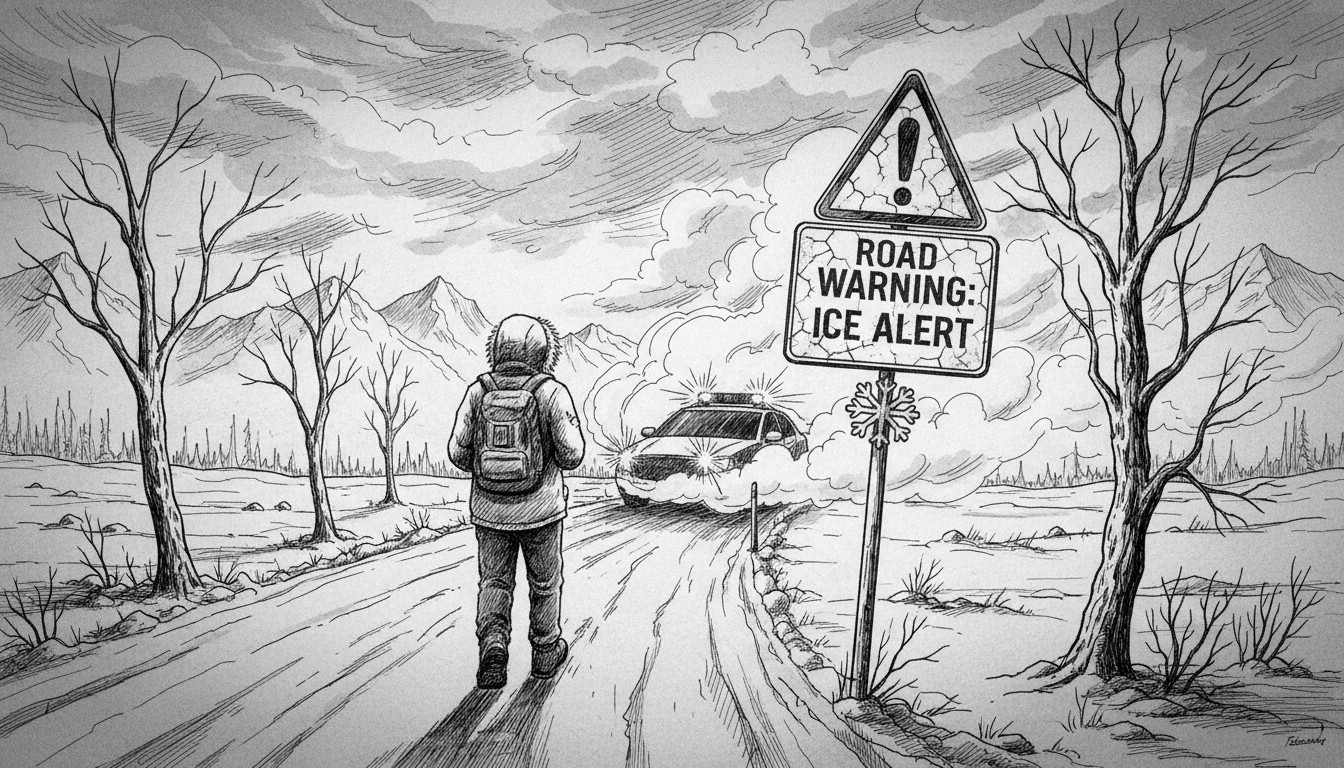
Denmark's Vestegnens Politi has issued a stark warning to drivers about treacherous road conditions following Sunday's snowfall. The police district serving the western municipalities of Copenhagen took to social media platform X to urge extreme caution, stating that falling snow continues to create slippery roads and reduced visibility. This standard yet critical winter alert highlights the annual challenge of maintaining mobility and safety in a Nordic climate, where infrastructure and public messaging are constantly tested.
"Drive calmly, keep a good distance, and adjust your speed," the police advised in their post. They added a characteristically practical Danish reminder for drivers to allow extra travel time and pack warm clothing in case of a breakdown. This advice, while simple, forms the bedrock of public safety campaigns during the Danish winter. It reflects a societal expectation of individual preparedness within a supportive welfare framework.
The Annual Winter Challenge
Every year, from late autumn through early spring, Danish authorities engage in a coordinated effort to manage the impact of snow and ice. The Danish Road Directorate and 98 municipalities share responsibility for gritting and ploughing. Yet, as this latest warning shows, even the most proactive systems cannot instantly overcome nature. The immediate risk on untreated secondary roads or during active snowfall requires vigilant driver behaviour. Traffic safety experts consistently stress that winter tires, significantly reduced speeds, and doubled or tripled following distances are non-negotiable during such conditions.
These warnings are not merely suggestions but are based on hard data. While specific figures from this incident are not yet available, historical data from the Danish Road Safety Council shows a noticeable increase in traffic accidents during the first major snowfall of the year. Drivers often need time to readjust to winter driving habits after milder autumn months. The police social media alert serves as that crucial, timely nudge. It is a digital extension of the public information campaigns that are a staple of Danish winter life.
A Society Built for Preparedness
The response to icy roads reveals deeper layers of Danish social policy and civic expectation. The reminder to bring warm clothing is telling. It underscores a core principle of the Danish welfare model: society provides a strong safety net, but citizens are also expected to exercise responsible self-reliance. This balance is evident in everything from the unemployment system (flexicurity) to winter readiness. People are advised to prepare their own emergency kits, while trusting that municipal road crews and emergency services will perform their duties effectively.
This incident, though minor in scale, connects to broader discussions about integration and societal cohesion in Denmark. For newer residents arriving from warmer climates, the realities of a Danish winter—including driving on ice—represent a significant adaptation. Municipal integration programs in cities like Copenhagen often include practical guidance on winter living, which is as fundamental as language lessons. Navigating hazardous road conditions safely is part of becoming oriented to life in Denmark. It is a shared experience that temporarily equalizes all drivers, regardless of background, facing the same slick asphalt.
Infrastructure and Individual Duty
Denmark's approach relies on a clear infrastructure plan. Main roads and highways are prioritized for salting and ploughing, ensuring the backbone of the transport network remains open. Residential and secondary roads may see delays. This tiered response is a pragmatic allocation of resources that most Danes understand. It places a corresponding responsibility on the individual to assess the risk for their specific journey. The police warning empowers citizens with information to make that choice. It shifts the focus from guaranteed clear roads everywhere to managed risk and informed decision-making.
Experts in traffic psychology note the importance of these repeated, consistent messages. "The goal is to make safe winter driving an automatic habit," explains a consultant from the Danish Road Safety Council. "Public alerts from trusted sources like the police reinforce that habit. They cut through complacency and remind drivers that conditions can change in a moment." This aligns with Denmark's generally successful track record in road safety, where a combination of regulation, education, and public campaigning has dramatically reduced fatalities over decades.
Looking Beyond the Forecast
The immediate warning will lapse once the snow stops and roads are treated. However, the underlying theme of coexistence with harsh weather remains. Climate change introduces new variables, with potential for more frequent freeze-thaw cycles and unpredictable precipitation. This tests the resilience of the current preparedness model. Municipal budgets for road salt and winter maintenance are a perennial discussion point in local politics, especially in densely populated regions like Vestegnen.
For now, the message is simple and clear. Vestegnens Politi has fulfilled its role in the national safety ecosystem by issuing a timely, clear warning. The responsibility now rests with every person who gets behind the wheel. They must decide whether their journey is essential, if their vehicle is properly equipped, and if their driving skills match the challenge. In this interplay between public authority and personal responsibility, the true portrait of Danish winter resilience is formed. As the days remain short and cold, this dance between citizen and state will continue on every glistening, potentially icy, street.