
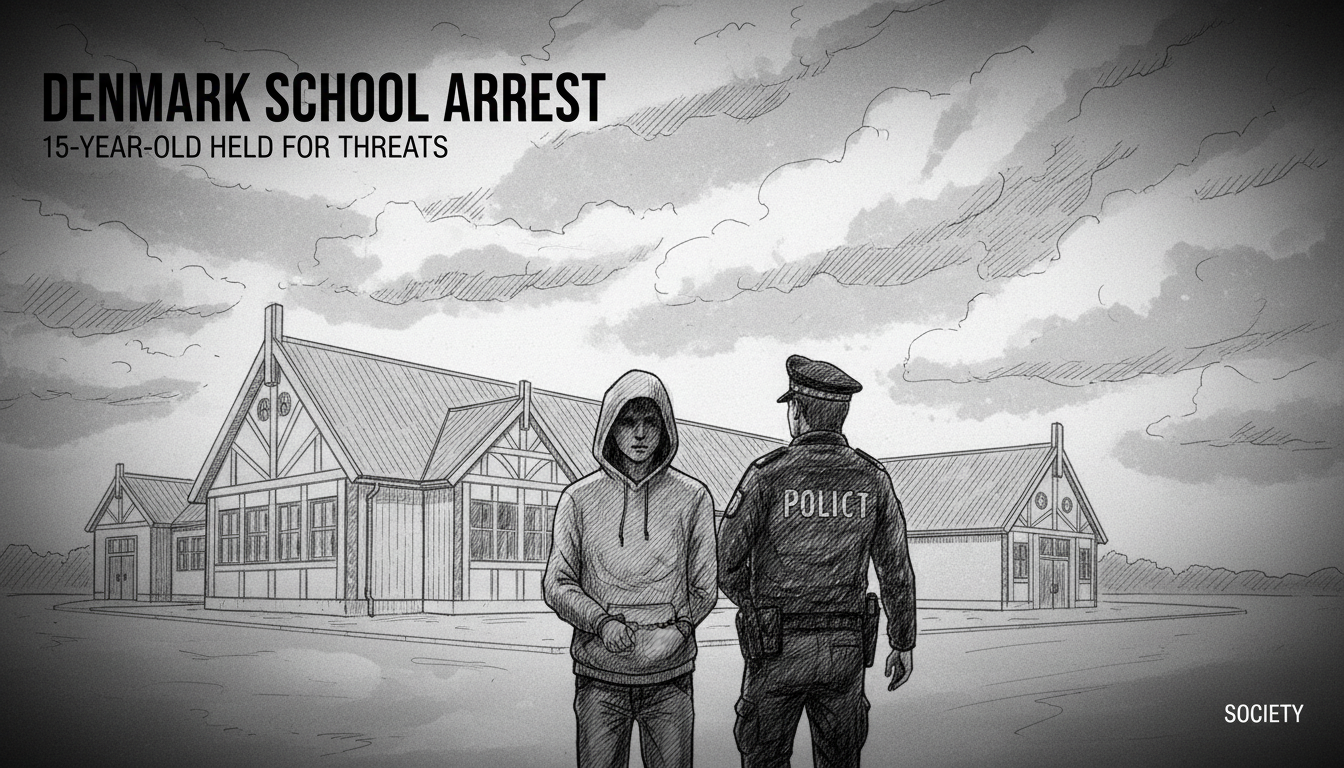
Denmark police arrested a 15-year-old boy Friday morning at an educational institution in Aarhus N. The East Jutland Police received a report at 9:18 AM about a person exhibiting threatening behavior on Halmstadsgade. Officers detained the teenager at the scene, charging him with making threats against someone's life. He was taken to a police station for questioning, and authorities confirmed no one was physically injured during the incident. This event has sent shockwaves through the local community, raising immediate questions about safety protocols and the pressures facing young people in the Danish education system.
A Swift Police Response
The police response was notably rapid, a reflection of the high priority given to threats on educational grounds. Danish law enforcement operates on a principle of immediate intervention when there is reasonable suspicion of a crime, especially one involving potential violence. The East Jutland Police moved quickly to secure the location on Halmstadsgade, a street in the diverse Aarhus N district. Their public statement was brief but clear, focusing on the facts of the arrest and the lack of physical harm. This efficiency is standard procedure, but it does little to calm the underlying anxieties such an event provokes among parents, students, and teachers. The scene, typically a place of learning and development, was abruptly transformed into a cordoned-off police matter.
The Legal Path for a Minor
The suspect's age introduces significant complexity into the legal proceedings. As a 15-year-old, he falls under Denmark's juvenile justice system, which operates differently from the adult criminal process. His case will likely be handled by a specialized youth unit within the police and, if prosecuted, by a court with specific protocols for minors. The focus for authorities now will be establishing the precise nature of the threats, the context in which they were made, and the boy's intent. Given the serious charge—threats to life—the case carries weight. However, the system is mandated to balance accountability with considerations for rehabilitation, given the defendant's youth. The outcome could involve anything from a formal warning and mandated counseling to more substantial intervention, depending on the investigation's findings.
Community Impact in Aarhus N
Aarhus N is a district known for its cultural diversity and, like many urban areas, its ongoing social challenges. News of an arrest at a local school resonates deeply here. For families, the primary emotion is relief that no one was hurt. Yet this relief is quickly followed by a nagging fear and a barrage of questions. Was this an isolated incident between individuals, or does it point to a broader issue? How secure are our schools? Parents I spoke to in the area expressed a universal desire for clear communication from the institution and reassurance about safety measures. There is also a palpable concern for the well-being of all students involved, including the arrested boy. These events fracture the sense of security a school is supposed to provide, replacing it with a tense vigilance.
Examining Pressures on Danish Youth
While the police investigate the specific criminal act, a parallel conversation is emerging about the environment that may have contributed to it. The Danish education system, particularly at the gymnasium (high school) level, is academically rigorous. Students face significant pressure to perform, a stress compounded by social dynamics and the challenges of adolescence. Experts in youth psychology often note that threatening behavior can be a manifestation of unaddressed anger, profound distress, or a cry for help. It is a severe and unacceptable action, but it rarely occurs in a vacuum. This incident forces a uncomfortable moment of introspection: are the support systems within our educational institutions—school psychologists, counselors, and teacher mentorship—adequate to identify and help students in crisis before they reach a breaking point?
The School's Role and Responsibility
The educational institution at the center of this storm now faces a critical test of its crisis management and community leadership. Its immediate responsibilities are clear: cooperate fully with the police investigation and ensure the physical safety of its students and staff. The longer-term task is more difficult. It must navigate the delicate process of healing its community. This involves transparent communication with parents, providing psychological support for students who witnessed or were affected by the event, and reviewing its own protocols for detecting and de-escalating conflicts. The school's approach in the coming days and weeks will be scrutinized. It must balance the need for disciplinary action with a compassionate understanding of the event's root causes, all while maintaining its primary function as a place of learning.
A Broader Look at Safety and Prevention
This arrest in Aarhus is not an isolated phenomenon in a global context, but it is relatively rare in Denmark. That rarity is what makes it so shocking. Danish society prides itself on its safe, trusting environments, especially for children. An incident like this strikes at the heart of that self-image. It prompts a necessary review of national and municipal safety policies in schools. Are prevention programs effective? Is there enough training for teachers to handle conflicts or recognize signs of extreme student alienation? The conversation often turns to the role of social services and how they interact with schools to support at-risk youth. This case may become a catalyst for local policymakers in Aarhus to examine whether their integrated support networks are functioning as intended.
The Human Story Behind the Headline
Beyond the police report and the institutional responses lies a deeply human story with multiple victims. The individual who felt threatened is undoubtedly traumatized. The classmates who witnessed the event are coping with fear and confusion. The teachers and staff are grappling with their own sense of vulnerability. And then there is the 15-year-old boy now in the custody of the justice system. His future is suddenly uncertain, his actions potentially altering the course of his life. What circumstances led a teenager to a point where making a threat seemed like an option? This question does not excuse the action, but answering it is essential for preventing future incidents. It requires looking at family life, social circles, mental health, and academic pressure—a complex web that simple condemnation cannot untangle.
Moving Forward from the Crisis
The days ahead will be defining for the community on Halmstadsgade. The police investigation will proceed, and the legal process will determine the consequences for the arrested youth. However, the true measure of this community's resilience will be in how it heals and learns. Will this event lead to a fortress mentality, with increased surveillance and suspicion? Or will it spark a more thoughtful, proactive effort to strengthen student support, improve communication channels, and foster an environment where young people feel they can seek help before despair turns to threat? The answer is not simple. It requires resources, commitment, and difficult conversations. This single morning in Aarhus N has revealed a crack in the system. The choice now is whether to merely patch it over or to examine its depth and build something stronger.