
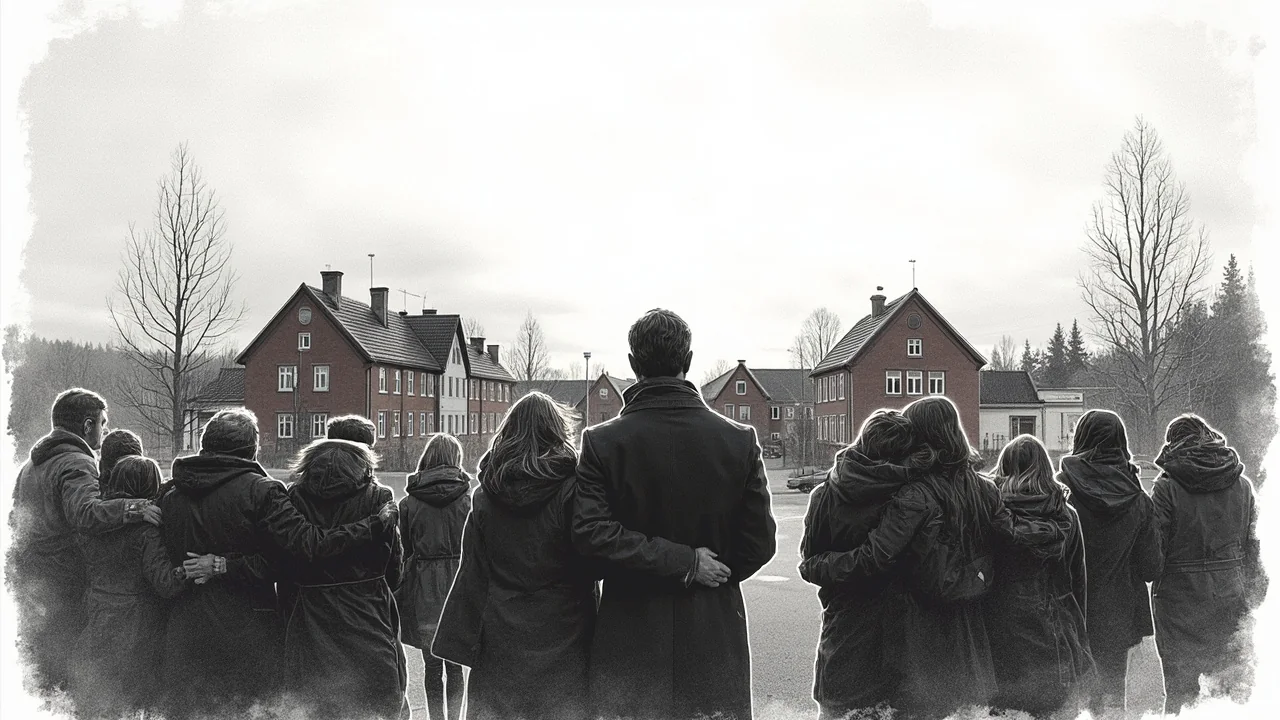
Denmark's school safety is under scrutiny after a student witnessed a violent assault. Thomas Klarlund Kramer's son was trapped in a school common room in Kolding, forced to watch as three older boys beat a fourth with fists and a belt. The incident, filmed by the perpetrators, has left a father questioning his child's security and exposed a gap in the Danish welfare system's approach to serious student misconduct.
Thomas's son, a 9th grader at Sdr. Vang Skole, was an unwilling spectator just before Christmas. He and two friends were in the local common room when the door was locked from the inside, initiating the attack. 'They try to get up and unlock the door, and they actually try to get in between. They are just swept aside,' Thomas told Nordics Today, recounting his son's harrowing experience. The boys were too shocked and fearful to report it immediately. 'I think they were also a little afraid that if we snitch on this, we are just the next in line.'
The three accused students, from the school's higher grades, have been reported to police and face temporary suspension. For Thomas, however, the temporary measures feel insufficient. He is deeply concerned about sending his son back to school if the perpetrators return. 'I am actually very worried whether such an episode, if these children come back to the school, will damage the learning outcome and disrupt the social relations in the class,' he said.
A System With Limited Sanctions
The case highlights a structural tension within Denmark's education system. School principal Jesper Dyrbjerg Strøager confirmed his legal authority is limited. He can suspend students for up to ten days, arrange a class change, or initiate a transfer to another school within the municipality. A permanent expulsion is not a decision he can make alone. That process requires intervention from the municipal administration and finding another school willing to accept the students. 'There is no provision that I can expel students (permanently),' Strøager stated, choosing not to comment on whether he would if he could.
This framework is designed to balance safety with the Danish principle of ensuring education for all. Yet in cases of severe violence, it can leave parents and students feeling unprotected. The decision-making becomes a bureaucratic process involving municipal lawyers and administrators, potentially far removed from the immediate trauma in the school corridors.
The Integration Dimension
While the police report did not specify backgrounds, such incidents often ignite discussions about integration in Danish society. Schools in Copenhagen and other urban centers are microcosms of these broader challenges. Success requires not just academic teaching but also fostering social cohesion and clear consequences for actions that violate community safety. When students feel unsafe reporting violence, it indicates a breakdown in that foundational trust.
Social policies aim to support at-risk youth through municipal social centers and tailored programs. However, a violent episode suggests these interventions either did not reach these students or failed to alter their behavior. The incident forces a difficult question: at what point does the welfare system's focus on rehabilitation and inclusion conflict with the right of other children to a safe learning environment?
Seeking Safety and Resolution
For Thomas and his family, the abstract policy debate is now a concrete, daily fear. The psychological impact on the witnesses is a significant, often overlooked, consequence. His son's reaction—the shock, the delayed reporting out of fear—is a textbook trauma response. It undermines the very sense of security that effective education requires.
Experts in youth psychology stress that witnessing violence can be as damaging as experiencing it directly. The school now faces the dual task of managing the disciplinary process while providing support for the victims and witnesses. This includes the boy who was beaten and those, like Thomas's son, who were forced to watch.
The path forward is fraught. The municipality must navigate a solution that addresses the perpetrators' needs without further victimizing their peers. A simple transfer to another school may just displace the problem. Effective intervention would likely require intensive, coordinated support from social services, a plan the receiving school must be equipped to handle.
A Broader Conversation on School Climate
This attack in Kolding is not an isolated event. It taps into ongoing national conversations about well-being and violence in Danish schools. While statistically rare, high-profile cases shape public perception and parental anxiety. They test the limits of the collaborative, trust-based model that underpins much of Denmark's social policy.
The Danish welfare system is admired globally for its support networks. Yet this case shows its potential limitations when confronted with intentional, filmed brutality within its institutions. The system is designed for support, but its tools for definitive removal when support fails are complex and shared across multiple authorities.
Thomas's dilemma is every parent's nightmare. He must weigh his son's education against his son's sense of safety. The school and Kolding Municipality must now demonstrate that their processes can deliver a resolution that restores security and confidence. The outcome will be a real-time test of whether Danish social policy can hold firm boundaries when the social contract within a school is violently broken. Can the system protect the vulnerable while still seeking to redeem those who stray? The answer will define the school year for several families and set a precedent for handling crises in communities across Denmark.