
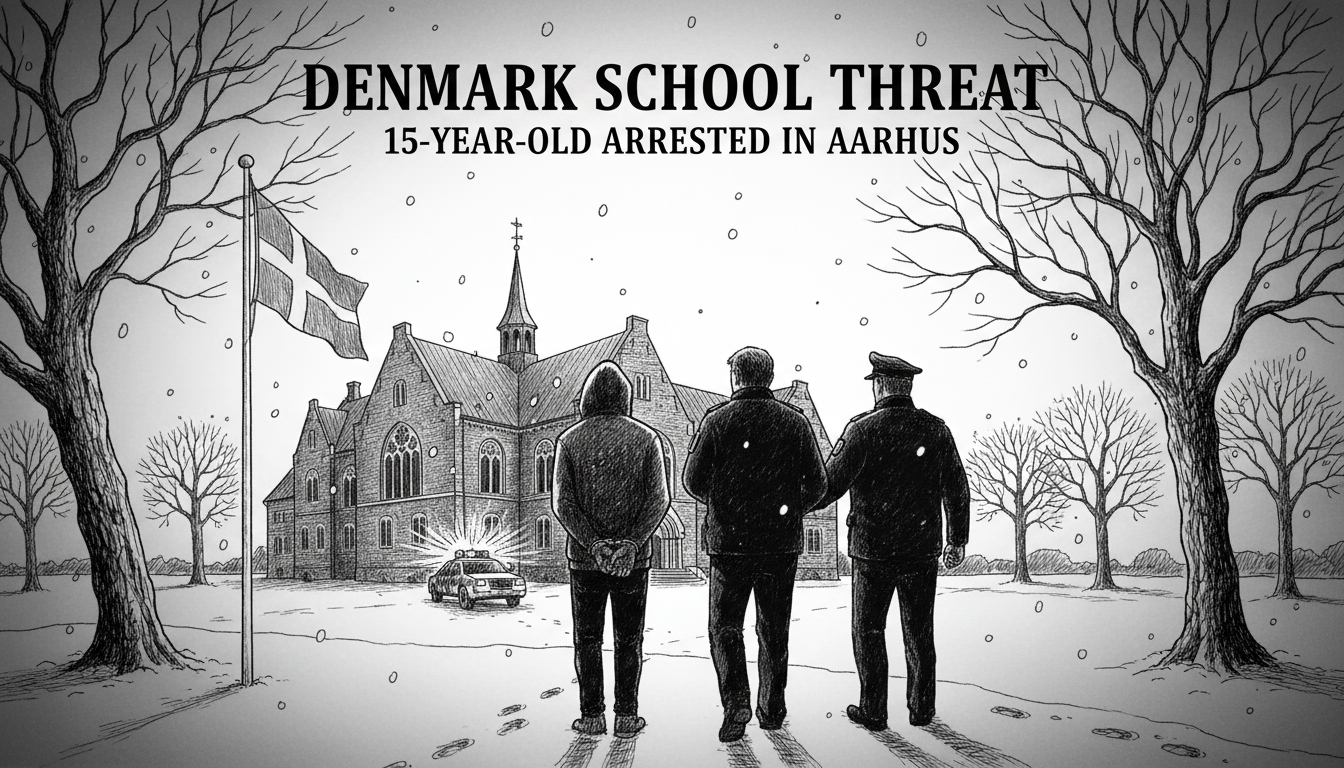
Denmark police arrested a 15-year-old boy at a school on Halmstadsgade in Aarhus N Friday morning. The East Jutland Police received a report at 9:18 AM concerning threatening behavior at the educational institution. Officers confirmed the boy was arrested and charged with making threats against someone's life. He was taken to a police station for questioning. Authorities stressed no one was physically injured during the incident. The swift police response locked down a normal school morning into a scene of anxiety and procedure.
A Morning Disrupted
The incident occurred in a district familiar with both community vitality and social challenges. Aarhus N, a populous area in Denmark’s second city, is a mix of residential blocks, green spaces, and schools. Halmstadsgade itself is lined with apartment buildings and local institutions. For parents receiving notifications, the event ruptured the fundamental expectation of school as a safe place. While physical harm was avoided, the psychological impact of a threat within school walls resonates deeply. It triggers national conversations about safety protocols and youth well-being.
The Neighborhood Context
Aarhus N is a district often discussed in Danish social policy and integration debates. It is a diverse area with a significant proportion of residents with immigrant backgrounds. Municipal reports frequently highlight both its strong community networks and the socioeconomic challenges it faces. Schools here are pivotal community hubs, tasked with education and social integration. An incident like this places immediate pressure on those institutions. They must manage student anxiety while cooperating with a police investigation. The school’s administration now faces the complex task of restoring a sense of normalcy and security.
From my perspective, covering Danish society, such events are never isolated. They intersect with ongoing discussions about youth alienation, resource allocation in the welfare system, and early intervention. Denmark prides itself on its comprehensive support networks. Yet, questions persist about whether they reach every young person in time. This case involves a boy young enough to be in the early years of secondary education. His age shifts the focus from pure punishment to prevention and underlying causes.
Prevention Over Punishment
Danish school safety protocols generally emphasize de-escalation and early threat assessment. Teachers and staff are trained to identify signs of distress or aggression. The goal is intervention long before a situation requires a police call. The fact that this incident reached the level of a life threat suggests a breakdown in that preventive chain. It raises hard questions for educators and social services. Could this have been anticipated? Were there prior signs from the student? The police report does not detail the boy’s background or potential motives.
Criminologists studying youth behavior often point to a constellation of risk factors. These can include social isolation, family issues, mental health struggles, or exposure to violence. In the Danish context, the robust welfare system is designed to mitigate these factors. Youth clubs, school psychologists, and municipal family consultants are standard. Their effectiveness, however, depends on uptake and coordination. A 15-year-old on the path to making serious threats may have slipped through these safety nets.
The Danish Approach to Youth Crime
The Danish legal system treats minors, especially those under 18, with a distinct focus on rehabilitation. For a 15-year-old, the consequences of a threat charge are serious but not automatically punitive. The social authorities will likely become deeply involved. The case may be referred to a social services committee that assesses the need for supportive measures. These could include mandatory counseling, family therapy, or alternative schooling arrangements. The aim is to address root causes, not just sanction the behavior.
This approach reflects a core principle of the Danish welfare model: society has a responsibility to its young. Yet, it often collides with public demands for security and accountability. When a threat disrupts a school, the immediate desire is for removal and harshness. The system, however, is programmed to ask ‘why’ and ‘how can we help’. Balancing these impulses is a constant challenge for policymakers. It tests the community’s faith in rehabilitative justice.
A Community's Response
In the aftermath, the school’s leadership must communicate with shaken students and worried parents. Danish schools typically have crisis management plans for such events. These involve psychologists and ensuring a return to routine is key. The broader Aarhus N community will also process the event. Local social centers and community workers may find themselves addressing heightened fears. They play a crucial role in stabilizing the social environment and preventing stigma.
Events like this, while rare, affect the perception of an entire neighborhood. Areas like Aarhus N already contend with narratives about crime and integration. A single incident can unfairly reinforce stereotypes. Responsible reporting and community dialogue are essential to prevent that. The focus should remain on the specific case and the systemic lessons it offers, not on broad generalizations.
Looking Ahead: Safety and Support
The coming days will see the formal legal process begin for the 15-year-old. Simultaneously, the school and municipality will review their safety protocols. This dual track—justice and prevention—is characteristic of the Danish response. The hope is that intervention now can alter a young person’s trajectory. The success of that intervention depends on resources, expertise, and persistent follow-through.
For Denmark, a country with relatively low school violence, such incidents are profound shocks. They force a re-examination of whether the famed welfare state is connecting with its most vulnerable youth. The investment in schools, social services, and community policing is significant. Yet, the measure of that investment is not in budgets, but in preventing a 15-year-old from feeling that a threat is his only outlet. The Aarhus case is a reminder that safety is not just about police response times, but about the daily, often invisible, work of support and inclusion. As the community moves forward, the challenge is to strengthen that work without succumbing to fear.