
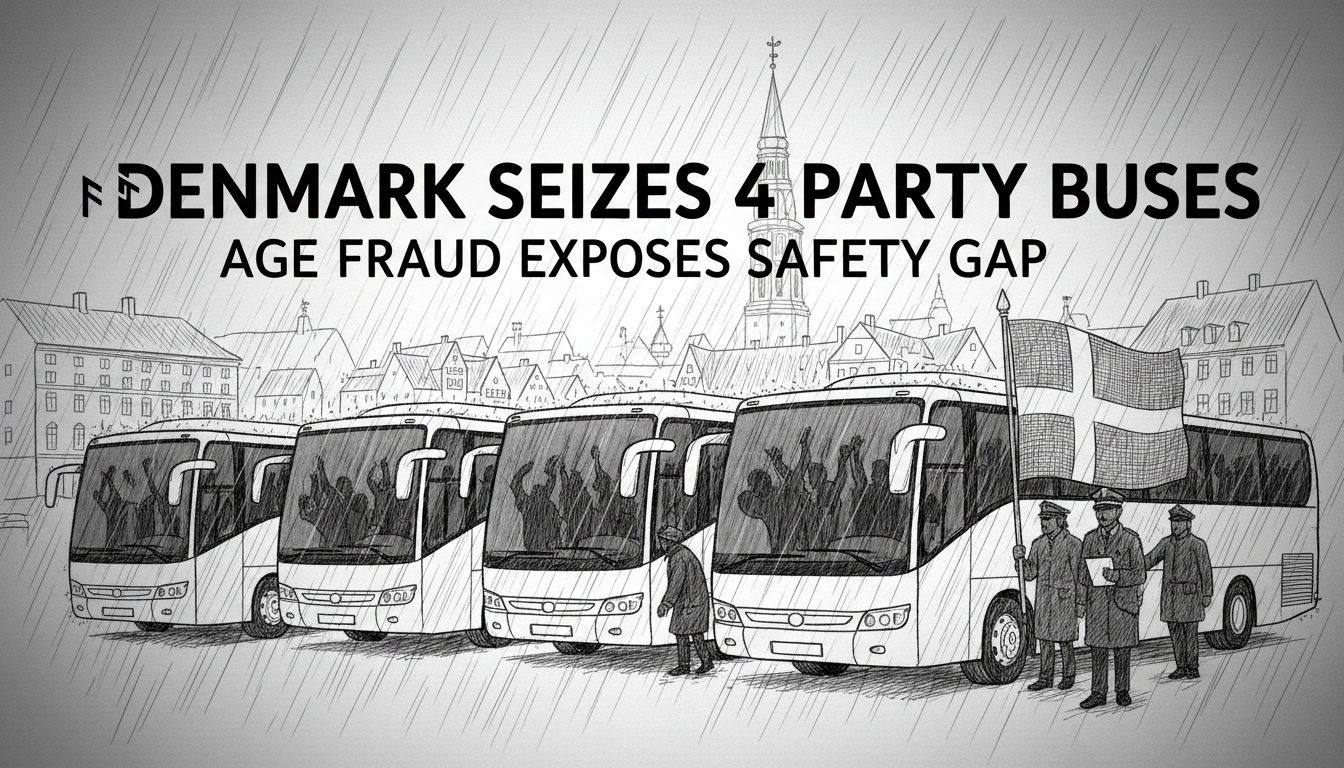
Denmark's party bus industry faces a safety reckoning after police seized four vehicles suspected of fraudulent age registration. The Midt- and West Zealand Police confiscated the buses from an operator believed to have lied about their manufacturing dates. This case exposes a dangerous loophole in Danish vehicle regulations, where buses over 26 years old are exempt from modern seatbelt requirements. For young passengers celebrating with alcohol, this legal gap creates a perfect storm of risk.
A Celebration Turned Regulatory Nightmare
Party buses have surged in popularity across Danish cities like Copenhagen and Aarhus, becoming a staple for birthdays, graduations, and stag nights. The allure is simple: a mobile party venue that transports groups between bars, clubs, and events. Yet, the festive atmosphere inside these rolling discos often masks a critical safety debate. Danish commercial vehicle rules are stringent, but they contain a grandfather clause for historic vehicles. Buses manufactured more than 26 years ago are not mandated to have passenger seatbelts. This exception, intended for classic car enthusiasts, has created a perverse incentive in the party bus trade. Operators can use older, potentially less maintained vehicles without installing lifesaving restraint systems, all while packing them with intoxicated young adults.
The Mechanics of a Dangerous Loophole
The recent police action centers on the allegation that the operator falsified documents to make the buses appear older than they are. By pushing a bus's registered age past the 26-year threshold, an operator avoids the cost and space intrusion of retrofitting seatbelts. "This isn't just about paperwork," a senior traffic police officer, who requested anonymity as the investigation is ongoing, explained. "It's about deliberately circumventing safety standards to maximize profit, putting vulnerable passengers at direct risk." The industry association for passenger transport has now publicly called for legal changes. They argue the current law unfairly pits responsible companies against those exploiting the loophole, creating a race to the bottom on safety. A crash involving an unbelted passenger in a party bus could have catastrophic consequences, especially given the common presence of alcohol.
Balancing Nostalgia and Public Safety
Denmark's welfare model prides itself on preventative safety and social protection. This incident challenges that self-image, revealing a regulatory blind spot. The legal framework struggles to balance preserving historic vehicles with ensuring modern passenger safety. For genuine vintage buses used in tours or weddings, the risk profile is different. They typically carry sober passengers on predictable routes at lower speeds. Party buses, however, operate at night, in urban areas, with a cargo of revelers. The social policy contradiction is stark. "We have strict laws for drunk driving and for club safety," notes Karen Mikkelsen, a social policy researcher at the University of Copenhagen. "Yet we allow a commercial service to transport drunk young people in vehicles without basic safety equipment. It's an inconsistency that needs urgent addressing from both transport and social authorities."
The Human Cost of Regulatory Failure
While no major accidents have been linked to the seized buses, safety advocates warn the system is gambling with lives. "Every weekend, hundreds of young Danes get into these buses thinking it's just part of the fun," says Lars Bjørn, head of a national road safety NGO. "They don't realize their 'party wagon' might be classified as a historic vehicle, exempt from the safety features their parents' car has. It's a failure of both regulation and public awareness." Parents and student unions are increasingly questioning the practice. The debate touches on core Danish values of tryghed (security) and responsible governance. Should the thrill of a mobile party override fundamental passenger protection? Municipalities, which often license these businesses, are now reviewing their local regulations in light of the police investigation.
A Path Toward Safer Celebrations
The solution, according to industry and safety experts, requires closing the legal loophole. Proposals include mandating seatbelts for all vehicles used for commercial passenger hire, regardless of age. Another option is creating a specific license category for party buses with mandatory safety features, including seatbelts, enhanced stability control, and a lower blood alcohol limit for drivers than the general standard. "The market exists because people want the service," the police officer stated. "Our job isn't to stop celebrations. It's to ensure the businesses providing them operate safely and legally. Right now, the law isn't helping us do that effectively." The police seizure is likely the first step in a broader crackdown, signaling to operators that fraud will be pursued.
The Bigger Picture for Danish Society
This case is more than a traffic violation; it's a microcosm of integration between business innovation and social policy. Denmark often encourages entrepreneurial spirit, but within a framework designed to protect citizens. The party bus loophole shows what happens when that framework doesn't evolve with new trends. It also highlights a generational divide in risk perception. For users, mostly in their late teens and twenties, the bus is an experience. For regulators, it's a vehicle subject to decades-old rules. Bridging that gap requires updating laws to reflect how these buses are actually used today, not how all vintage vehicles were used in the 1990s. The coming legislative response will test Denmark's ability to adapt its famous welfare and safety principles to modern forms of leisure and risk.
Will Denmark update its laws to ensure that a night of celebration doesn't end in tragedy, or will outdated regulations continue to allow safety to be optional? The seized buses in Zealand are a warning that the current path is unsustainable. As one city councilor in charge of integration and social services told me, 'Safety isn't a historic concept. It needs to be present tense, especially for our young people.' The party, for this loophole, may finally be over.