
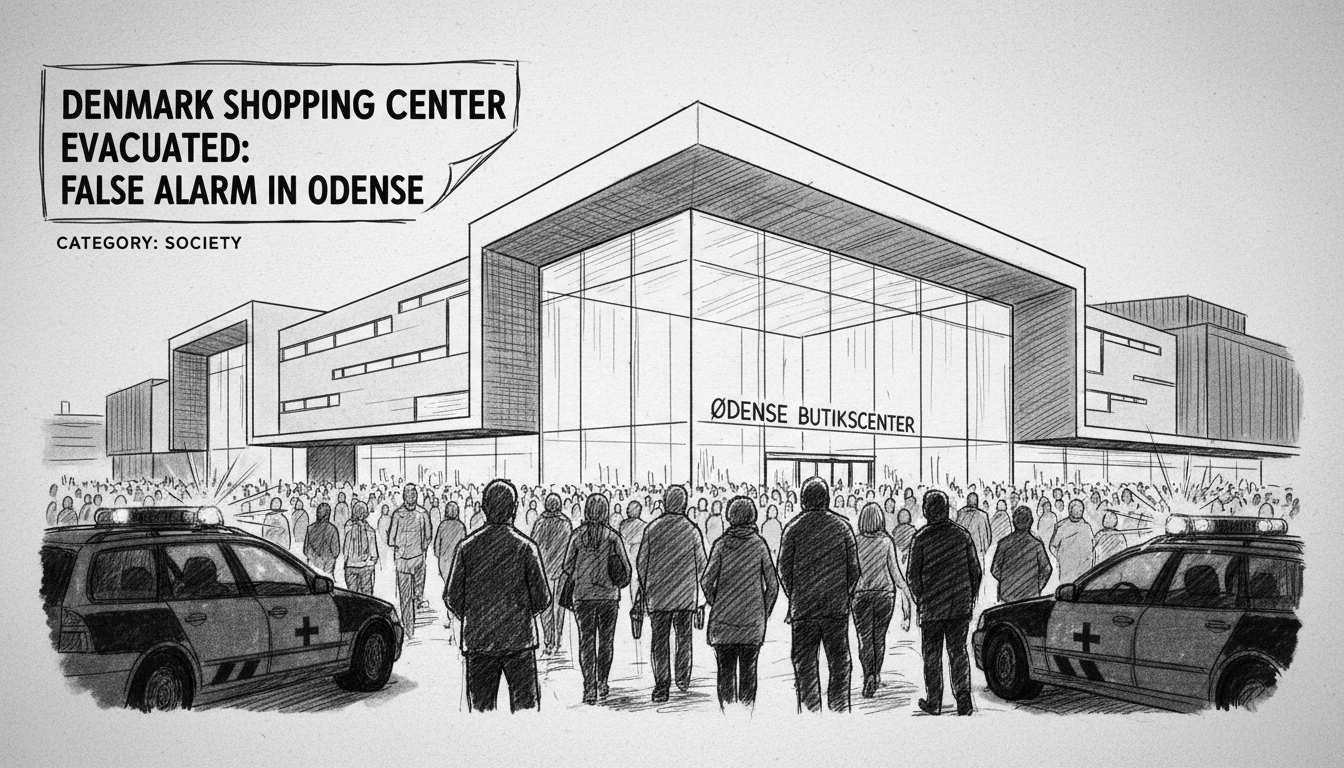
Denmark shopping center evacuations are rare but disruptive events that test public safety protocols. Rosengårdscenteret, a major retail hub in Odense, was evacuated on a busy Saturday afternoon following a public address order. Police later confirmed the incident was a false alarm, with officers arriving only after media inquiries began. This event highlights the delicate balance between precaution and public disruption in Denmark's managed public spaces.
A Saturday Afternoon Disrupted
Shoppers and staff at Rosengårdscenteret were instructed to leave the premises abruptly. The evacuation order came over the center's public address system, creating immediate but orderly confusion. Such incidents, while infrequent, cause significant operational disruption. Retailers lose sales during peak hours, and public trust in the security of everyday spaces can be temporarily shaken. For a Saturday, typically the busiest shopping day, the financial impact on small and large businesses alike would have been immediate.
Police involvement came indirectly. According to the security chief on duty, Henrik Strauss, law enforcement was unaware of the evacuation until local news outlets began contacting the police district. By the time officers arrived at the scene, the process was complete and the alarm had been declared false. This sequence raises questions about communication protocols between private security in large public complexes and the Danish police.
The Protocol Behind the Panic
Evacuation procedures in Danish shopping centers are governed by strict safety regulations. Building managers and security firms must have clear plans approved by municipal authorities and the Danish Emergency Management Agency (Beredskabsstyrelsen). These plans dictate how alarms are raised, how information is communicated to the public, and how coordination with police and fire services should occur. The Rosengårdscenteret incident suggests a possible breakdown in the notification chain.
"The primary goal is always public safety, but part of that safety is ensuring authorities are informed and can manage the external response," says a Copenhagen-based security consultant who has worked on mall safety plans. "An evacuation that the police don't know about can create new risks outside the building, with crowds gathering and traffic potentially being affected without guidance." The consultant spoke on condition of anonymity due to client confidentiality.
In Denmark, false alarms carry a cost. Municipalities can fine businesses for repeated false alerts that unnecessarily draw emergency services. While a single incident like this is unlikely to result in a penalty, it triggers an internal review. Center management will need to examine why the alarm was triggered and why the established protocol for informing police may have failed.
The Ripple Effect on Retail and Public Confidence
The economic impact of an unplanned closure for a center the size of Rosengårdscenteret is substantial. A 2022 report from the Danish Chamber of Commerce (Dansk Erhverv) estimated that an unexpected four-hour closure of a major shopping center can result in collective losses for retailers exceeding 2 million Danish kroner. This figure accounts for lost sales, wasted perishable stock in food courts, and employee costs without revenue.
Beyond the balance sheet, these events affect public perception. Shopping centers in Denmark are more than retail spaces; they function as modern community squares, especially in suburban areas. They are places for socializing, family outings, and community events. A sudden evacuation, even a false one, can make people feel less secure in these everyday environments. Restoring that sense of normalcy and safety is a key task for management in the aftermath.
"Trust is built over time but can be fragile," notes a social researcher specializing in urban spaces. "People need clear communication after an event. Knowing it was a false alarm is one thing, but understanding what caused it and what is being done to prevent a repeat is what rebuilds confidence." The researcher emphasized that Danish consumers expect transparency from the institutions that manage public life.
A Comparative Look at Safety in Public Spaces
Denmark generally enjoys a high level of public safety, and mass evacuations are uncommon. When they do occur, they are most frequently due to technical faults like fire alarm malfunctions or gas leak suspicions. Malicious threats like bomb scares are statistically rare. The response in Odense appears to have been executed calmly, reflecting a public accustomed to following official instructions in emergencies.
This contrasts with evacuation experiences in other international contexts, where panic can be a greater factor. Danish civic culture and trust in authorities often lead to orderly responses. The incident at Rosengårdscenteret, while disruptive, did not result in any reports of injuries or panic, suggesting the safety drills and inherent public composure worked as intended on the ground level.
The focus now shifts from response to review. The center's management, in conjunction with its security provider, must conduct a thorough debrief. Key questions will include the origin of the alarm, the decision-making process for the evacuation order, and the precise failure in alerting the police immediately. Their findings, though likely kept internal, will inform future protocol adjustments not just in Odense, but for similar complexes across Denmark.
The Path Forward: Transparency and Improved Systems
For the shoppers and employees who experienced the evacuation, the lasting impact will be minimal if communication is handled well. A clear statement from Rosengårdscenteret explaining the nature of the false alarm and any steps taken to prevent recurrence would be a standard and expected measure. In Denmark's culture of information access, people appreciate straightforward explanations.
Technologically, this event may prompt investment. Integrated alarm systems that automatically notify both internal security and local emergency services are becoming standard in new constructions. Older centers like Rosengårdscenteret may need to retrofit such systems. It represents an ongoing investment in public safety infrastructure that goes unnoticed until an incident occurs.
The false alarm at Rosengårdscenteret serves as an unplanned drill. It tested the evacuation plans, the public's reaction, and the coordination between private and public safety entities. The results show a public that follows instructions, but a notification system that had a critical gap. In the meticulous Danish approach to societal safety, this gap will not remain open for long. The incident is a reminder that safety is a dynamic process, requiring constant evaluation and adjustment, even in one of the world's most secure countries.