
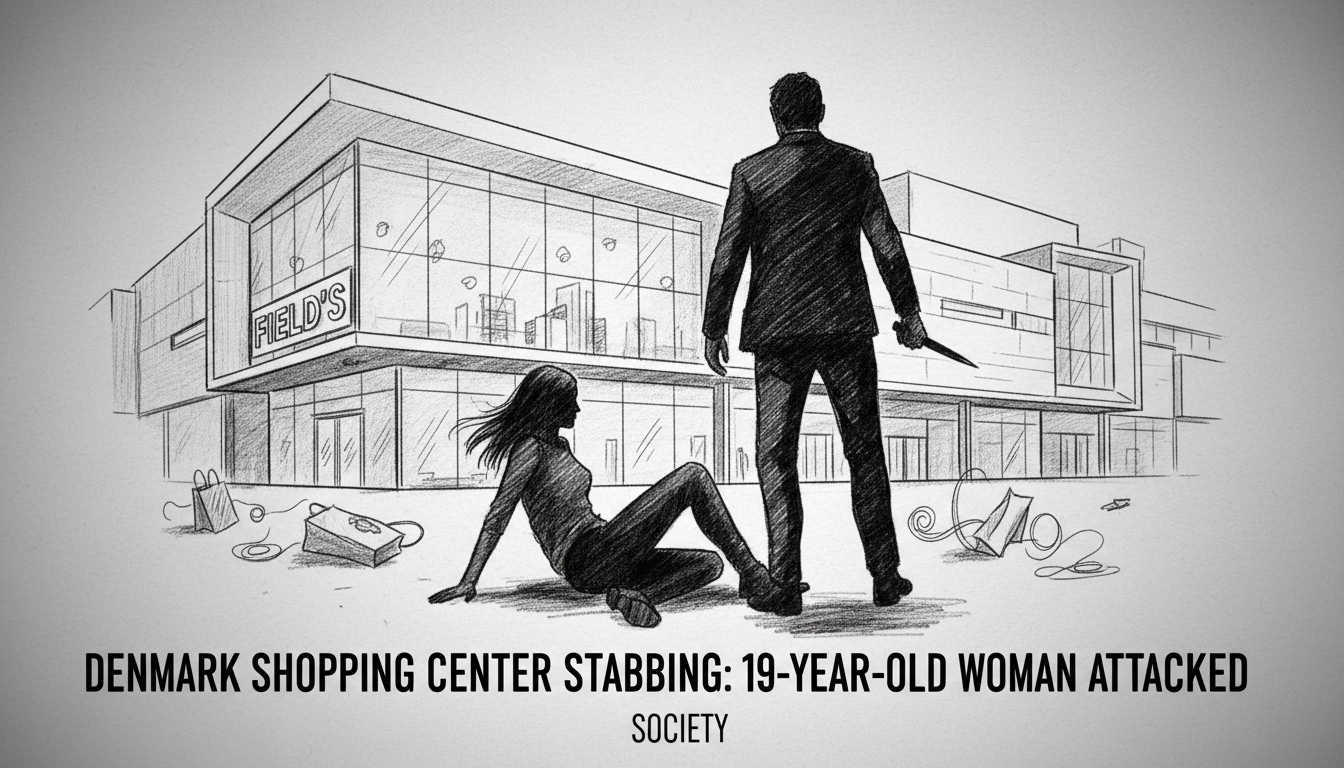
Denmark police are investigating after a 19-year-old woman was stabbed inside the Amager Centret shopping mall in Copenhagen on Friday evening. A 20-year-old man, believed to be known to the victim, is in custody following what police described as a 'tumult' at the location. The incident, reported to authorities at 6:02 PM, has sent shockwaves through the busy retail hub, raising immediate questions about safety in public spaces. The young woman was transported to a hospital with what police later stated were minor injuries.
Vagtchef Rasmus Nielsen of the Copenhagen Police confirmed the arrest and the ongoing investigation. 'There has been tumult on the spot and in that connection, there is a perpetrator who has stabbed a victim with a knife,' Nielsen said. He emphasized the working hypothesis that the two individuals had prior acquaintance. Police remain on scene reviewing video surveillance and conducting witness interviews to establish the full sequence of events.
A Community Left Uneasy
For regular shoppers and employees at Amager Centret, the news transformed a routine Friday into a scene of fear and confusion. Such violent incidents inside Denmark's large, covered shopping centers—often seen as safe, communal spaces—are relatively rare but cut deeply into the public sense of security. The center, located on the island of Amager, serves a diverse local community and is a major retail anchor for the area. This stabbing forces an uncomfortable spotlight onto the challenges of preventing isolated acts of violence, even in monitored, high-traffic environments.
Local resident and frequent shopper, Karina Møller, expressed her anxiety. 'You come here to buy groceries, to meet friends, not to worry about being attacked,' she said. 'It makes you look over your shoulder. My teenage daughter often comes here alone, and now I will be worrying.' Her sentiment reflects a broader community concern that transcends this single case, touching on universal fears about random violence.
The Broader Context of Knife Crime
While Denmark's rates of serious violent crime are lower than in many European counterparts, knife-related incidents remain a persistent focus for law enforcement and social policymakers. Data from the Danish National Police shows that a significant proportion of violent crimes involving weapons are committed by and against young people, often within social networks. This incident aligns with that pattern, given the ages of those involved and the police's assertion of a prior connection.
The response typically involves a dual track: immediate law enforcement and longer-term social intervention. Copenhagen Police have dedicated resources to weapon prevention, including surveillance in nightlife districts and cooperation with security firms at large venues. Yet, as this case demonstrates, incidents can erupt suddenly in any crowded place. Security analyst Lars Jørgensen notes that total prevention is an impossible standard. 'Shopping centers are microcosms of society. They have good security, but they are not fortresses,' Jørgensen explains. 'The goal is rapid response and deterrence, but you cannot frisk every visitor. The ultimate challenge lies in addressing conflicts before people walk through the doors.'
Social Policy and Prevention Strategies
Beyond policing, Danish municipalities and social services run targeted programs aimed at young adults, focusing on conflict resolution, mental health support, and integration. These initiatives are part of the foundational welfare system, designed to offer pathways away from violence. In Copenhagen, community centers and youth clubs in districts like Amager work to provide alternatives and support networks.
Mikkel Hansen, a social worker with the City of Copenhagen, stresses the importance of these front-line services. 'When we see violence between young people who know each other, it often points to unresolved personal conflicts, psychological distress, or social pressures,' Hansen says. 'Our role is to be a visible, trusting presence before a crisis occurs. It is complex, underfunded work, but it is essential for creating safer communities.' He argues that investing in these social safeguards is as crucial as funding police work.
Experts point to the need for sustained investment in these areas, particularly following the strains of recent years on youth mental health. The Danish government has periodically launched action plans against gang violence, which often include knife crime measures. However, isolated interpersonal violence, as suspected in this Amager case, exists in a different category, requiring nuanced approaches that blend social care with judicial measures.
Looking Ahead: Safety and Public Trust
The immediate legal proceedings will now follow their course. The arrested 20-year-old man awaits formal charging as police finalize their evidence. The victim's recovery from her physical injuries, thankfully minor, will be swifter than the psychological impact on her and the community's eroded sense of security.
For the management of Amager Centret and similar complexes nationwide, the incident prompts inevitable reviews of security protocols. These centers balance open access with the need for safety, a difficult equilibrium to maintain. Public confidence is their currency, and events like this can damage it significantly.
As a society, Denmark continues to grapple with how best to protect its citizens in public spaces while addressing the deeper roots of violence among youth. This stabbing in a Copenhagen shopping center is not just a police blotter entry. It is a stark reminder that safety is a fragile construct, built on both effective policing and a healthy, supported social fabric. The question for Copenhagen now is how this event will influence the ongoing dialogue about security, youth, and community in urban Denmark.