
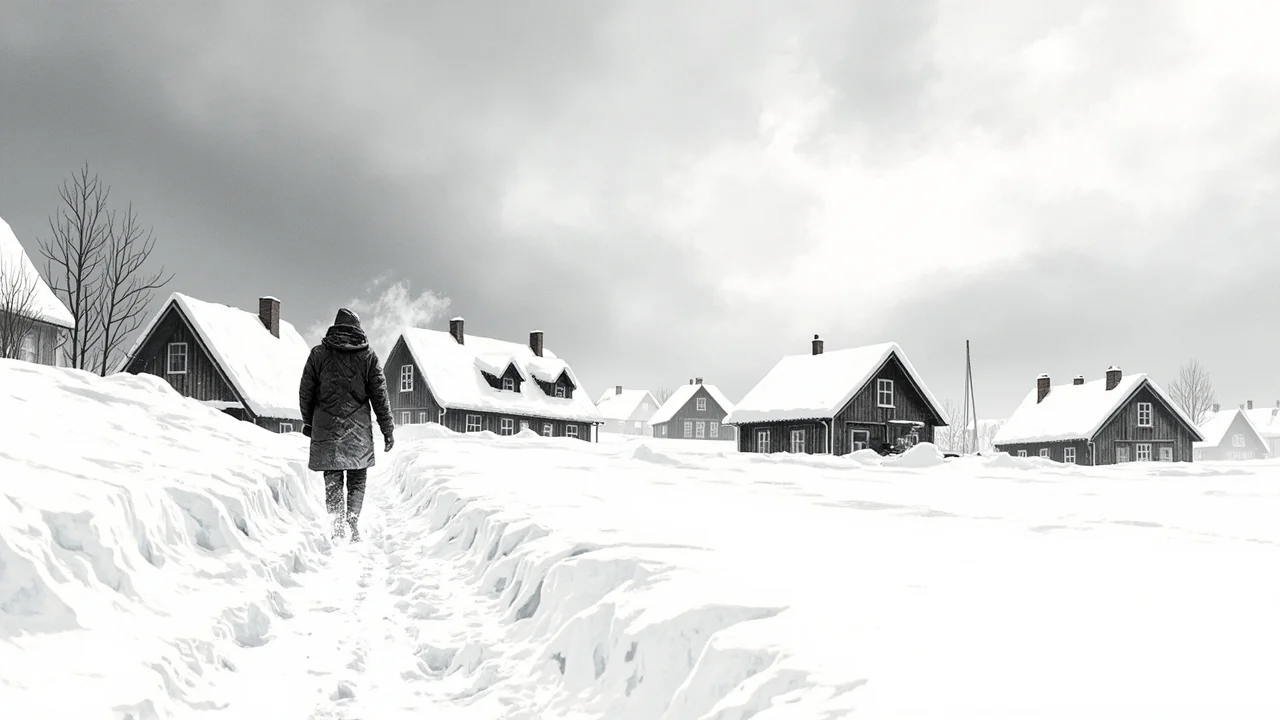
Denmark's Meteorological Institute has issued a severe snowdrift warning for the Nordjylland region, setting the stage for a disruptive Monday morning. This immediate crisis, affecting the entire area from 6 AM Monday to 1 AM Tuesday, transcends mere weather reporting. It strikes at the core of daily Danish life, testing infrastructure and community resilience. As someone who analyzes Danish society news and integration daily, I see such events as acute stress tests for our social policies and welfare systems. The warning specifically highlights significant challenges for traffic and mobility, prompting urgent municipal responses across North Jutland.
Immediate Threats and Regional Response
Nordjylland residents awoke to official alerts predicting dense snowdrifts and hazardous travel conditions. Local authorities in municipalities like Aalborg and Hjørring have activated contingency plans, focusing on road clearance and public safety announcements. The Danish Road Directorate is coordinating with police to manage expected disruptions on major routes like the E45. This operational swiftness reflects the ingrained Danish approach to collective security, a principle central to the welfare system. However, the real-time deployment also reveals the logistical pressures faced by rural and urban centers alike. Social media channels are flooded with practical advice, from school closures to delayed public transport, showcasing a society in proactive mode.
Community Impact and Vulnerability
Beyond traffic snarls, such weather events disproportionately affect vulnerable populations. Newcomers to Denmark, including immigrants and refugees, may lack experience with harsh Nordic winters. Community centers in Copenhagen and Aarhus often report that integration programs include climate adaptation guidance. In Nordjylland, local social centers are now pivotal points for disseminating warnings in multiple languages. "Our priority is ensuring no one is left isolated," a community organizer in Aalborg told me, emphasizing outreach to elderly and non-Danish-speaking residents. This highlights how Denmark's immigration policy must account for environmental factors. The storm's timing, early on a weekday, exacerbates risks for low-income workers reliant on punctual commutes, probing the limits of social safety nets.
Municipal Coordination Under Pressure
Danish municipalities are the frontline responders, embodying the decentralized welfare model. In Nordjylland, crisis staff are assessing shelter options and emergency supplies. Aalborg Municipality's integration office, for instance, is coordinating with volunteer networks to check on vulnerable families. This mirrors broader Danish social policy where local governance is tasked with both routine services and emergency management. The response involves a complex dance between meteorologists, road crews, and social workers. It is a practical demonstration of the much-discussed Danish cohesion, yet also a moment where resource gaps can surface. Past weather incidents have shown that prolonged disruptions can strain municipal budgets, affecting longer-term integration projects and community programs.
Analyzing Societal Resilience
From my perspective covering Danish society news, this event offers critical insights. Denmark's welfare system is designed for stability, but acute shocks like severe weather reveal interdependencies. For example, school closures impact working parents, testing parental leave policies and workplace flexibility. Public transportation halts can isolate those in peripheral housing areas, often home to newer immigrant communities. Statistics from previous years indicate that weather-related disruptions in Denmark cause significant economic losses, though exact figures for this event are pending. The societal response, however, is telling. The collective ethos, where neighbors are encouraged to check on each other, aligns with Danish values of mutual care. Yet, it also underscores ongoing challenges in ensuring all community members are equally prepared and informed.
Expert Perspectives on Preparedness
I spoke with a policy analyst from a Copenhagen think-tank focused on urban resilience. "Denmark's infrastructure is generally strong, but climate change increases the frequency of extreme weather," she noted. This necessitates evolving social policies that incorporate climate adaptation into integration efforts. Municipal emergency plans now often include specific protocols for reaching non-Danish speakers, a direct outcome of lessons from past storms. Community leaders emphasize that trust-building during crises can strengthen social bonds across diverse groups. However, experts also warn that consistent funding for municipal social centers is crucial for sustained preparedness. This event in Nordjylland may prompt renewed debate on allocating resources for climate resilience within the welfare state framework.
Looking Beyond the Snowfall
As the snowdrifts subside by Tuesday, the aftermath will offer a clear view of Danish societal strengths and weaknesses. Will the response be seen as a model of efficient welfare operation, or will it expose fissures in community support networks? For immigrants and marginalized groups, the experience can shape their perception of Danish society positively or negatively. The role of digital communication in crisis management will also be scrutinized, especially for those with limited digital literacy. Ultimately, this weather warning is more than a meteorological bulletin. It is a real-time case study in how Denmark's social policy and integration models perform under pressure. The coming days will reveal whether our collective response fosters greater inclusion or highlights areas needing urgent attention in our ever-evolving society.