
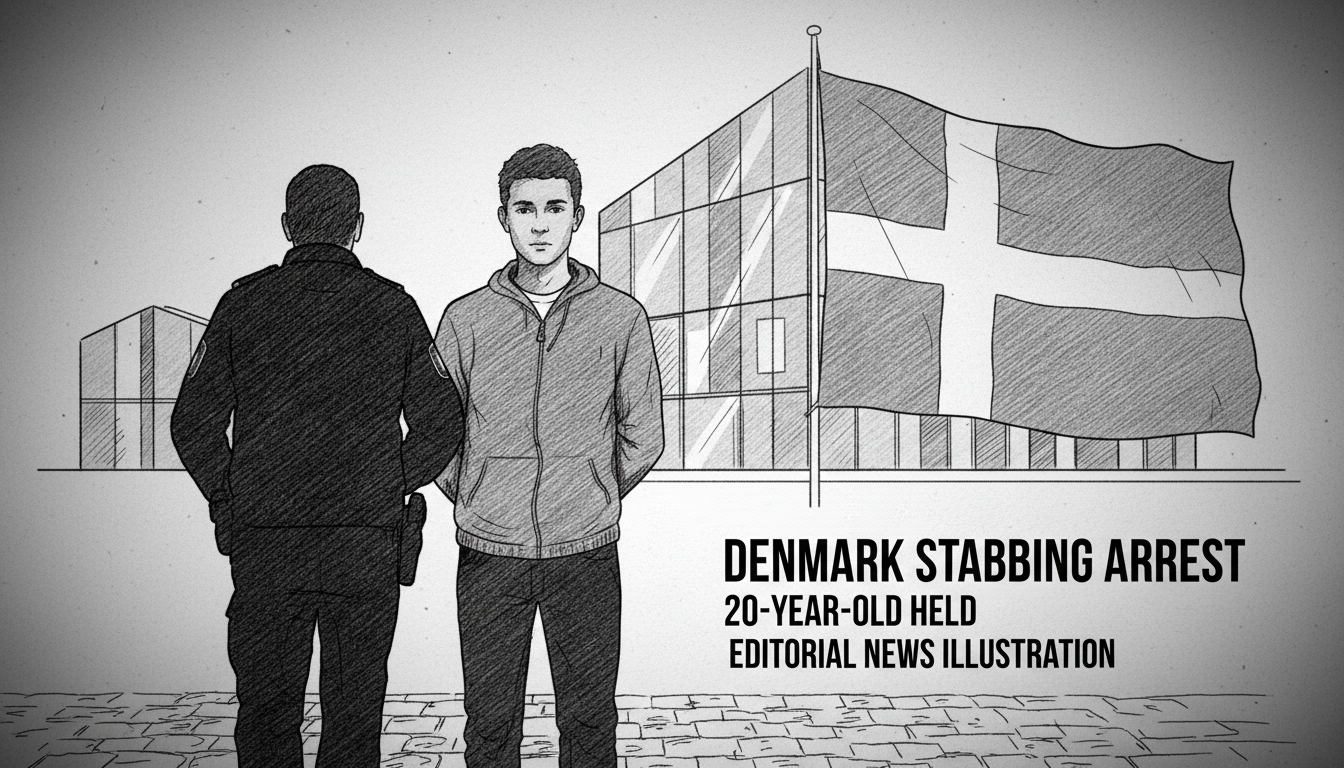
Danish police have recorded over 250 violent knife incidents annually in recent years, but a Friday night stabbing inside a Copenhagen shopping center has jolted the capital's sense of public safety. A 19-year-old woman was stabbed at Amager Centret, leading to the arrest of a 20-year-old man believed to be known to her. The attack occurred amidst tumult in the busy retail space shortly after 6 PM, sending shockwaves through the surrounding community.
A Friday Evening Shattered
Police were called to the scene at Amager Centret at 6:02 PM by witnesses. The shopping center, a major retail hub for the Amager borough, was filled with Friday evening shoppers when the violence erupted. Copenhagen Police Duty Chief Rasmus Nielsen confirmed the arrest. 'There has been tumult on the spot and in that connection there is a perpetrator who has stabbed a victim with a knife,' Nielsen said in a statement. He emphasized the police's working hypothesis that the two individuals had prior acquaintance. The victim was transported to a hospital with what police described as light injuries.
The Investigation and Immediate Aftermath
Police remained on site to investigate, reviewing video surveillance and conducting witness interviews. The precise charges against the detained 20-year-old man were still being determined as forensic work continued. No other individuals are believed to have been involved in the direct attack. For residents of Amager, an island municipality of Copenhagen known for its diverse population and dense urban living, the incident sparked immediate concern. Such overt violence in a controlled, public space like a shopping center feels particularly invasive, challenging norms of everyday security.
Knife Violence in the Danish Context
While this single act is severe, statistically, serious knife crime remains relatively uncommon in Denmark. According to the latest data from the Danish National Police, incidents involving knives represent a small fraction of overall violence, which itself has seen a general decline in the past decade. Denmark's homicide rate is among the lowest in the world, typically recording under 50 cases per year. Most violent crimes, when they do occur, happen between individuals who know each other, often in private settings rather than public retail spaces. This context makes the Amager Centret stabbing an alarming outlier, not a indicator of a widespread trend.
Expert Analysis: Relationships and Public Space Security
Criminologists stress that the alleged prior connection between victim and suspect is a critical focal point. 'When violence spills from a private dispute into a public, crowded arena, it raises different societal alarms,' notes Lars Holmberg, a professor of criminology at the University of Copenhagen. 'The primary risk factors often lie in the dynamics of specific relationships, not random predatory behavior. However, the location forces us to examine the security and conflict de-escalation protocols in spaces designed for community commerce.'
Security in Danish shopping centers typically relies on a combination of visible patrols, CCTV, and design that avoids hidden corners. Amager Centret, like most major malls, has such measures in place. The effectiveness of these systems is now under scrutiny, not just for apprehending suspects after the fact, but for potentially preventing escalations. Some experts advocate for increased training for security and retail staff in recognizing and mediating heated conflicts before they turn violent.
Community Impact and the Path Forward
The incident briefly disrupted the normal rhythm of a key community space. For local families and business owners, the psychological impact of violence in a familiar, everyday environment can linger. Community policing teams in Copenhagen often work to maintain dialogue with shopping center management and local youth clubs to foster early intervention strategies. The Danish welfare model, with its strong social services and youth outreach programs, is frequently cited as a preventative tool against alienation and violence. Integration policies that focus on education, employment, and social inclusion are seen as long-term deterrents to crime.
However, isolated acute incidents like this one test public confidence. They prompt municipal discussions about the balance between open, accessible public spaces and necessary security. Copenhagen's Mayor, Sophie Hæstorp Andersen, has previously emphasized investment in social cohesion as the bedrock of safety. The city funds numerous local activity centers and integration projects, particularly in diverse districts like those on Amager, aiming to address root causes of social friction.
A Look Ahead: Justice and Healing
The judicial process for the arrested suspect will now begin. Danish law prescribes severe penalties for acts of violence, with sentencing considering the weapon used, the intent, and the resulting injuries. As the police investigation concludes, the court system will determine the appropriate consequences. For the 19-year-old victim, the path involves physical recovery and the longer-term process of overcoming the trauma of a very public attack.
This stabbing serves as a stark, painful reminder that no society is immune to sudden violence. Yet Denmark's response will likely be measured, focusing on a thorough legal process, support for the victim, and reinforced commitment to the community-level social policies that have long kept its crime rates low. The ultimate test is whether this single, shocking event fractures trust or strengthens the collective resolve to maintain safe, inclusive public spaces for all Copenhagen residents.