
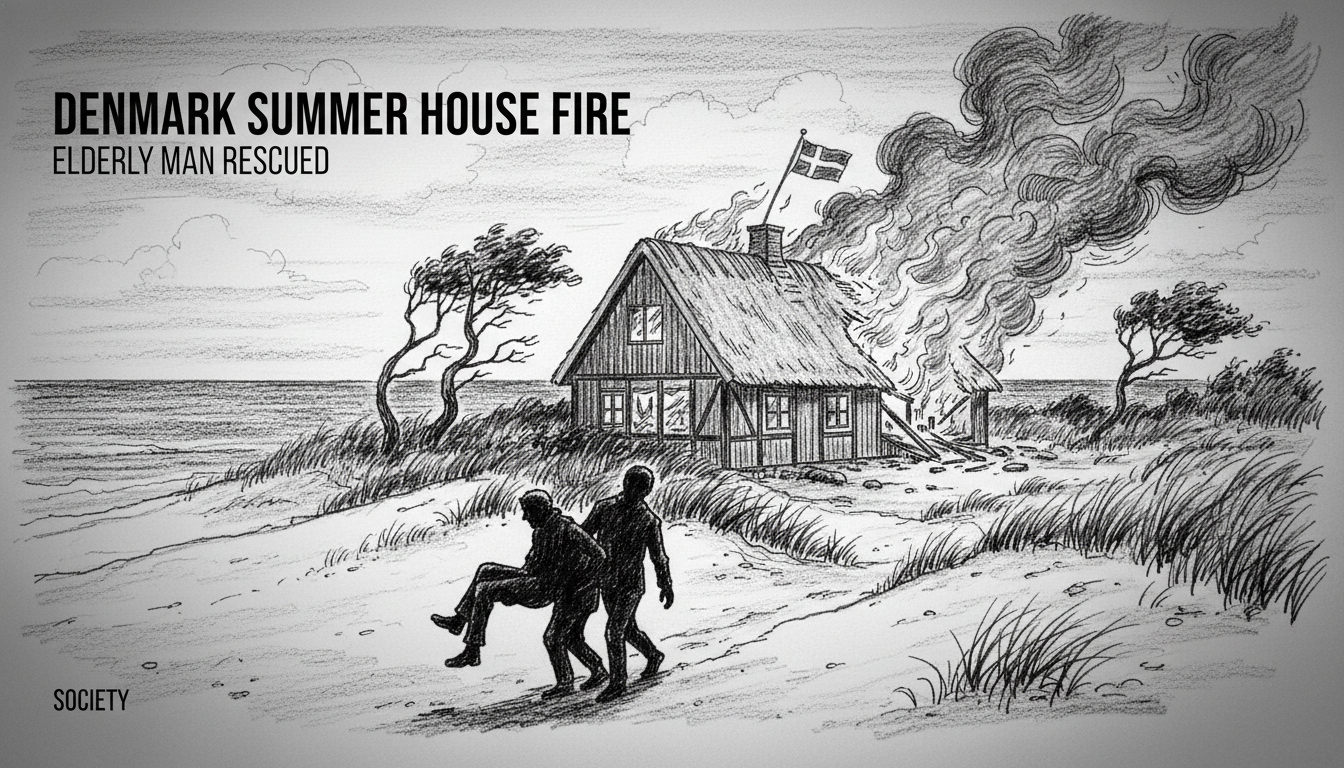
A summer house in the Danish coastal town of Juelsminde burned to the ground Saturday after a routine chore with a wood stove sparked catastrophe. The dramatic rescue of an elderly man by quick-acting neighbors highlights both community spirit and the persistent fire risks facing Denmark's iconic holiday homes. Emergency services were alerted at 3:21 PM to the blaze on Engbo Road, where flames quickly consumed the wooden structure.
Neighbors pulled the man to safety before the fire engulfed the building entirely. Police reported the man was examined by ambulance personnel but escaped physical injury. The emotional shock of losing a home, however, is a different kind of wound. Watching decades of memories turn to ash is a profound loss that no medical check can measure.
The Fateful Mistake on the Terrace
The fire's origin was tragically mundane. According to the police duty officer, the man was handling ash from a wood-burning stove. He emptied the ash onto the wooden terrace of the summer house, likely assuming the material was cold. Embers hidden within the ash quickly ignited the dry timber. From the terrace, the fire raced to the roof, making the structure a total loss within minutes.
This sequence underscores a common and dangerous misconception about ash disposal. 'It looks inert, but ashes can retain heat for days,' says Lars Jensen, a fire safety instructor with over twenty years of experience. 'A single ember is enough to start a catastrophic fire, especially in older, dry wood constructions.' The incident serves as a stark, seasonal reminder for the hundreds of thousands of Danes who own or visit sommerhuse.
A Community Response in Crisis
The successful rescue underscores the vital role of community vigilance, particularly in seasonal areas. Summer house districts can be quiet outside peak holidays, with slower emergency response times than in cities. In this case, neighbors acted as first responders, their intervention proving decisive. The Southeast Jutland Fire Service deployed four vehicles and eleven firefighters to the scene for extensive extinguishing work.
Police confirmed the fire did not risk spreading to neighboring properties, a critical fact in areas where homes are often nestled close together. The Juelsminde area, popular for its marina and holiday atmosphere, is dotted with similar wooden structures. A major fire spreading through such a community is a nightmare scenario for local emergency planners.
The Recurring Risk in Wooden Structures
Denmark's summer house culture is deeply cherished, but the architectural charm often comes with inherent risk. Many classic sommerhuse are built from wood, sometimes decades old, and located in remote areas. They are used intensively in summer and winter, with wood-burning stoves and fireplaces as common heat sources. This combination creates a perennial fire safety challenge.
National fire data consistently shows a spike in incidents during cold months, frequently linked to heating appliances and chimney fires. A report from the Danish Emergency Management Agency notes that improper disposal of ashes is a leading cause of ignition in residential fires outside urban centers. The Juelsminde fire is a textbook example of this statistical trend becoming a personal disaster.
Expert Advice for Seasonal Safety
Fire safety experts advocate for simple, non-negotiable protocols for summer house owners. 'Always use a metal ash bucket with a tight-sealing lid,' emphasizes Lars Jensen. 'Never use cardboard boxes or plastic containers. The bucket should be placed on a non-combustible surface like stone or gravel, well away from the house, deck, or any flammable materials.'
Jensen recommends letting ashes cool for a minimum of three to four days before disposal, and even then, treating them with extreme caution. Beyond ash management, he stresses the lifesaving importance of working smoke detectors in every room and a fire extinguisher readily available. These measures are not just bureaucratic recommendations; they are the frontline defense against losing everything.
Beyond the Ashes: A National Conversation
While this fire ended with a thankful rescue, it prompts a broader discussion about preventative safety culture. Municipalities in popular summer house areas run periodic awareness campaigns. Yet, the familiarity and comfort of a holiday home can sometimes lead to a relaxation of the safety rigor applied in primary residences.
Integrating safety into the very ritual of closing up a summer house—checking detectors, ensuring heating appliances are off and cold, removing potential hazards—is crucial. For an aging population of summer house owners, this also involves acknowledging physical limitations when handling tasks like stove maintenance or ash removal.
The man in Juelsminde is safe, thanks to his neighbors. His home is gone, a loss that resonates in a nation where the summer house represents family, leisure, and a deep connection to nature. This story is a powerful, charred reminder that safety must be as integral to that idyllic picture as the porch and the view. How many more warnings written in smoke will it take for these practices to become as automatic as locking the door?