
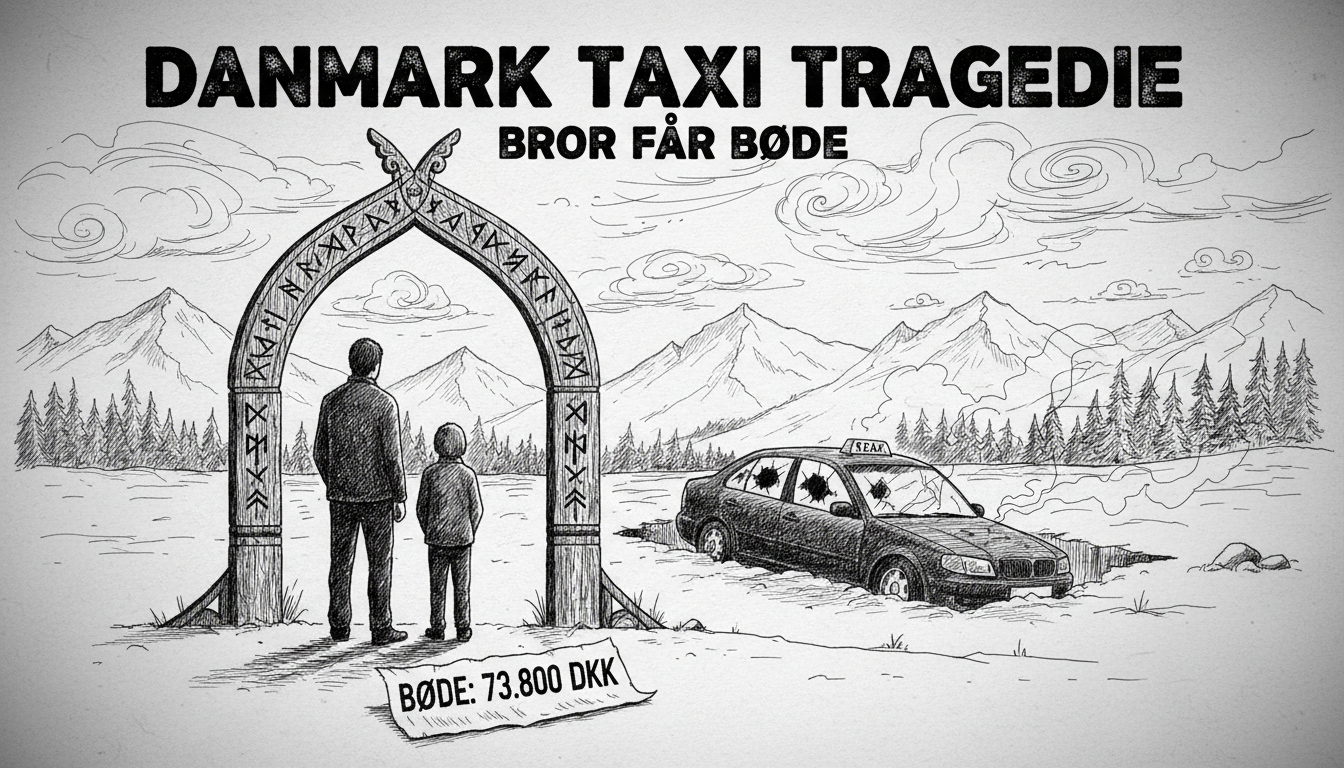
Denmark's taxi industry faces a profound safety and legal crisis after a driver's death led to his brother and employer being fined by the national labor authority. Yamen Hussein Abu Sweid, a 27-year-old taxi driver, was stabbed in the neck by a passenger on March 27, 2025, while transporting the man to a psychiatric emergency room in Roskilde. He died from his injuries days later. Now, the Danish Working Environment Authority, Arbejdstilsynet, has fined the driver's brother and employer, Mohammd Abu Sweid, 73,800 kroner for violating the Working Environment Act by failing to ensure the job was performed safely.
"It was the perpetrator who committed the murder, it was not me," Mohammd Abu Sweid said. "I experience the Working Environment Authority's assessment as very unreasonable, and it puts a lot of pressure on me personally, in a period where I am already living with the loss of my brother."
The case exposes a raw nerve in Denmark's system for transporting vulnerable individuals, raising urgent questions about employer liability, public service contracts, and the protection of workers in high-risk situations.
A Fatal Night and a Devastating Aftermath
On that night in late March, Yamen Hussein Abu Sweid received a job through the Flextrafik system, a public service for transport in rural areas or for people with special needs. His company, Marias Taxa, operated under contract with the regional transport authority Movia. The booking included the passenger's name, address, and phone number, along with instructions to drive him to the psychiatric emergency department at Roskilde Hospital.
During the journey, the passenger attacked Yamen with a scalpel, stabbing him in the neck. The young driver succumbed to his wounds shortly after. The perpetrator, a mentally ill man, is facing criminal prosecution. For the victim's family, the tragedy was compounded by an official letter from the state.
Mohammd Abu Sweid, who owned and operated Marias Taxa, was not only grieving his younger brother but was soon deemed professionally responsible. Arbejdstilsynet concluded he had breached section 83 of the Working Environment Act, stating he was responsible for ensuring the work involving bus transport of psychiatric patients was "planned, arranged, and carried out in a fully responsible manner from a safety perspective." The authority found he had not effectively prevented the company's employees from being exposed to violence during work.
The Weight of Legal Responsibility
The 73,800 kroner fine is a direct consequence of that legal assessment. For Mohammd, the financial penalty is secondary to the moral burden it represents. In the wake of his brother's killing, he made the decisive choice to terminate Marias Taxa's contract with Movia Flextrafik, believing the task of transporting psychiatric patients was simply too dangerous.
"I chose to stop the collaboration with Movia Flextrafik precisely because I thought it was far too dangerous to drive with psychiatric patients," he explained. His decision sparked a brief media debate about safety protocols in such transport services.
A critical point of contention in the case is the lack of specific guidance. The Arbejdstilsynet's notice does not detail what specific safety measures Mohammd should have implemented in the vehicle. Furthermore, Mohammd states he never received any prior warning, specific instruction, or safety protocol from Movia or any other public authority indicating that transporting psychiatric patients required special precautions beyond standard taxi operation.
This leaves a central question unanswered: What could a small business owner realistically have done to prevent a sudden, violent attack by a passenger in distress?
Expert Analysis: A Legal and Ethical Grey Zone
Legal experts note this case sits in a challenging grey area of occupational safety law. The Working Environment Act imposes a broad, strict liability on employers to ensure a safe working environment. This principle is clear when dealing with machinery, chemicals, or repetitive strain. It becomes vastly more complex when the primary risk stems from the unpredictable actions of a third party, especially in a public-facing service role.
"The law's intent is absolute: protect the worker," said a Copenhagen-based labor law attorney who preferred not to be named. "But its application here tests the limits of an employer's control. Can a taxi company owner be expected to foresee and prevent a single, acute psychotic episode leading to violence? The Arbejdstilsynet is saying yes, by virtue of the known client group. This ruling will send shockwaves through any small business providing transport for social or healthcare services."
Occupational safety analysts point to a systemic gap. If transporting individuals in psychiatric crisis is an essential public service—which it is—then the responsibility for defining and resourcing the necessary safety protocols must be shared. This includes the contracting public authorities like Movia and the healthcare system that issues the transport requests.
"The contractor, in this case a small taxi firm, is the final link in a chain," said an independent safety consultant. "If the system provides no specific training, no risk assessment guidelines, and no safety equipment like mandatory partitions or alarm systems for these specific jobs, can we fairly place the entire legal onus on the individual business owner? This case suggests the authority believes we can, and that is a significant shift."
A Brother's Grief and a Broader Reckoning
For Mohammd Abu Sweid, the personal and professional are inextricably linked. He lost a family member and an employee in one violent act. Now, the state has formalized a portion of the blame onto his shoulders through an administrative fine. The emotional impact is profound.
The case transcends one family's tragedy. It highlights the precarious position of small contractors within Denmark's large public sector outsourcing model. These companies often operate on thin margins and rely on the specifications provided by the contracting authority. When those specifications are silent on critical safety aspects for high-risk tasks, the small business bears the ultimate risk.
Following the incident and Mohammd's termination of the contract, questions were raised about the safety of Flextrafik drivers. However, a comprehensive review of national standards or mandatory safety upgrades for vehicles used in psychiatric patient transport does not appear to have materialized.
This ruling by the Arbejdstilsynet could force that conversation. It establishes a precedent that the employer's duty of care extends to preventing violence from service users in specialized transport. The logical next step is for the industry, the unions, and the public authorities to collaboratively define what "effective prevention" looks like in practice. Options could include mandatory safety screens, duress alarms linked directly to authorities, specific de-escalation training for drivers, or even a requirement for two staff members during certain transports.
Looking Ahead: Safety, Liability, and Systemic Change
The death of Yamen Hussein Abu Sweid is a heartbreaking human story. The fine levied against his brother is a stark legal and administrative response. Together, they create a catalyst for a necessary and difficult discussion about responsibility in Denmark's welfare state.
Who is ultimately accountable for the safety of workers executing public service mandates? Is it the small business owner who signed the contract, the regional transport authority that drafted it, or the healthcare system that identifies the need for transport? The Danish Working Environment Authority's decision places the weight squarely on the first link.
This approach may drive improved safety standards through fear of liability. It may also deter small operators from taking on socially necessary but high-risk public contracts, potentially reducing service availability. The balance between worker protection and viable service provision is delicate.
As Mohammd Abu Sweid navigates his grief and contests what he sees as an unjust penalty, the industry watches. The outcome of any appeal, and the policy reactions that follow, will determine whether this tragedy leads to clearer, shared safety protocols or simply leaves individual business owners bearing an impossible burden. The memory of a young driver lost on a quiet road to Roskilde demands more than a fine; it demands a systemic solution that protects every driver who answers the next call.