
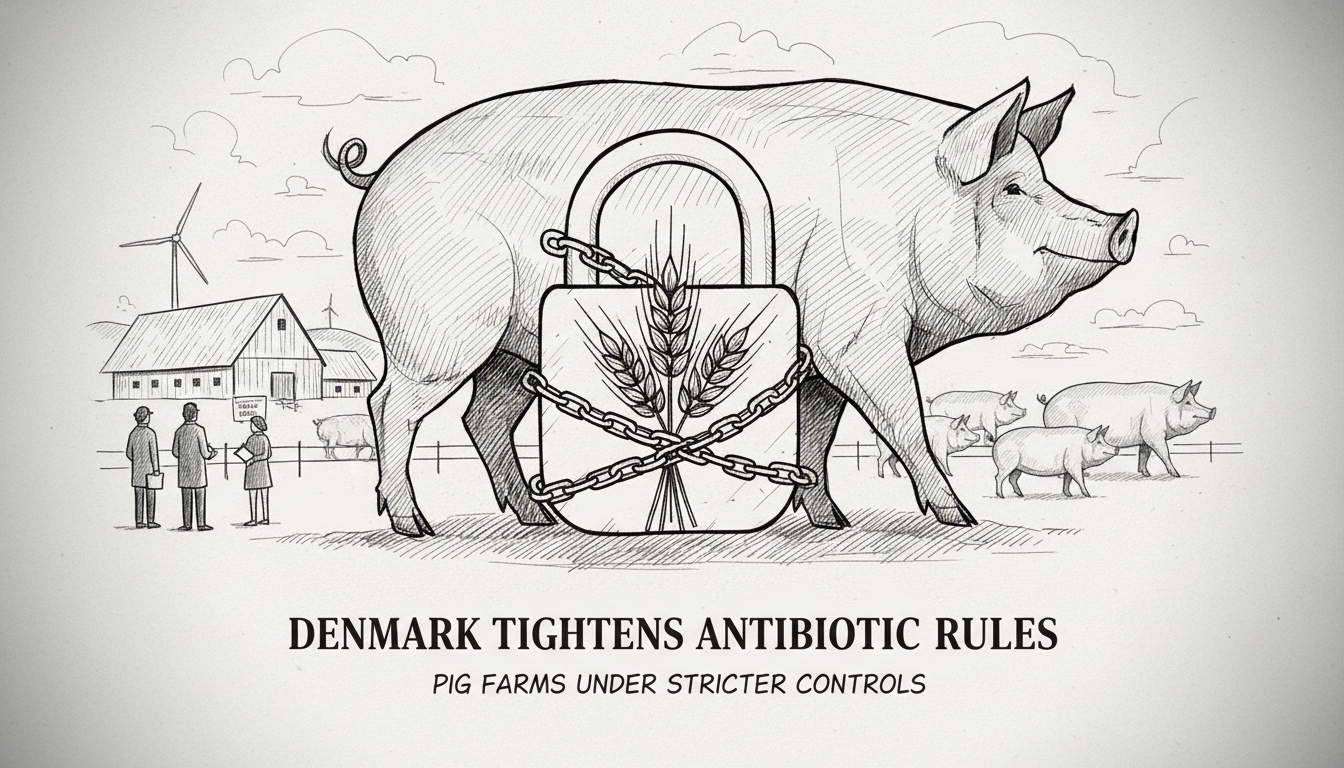
Danish pig farmers face stricter limits on antibiotic use starting next year. Food Minister Jacob Jensen announced a twenty percent reduction in the permissible threshold. This move targets farms raising slaughter pigs and weaners specifically. The decision comes as antibiotic consumption in Danish pig production shows an unwelcome increase. The government aims to protect both animal welfare and public health with this policy shift.
Danish authorities operate a yellow card system for antibiotic oversight. Farms exceeding set limits receive official warnings and mandatory action plans. They then have nine months to reduce usage below the threshold again. Enhanced supervision from the food agency follows, with farmers covering the inspection costs. Minister Jensen emphasized antibiotics remain vital for treating sick animals. Their use requires careful consideration to prevent resistance development, he noted.
Recent data reveals a concerning trend despite political goals. Danish pig production used nearly seventy-three tons of antibiotics in the most recent full year. This marked a two percent increase from the previous year's figures. The national technical university and the serum institute compile these consumption reports. Minister Jensen acknowledged Denmark's global leadership in reducing agricultural antibiotic use. He stated the new rules aim to maintain that leading position proactively.
This is not the first ministerial attempt to curb antibiotic use in stables. A previous environment and food minister introduced similar restrictions several years ago. The repeated focus highlights the policy's difficulty and persistent challenge. Agricultural practices and disease pressures complicate reduction efforts consistently. Farmers balance animal health needs with regulatory compliance constantly. The new stricter limits will test this balance more severely from the next calendar year.
From a broader Danish society perspective, this policy intersects with several key values. Denmark's welfare system emphasizes preventive care and sustainable practices. Its food production sector operates under high transparency and regulatory standards. The integration of scientific data into policy-making reflects a systematic approach. This case shows how public health concerns can drive agricultural regulation directly. It also demonstrates the continuous adjustment of Denmark's social contract around food safety.
International readers might wonder why this matters beyond Denmark. Antibiotic resistance is a global health threat recognized by the WHO. Intensive livestock production contributes to this problem significantly. Denmark's actions set precedents for other pork-exporting nations to consider. The Danish model often influences EU agricultural policy discussions too. For consumers, it reinforces questions about production methods behind their food. The policy essentially makes Danish pork slightly more expensive to produce, but potentially safer for everyone in the long term.
The honest analysis here is straightforward. The government is reacting to data showing backsliding on a prior commitment. Farmers face real economic pressures that can incentivize antibiotic use as a preventive tool. Stricter limits without support for alternative disease management could strain producers. The policy succeeds only if it reduces usage without harming animal welfare. That is a difficult technical and economic challenge for the agricultural sector to solve in a short timeframe.