
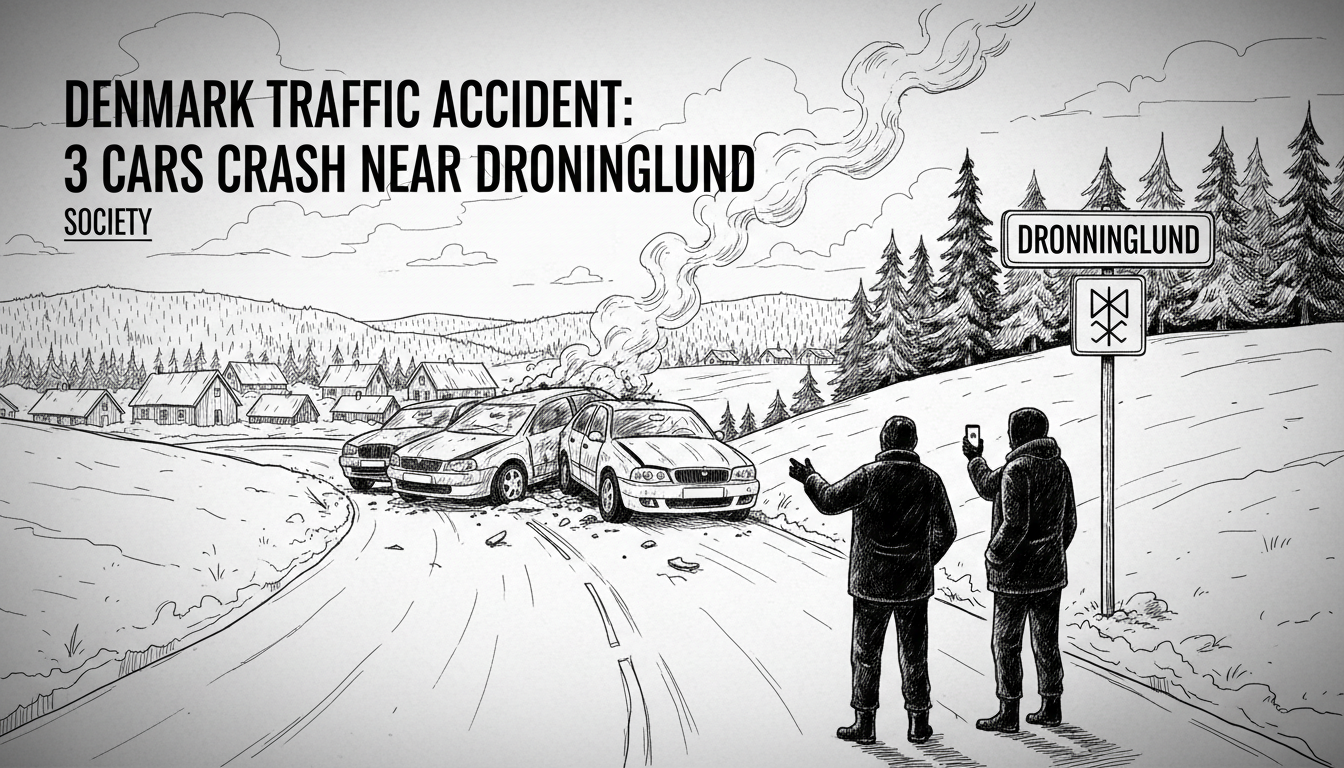
Denmark traffic accident response swung into action at 6:16 AM Thursday morning on a quiet street near a historic castle. A three-vehicle collision on Slotsgade and Hjallerupvej near Dronninglund Slot blocked the road in both directions, redirecting local traffic and drawing emergency crews to North Jutland. Police reported one driver was sideswiped by another vehicle before a head-on crash with a third car, creating a complex scene for first responders. The incident highlights the sudden disruption a serious crash brings to a small community, even on roads not known for heavy congestion.
Local police quickly established a perimeter around the crash site. "The road was blocked in both directions, so traffic was directed to detour around the area," said Torben Arendrup, the duty officer for North Jutland Police. Emergency services confirmed they had three vehicles on scene for the rescue operation. They instructed all public inquiries to go through the police, indicating a coordinated effort to manage the situation and gather information. For residents of Dronninglund, the morning commute was abruptly altered by flashing blue lights and closed roads.
A Morning Commute Interrupted
The crash occurred in a town defined by its pastoral setting and historical landmark. Dronninglund, with its 12th-century castle, is typically a picture of North Jutland tranquility. Slotsgade, or Castle Street, and Hjallerupvej are local arteries used by residents, not major highways. Accidents here resonate deeply because they involve neighbors and disrupt the predictable rhythm of small-town life. The early morning timing suggests drivers were likely heading to work or school, making the sudden collision a jarring start to the day for those involved and witnesses.
Emergency protocols in Danish municipalities prioritize swift isolation of accident scenes to protect victims and responders. The police directive to route all inquiries through their channels is standard. It ensures a single source of information during the critical initial phase of an investigation. This system aims to prevent misinformation and allows rescue personnel to focus on their tasks without external interference. The presence of multiple response vehicles points to a significant deployment of resources for potential injuries and vehicle extraction.
Analyzing Risk on Local Roads
While major highways often dominate traffic safety discussions, incidents on local roads like this one present distinct challenges. Traffic accident analysts would examine several factors specific to this location. Road conditions at dawn, potential sun glare, driver behavior on familiar routes, and the intersection layout near the castle grounds all become relevant. A sense of familiarity can sometimes lead to decreased vigilance, a phenomenon observed in many communities. The investigation will work to piece together the sequence that led from a sideswipe to a head-on collision.
Data from the Danish Road Directorate shows that a significant portion of serious accidents happen on municipal roads outside urban centers. These roads may have varying design standards and less consistent lighting compared to national highways. The social fabric of a town like Dronninglund means accident investigations are felt personally. Everyone waits to hear if those involved are known to the community. The local response network, from police to volunteer firefighters, is often comprised of people who live nearby, adding a layer of personal investment to their professional duties.
The Community Ripple Effect
A road closure in a small town has immediate logistical consequences. It disrupts school bus routes, delays deliveries, and forces residents to take unfamiliar detours. The social impact extends beyond the drivers directly involved. Witnesses, first responders, and even those stuck in the resulting traffic jam are affected. In close-knit areas, news of an accident spreads quickly, often accompanied by concern for the well-being of those involved. The castle, normally a tourist attraction, became the backdrop for an emergency operation, altering the area's character for the day.
Danish welfare systems are designed to support citizens after such traumatic events. This includes medical care, psychological follow-up for victims and responders, and insurance processes guided by clear national frameworks. The municipality of Brønderslev, which encompasses Dronninglund, would coordinate any necessary longer-term local support services. This safety net is a cornerstone of Danish society, but it begins with the acute response at the scene. The efficient clearing of the wreckage and reopening of the road is the first step in restoring normalcy.
A Look at Broader Safety Trends
This single accident connects to national conversations about road safety in Denmark. The country has set ambitious targets to reduce serious traffic injuries, with a focus on infrastructure, vehicle technology, and driver education. Every incident provides data points that safety authorities analyze. Was speed a factor? Could road design have mitigated the outcome? These are questions investigators will seek to answer. The findings contribute to the ongoing evaluation of Denmark's traffic safety strategy, which aims to protect people on all roads, from motorways to village streets.
For international observers, the Danish approach to traffic incidents demonstrates a integrated system. Police, emergency medical services, and road authorities follow coordinated protocols. The public communication, while brief initially, is typically followed by detailed reports that inform safety campaigns. This systematic method strives to treat each accident not just as an isolated tragedy, but as a learning opportunity to prevent future ones. The goal is a continuous improvement loop that makes the roads safer for everyone.
The Path Back to Normalcy
After the last response vehicle leaves, the community's process of recovery begins. The physical scars on the road are repaired, but the memory of the event lingers. For the individuals involved, the journey may involve physical rehabilitation and dealing with insurance claims. For their families and neighbors, it's a reminder of vulnerability. These events often spark local discussions about specific street safety, such as requesting speed bumps or improved signage near the castle. A single morning collision can become a catalyst for community engagement with local authorities over public space.
The story of this crash in Dronninglund is, unfortunately, a common one in its basic outline. Yet, it is profoundly unique to those who experienced it. It underscores how quickly ordinary life can be fractured. It also shows the mechanisms Danish society has built to respond, support, and analyze. The hope is that through effective response and thorough investigation, similar fractures can be prevented elsewhere. As traffic finally flowed normally again on Slotsgade, the quiet returned to the castle grounds, leaving a morning's disruption to be processed by the town and recorded in official statistics.