
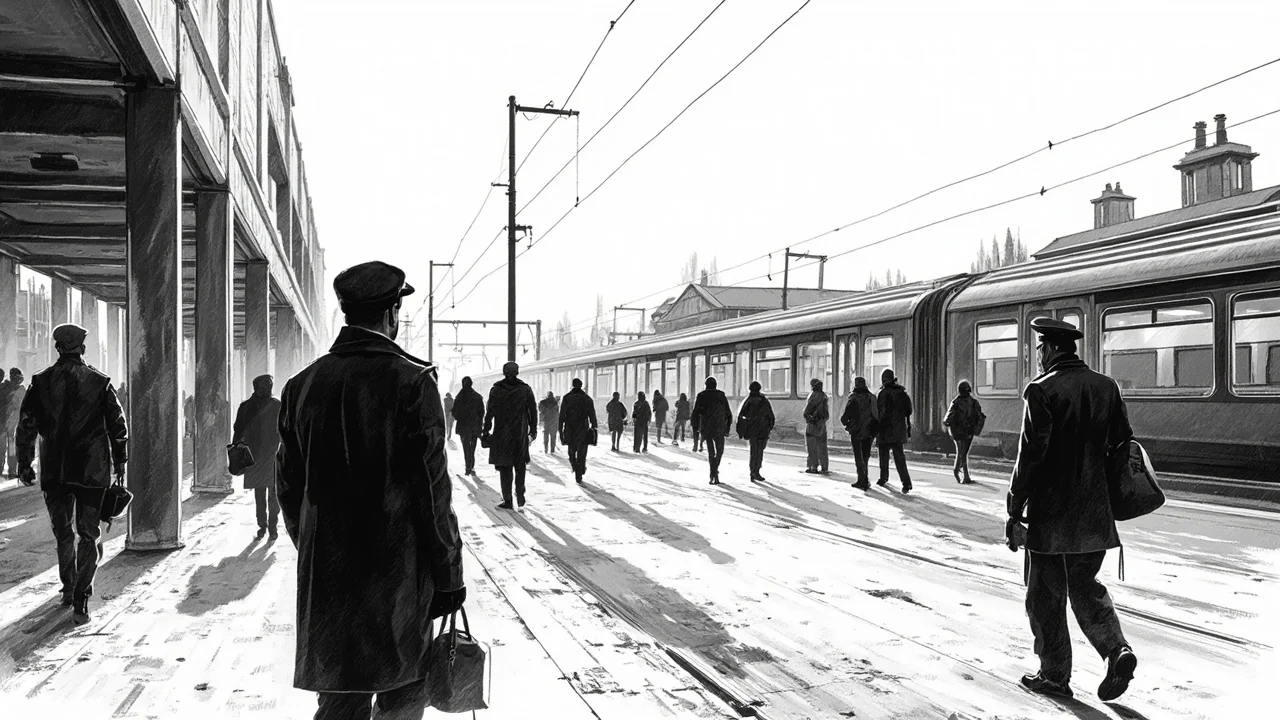
Denmark police have charged a man with attempted manslaughter after he allegedly pushed another man into the path of a moving freight train at Middelfart Station on Thursday night. The shocking act of violence on a public platform has left a 24-year-old victim hospitalized, igniting urgent conversations about public safety and the pressures within Danish society. As a reporter covering integration and social policy, I see this case extending beyond a single criminal charge—it touches on community wellbeing and the environments we foster.
The victim, whose identity remains private, survived the traumatic incident against grim odds. Police confirmed on Friday he was in stable condition and out of immediate danger. This outcome is nothing short of miraculous given the forces involved. The suspect, also a man in his twenties, was swiftly identified and charged by Funen Police. The motive remains unclear, with investigators carefully examining the relationship between the two men and the events leading to the push. Such random, brutal violence in a communal space fundamentally challenges our sense of security.
A Community's Sense of Safety Shattered
Train stations are the arteries of Danish daily life, especially in cities like Copenhagen where integration and mobility are intertwined. They are spaces of transition where diverse populations intersect. An attack here feels like a violation of a shared public trust. Vagtchef Johni Müller's brief public statement confirmed the charge but offered little solace to a unsettled community. Incidents this severe are statistically rare in Denmark, yet their impact is profound and lasting. They force municipalities and social services to examine whether support systems are reaching those at the brink.
The psychological ripple effect is significant. People will now look over their shoulders on platforms in Middelfart and beyond. Parents might second-guess letting teenagers travel alone. This erosion of casual trust is a social cost not captured in police blotters. For immigrants and newcomers learning to navigate Danish society, such events can doubly amplify feelings of vulnerability. Public safety is a cornerstone of the Danish welfare model, and its perceived fragility concerns everyone.
Examining the Social Fabric
While police focus on the criminal investigation, community leaders are asking broader questions. What drives a person to commit such a sudden act of extreme violence? Are there preventative measures our social policies are missing? Denmark boasts strong social safety nets and active municipal social centers aimed at early intervention. Yet, cases like this suggest some individuals still fall through the gaps. Potential factors include unmet mental health needs, social isolation, or unresolved conflicts that escalate tragically.
Integration policy often focuses on language, employment, and cultural understanding. It must also actively foster community cohesion and mental wellbeing. Social workers in cities like Copenhagen stress that successful integration is not just about economics—it's about building connections and managing conflict. An individual's failure to integrate socially can manifest in alienation and, in extreme cases, violence. This incident serves as a stark reminder that investing in community support and conflict mediation is investing in public safety.
The Role of Authorities and Next Steps
Funen Police will now build their case for the courts. The charge of attempted manslaughter (forsøg på manddrab) carries serious potential penalties. The judicial process will seek legal accountability. Meanwhile, the social accountability is less defined. Local authorities in Middelfart and other Danish municipalities may review safety protocols around transit hubs. They might also increase visibility of outreach workers who can de-escalate tensions before they turn violent.
The Danish welfare system is designed to be proactive, not just reactive. This philosophy must extend to preventing violence in public spaces. It requires coordination between police, social services, and community organizations. It demands that we pay attention to social isolation and anger, whether in a long-term resident or a newly arrived citizen. The goal is a society where such a push on a train platform is unimaginable, not just illegal.
A Personal Reflection on Public Trust
Reporting on Danish society, I often analyze policy outcomes and integration metrics. This incident cuts deeper than data. It is a human story of survival, alleged malice, and communal shock. The true test for Denmark will not be in this single prosecution. The test lies in how we respond as a society. Do we retreat into fear and suspicion? Or do we use this moment to strengthen community bonds, improve outreach, and reaffirm that public spaces belong to everyone safely?
The victim's recovery will be long, encompassing both physical and psychological trauma. The community's recovery requires restoring a sense of safety. As the wheels of justice turn, the harder work of social repair begins. We must ask ourselves: what kind of public life do we want to share, and what are we willing to do to protect it? The answer will define our society far more than this one tragic night on a railway platform.