
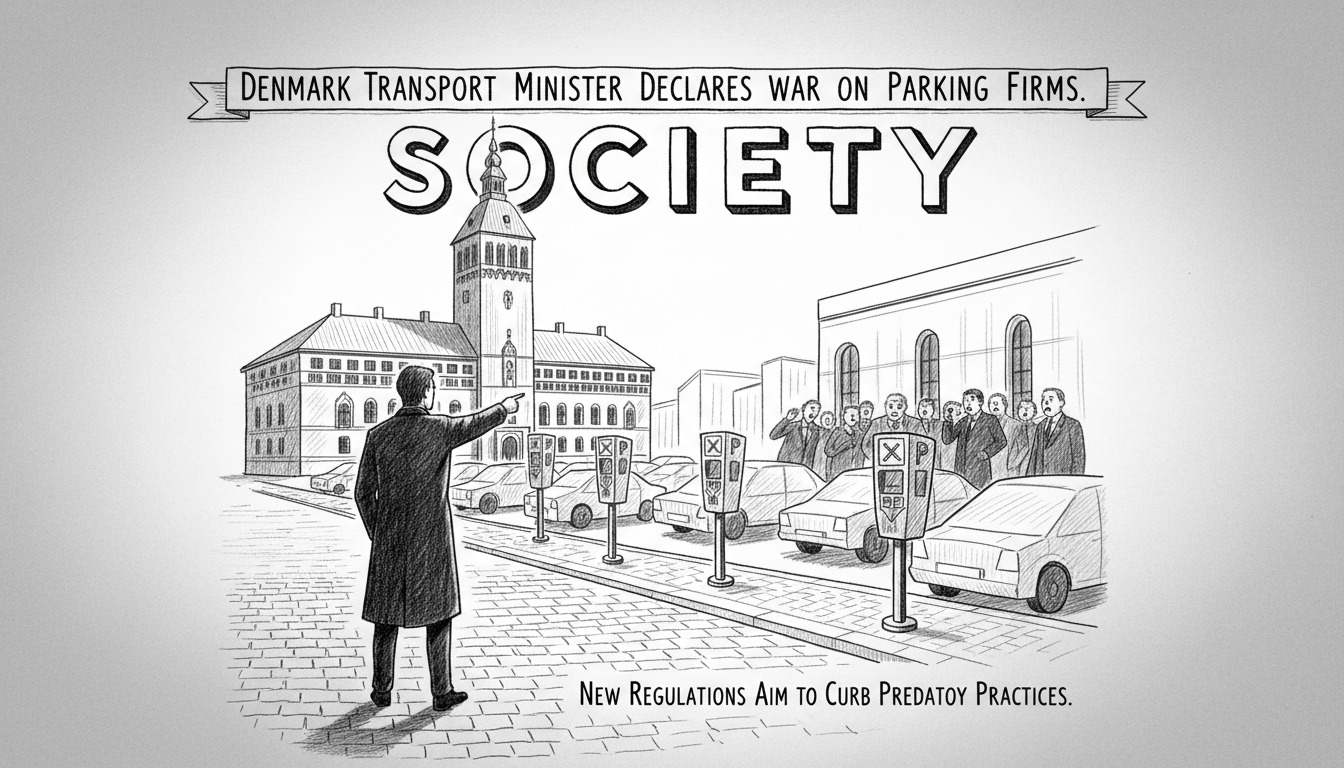
Denmark's Transport Minister Thomas Danielsen has launched a blistering attack on private parking companies, accusing them of 'cheating people' and engaging in 'sheer trickery.' The minister singled out the firm Oparko, vowing to pursue companies that issue so-called 'invisible fines' sent by mail without a physical notice on the vehicle. This marks a significant escalation in a long-running battle between Danish authorities and the private parking enforcement industry.
"They cheat people. It's sheer trickery. So I'm not interested in hearing that I should speak politely," Danielsen said in a recent interview. "And I will pursue this also with Oparko. I want parking companies to comply with existing legislation. It is not voluntary when you run a business in Denmark." The minister's comments reflect growing government impatience with business practices it views as predatory, signaling a potential regulatory crackdown that could reshape the industry.
A Minister's Ultimatum
The conflict centers on the legality of digital enforcement methods. Private parking operators like Oparko use camera systems to monitor lots, issuing fines by mail if a driver overstays or fails to pay. Minister Danielsen and consumer advocates argue this violates Danish law, which requires clear, immediate notification of a violation at the vehicle itself. The minister has dismissed the industry's defense of these methods as technological progress, framing it instead as a search for "better conditions to cheat people."
Danielsen has issued a clear ultimatum to the sector: no dialogue until companies present "constructive" proposals for compliance. "I am not interested in a dialogue with the parking companies before they send some constructive solutions my way," he stated. This hardline stance puts immediate pressure on firms to overhaul their operational models or face intensified government scrutiny. The minister recently unveiled a new tool to combat these business methods, though specific details remain undisclosed, suggesting a multi-pronged regulatory approach is being prepared.
The Industry's Defense and Economic Argument
Parking companies have mounted a vigorous defense, warning that the minister's campaign will backfire on consumers. Kasper Daae, founder of Oparko, argues that forcing companies to use physical patrols instead of camera surveillance will drastically increase operational costs. These costs, he contends, will inevitably be passed on to the public through higher parking fees for everyone. "It will ultimately make it more expensive for the individual citizen," Daae said, framing digital enforcement as a necessary efficiency that keeps base costs low for compliant users.
This debate touches on a core tension in modern service industries: the balance between automated efficiency and consumer protection. The parking industry positions itself as a facilitator of smooth urban mobility, using technology to ensure space turnover and availability. From their perspective, immediate physical ticketing is an antiquated, labor-intensive model ill-suited to managing large, dispersed parking areas. They see the minister's stance as an impediment to innovation that ignores the practical realities of running a nationwide parking operation.
Legal Ambiguity and Consumer Backlash
The heart of the dispute lies in the interpretation of Denmark's Parking Act. Legal experts note that the law mandates clear signage and notification, but its application to digital-age enforcement remains a gray area. Consumer rights organizations have sided with the minister, reporting a surge in complaints about 'invisible fines.' Drivers often discover violations weeks later when a hefty fine arrives in the post, leaving them with little recourse to contest the charge or recall the specific parking event. This lack of immediate, tangible notice is the crux of the consumer grievance.
"The principle is simple: if you break a rule, you should know it right away," said a Copenhagen-based consumer lawyer who requested anonymity due to ongoing cases. "A letter weeks later removes any chance for a driver to rectify an honest mistake or challenge incorrect details while memories are fresh. It turns parking enforcement from a regulatory function into a revenue-generating trap." Public sentiment appears to support the minister, with social media and local news forums filled with stories of confusing signage and unexpectedly large fines from private operators.
Broader Implications for Danish Business Climate
Minister Danielsen's aggressive rhetoric—"sheer trickery," "cheating people"—is unusually direct for a sitting minister discussing a legal industry. It signals a shift in regulatory philosophy under the current government, moving towards a more interventionist stance in markets where consumer vulnerability is perceived. This case is being watched closely by other sectors that rely on automated compliance and post-service billing, such as private toll roads or automated traffic enforcement.
The confrontation also tests the boundaries of corporate social responsibility in Denmark. The minister's statement that compliance "is not voluntary when you run a business in Denmark" underscores an expectation that ethical conduct goes beyond the letter of the law. For international investors observing the Danish market, this episode highlights the high standards of transparency and immediate fairness expected by both regulators and the public. A failure by parking firms to address these concerns could lead to stricter legislation that mandates physical notification, fundamentally altering their business model's profitability.
What Comes Next: Enforcement or Compromise?
The immediate future hinges on whether parking companies like Oparko will present the "constructive solutions" demanded by the transport minister. Potential compromises could involve hybrid models: using cameras for enforcement but coupling mail fines with an immediate SMS notification to the registered vehicle owner, or creating a mandatory, user-accessible digital portal where parking sessions and violations are logged in real-time. Another solution might be a statutory cap on fines issued via digital means without physical notice.
If the industry digs in, Danielsen has promised to "pursue" non-compliant companies. This could involve directing the Danish Transport Authority to conduct audits, supporting municipalities in revising contracts with private operators, or even drafting new legislation to explicitly ban the practice of 'invisible fines.' The political will seems present; the question is whether it will translate into effective enforcement that protects consumers without creating a cumbersome, costly alternative. The outcome will set a precedent for how Denmark governs the intersection of technology, private enterprise, and everyday consumer rights in the public space.
For now, Danish drivers are caught in the middle. Many welcome the minister's tough stance against practices they view as unfair, yet they also fear the prospect of universally higher parking rates. The resolution of this clash will reveal much about the balance of power between regulator and industry in modern Denmark, and what "fair business" truly means in a digital economy. Will innovation bend to consumer protection, or will a new model emerge that satisfies both? The parking space has become an unlikely battleground for a much larger debate.