
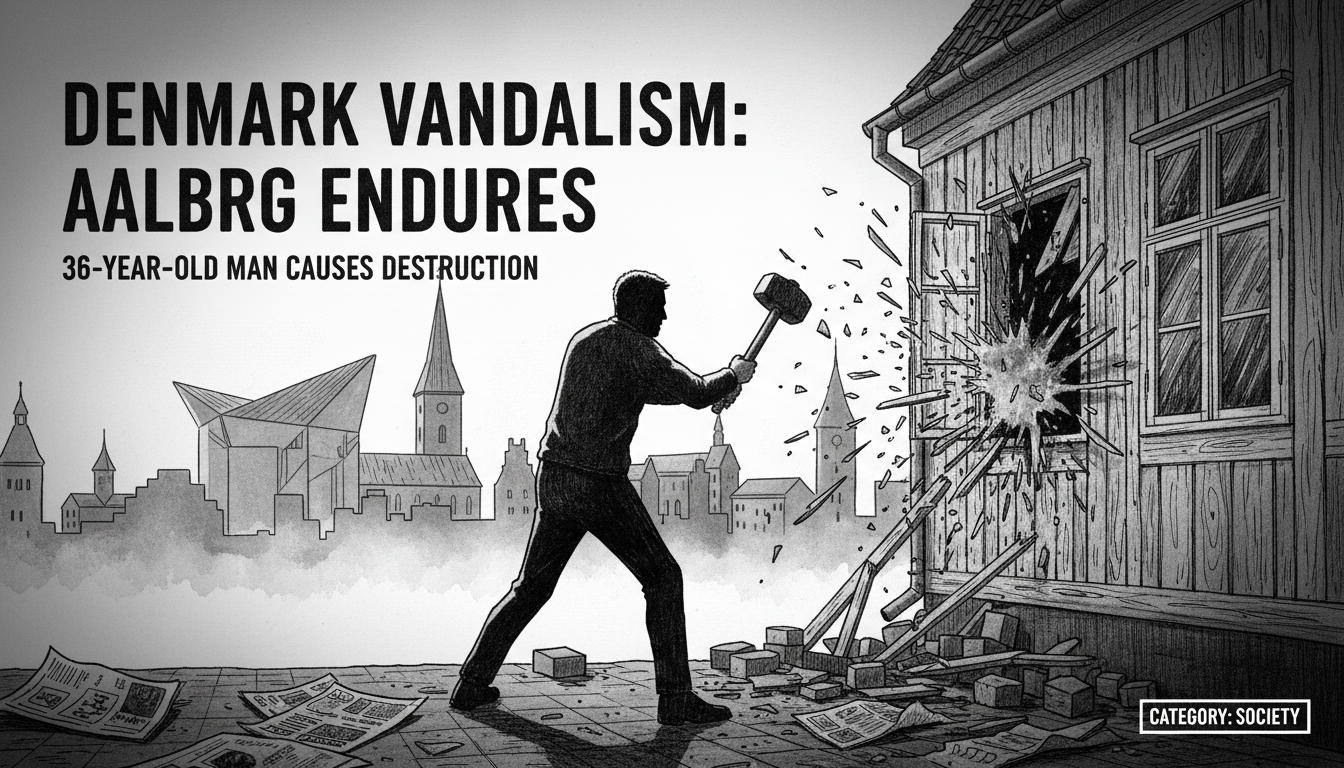
A 36-year-old man caused significant property damage on Schleppegrellsgade in central Aalborg at 2:56 AM on Sunday. North Jutland Police received a call reporting the man was creating havoc, targeting two residential buildings. The incident, occurring in one of Denmark's quieter urban centers, raises questions about nocturnal disturbances and public safety.
A 2:56 AM Call to Schleppegrellsgade
Police Duty Officer Christian Tilsted described the scene. The man smashed the door phone panels at numbers 80 and 82 on the residential street. He also shattered a window in the entrance door of number 82 and split a lamppost outside the same address. Officers arrived quickly to intervene. "We drove out and put a stop to it," Tilsted said. The suspect was not intoxicated but was described as "off balance." He was taken to the station and spent the night in custody before being released after questioning on Sunday.
This act of vandalism in a calm neighborhood is a stark reminder that crime is not confined to major metropolitan areas. Aalborg, with its vibrant waterfront and university culture, is Denmark's fourth-largest city. It typically enjoys a reputation for safety and community cohesion. Incidents like this disrupt that peace and directly impact residents' sense of security.
The Human and Municipal Cost of Destruction
For the residents of Schleppegrellsgade, the damage is more than an inconvenience. Broken door panels and windows compromise building security, creating immediate vulnerability. Repairing public infrastructure like lampposts ultimately draws on municipal resources. These costs are borne by the local community through Aalborg Municipality's budget. While the financial impact of a single lamppost may be small, repeated incidents strain public maintenance funds.
The police have not determined a motive. The officer's note that the man was not drunk opens other lines of inquiry. Mental health crises, personal distress, or undisclosed substance issues are potential factors analysts might consider. Without a clear explanation, the event feels random and unsettling to affected residents.
Police Response and Prevention Strategies
North Jutland Police's response was swift, demonstrating effective patrol deployment for a late-night call. The suspect was apprehended, processed, and faced charges for vandalism. This procedural efficiency is a hallmark of the Danish policing model. However, prevention remains a more complex challenge than response.
Criminologists examining urban crime patterns note that isolated vandalism often defies easy prediction. It does not typically follow the organized patterns of gang-related property crime. "These are often acts of opportunity or moments of personal crisis," says Lars Jensen, a professor of criminology at Aalborg University. "The policing challenge is immense because the threshold is so low. The focus shifts to social prevention—addressing root causes before someone picks up a brick."
Local policing strategies in Denmark increasingly involve collaboration with social services. Community police officers are often aware of individuals facing difficulties. The goal is to connect them with support from municipal social centers before a crisis escalates into criminal action. It is unclear if this individual was known to such services.
Aalborg's Context in Danish Crime Statistics
Denmark consistently ranks as one of the world's safest countries. Overall rates of vandalism have seen fluctuations but no dramatic nationwide surges in recent years. Each incident, however, carries weight for its local community. In Aalborg, such public destruction is relatively rare, making this event particularly noticeable.
The Danish welfare system is designed to provide a strong safety net, including mental health care and social support. Gaps in this system, whether due to resource constraints or individuals falling through the cracks, can manifest in public disorder. This incident serves as a micro-case study. It prompts examination of how well local social safety nets are functioning, even in prosperous, well-organized cities.
Looking Beyond the Broken Glass
The story of the 36-year-old man on Schleppegrellsgade is a brief news item. Yet it contains layers relevant to Danish society. It touches on the effectiveness of policing, the hidden pressures on municipal budgets, and the silent struggles some individuals face. For the international observer, it shows that even the most stable societies are not immune to moments of breakdown.
What remains after the glass is swept up and the lamppost repaired? A lingering question about balance. How does a society balance swift law enforcement with compassionate early intervention? Denmark's integrated approach, where police and social workers sometimes collaborate, is one tested model. Its success depends on resources, coordination, and continuous evaluation.
This single night in Aalborg will not change national policy. But it is a data point in the ongoing assessment of urban well-being. It reminds us that security is not just the absence of major crime. It is also the presence of communal trust and supportive institutions that can catch people before they fall. As the new week begins on Schleppegrellsgade, the repairs will be made. The deeper work of strengthening the social fabric continues, one street and one individual at a time.