
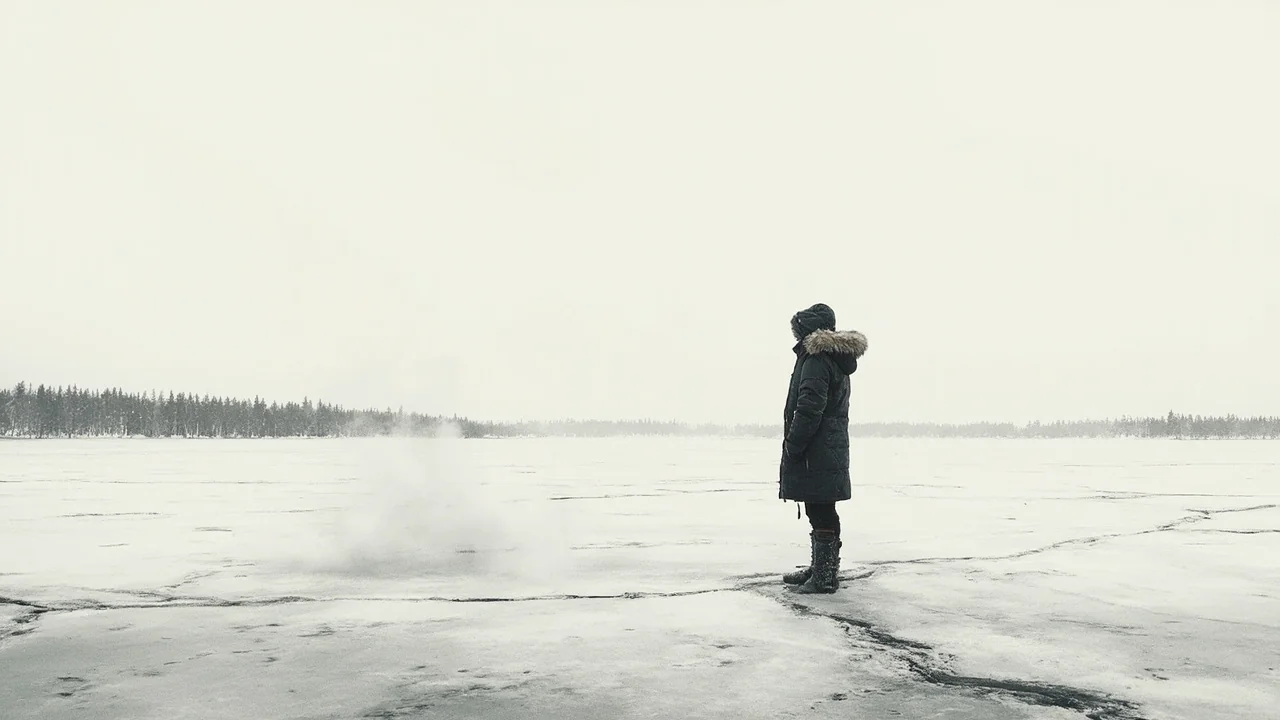
Danish police issued urgent warnings this weekend after receiving numerous reports of people walking on dangerously thin ice covering Copenhagen’s lakes. The capital’s sub-zero temperatures have created a deceptive and treacherous winter landscape, drawing residents onto frozen surfaces that authorities say cannot safely support their weight. Copenhagen Police and the Capital Region’s Emergency Services both reported a surge in calls concerning citizens venturing onto iced-over waterways like Peblinge Sø and Sortedams Sø. ‘Many are testing their luck, but we urge people not to go out on the ice,’ a police statement read, highlighting a recurring and potentially deadly winter challenge in Danish society.
A Winter Temptation with Deadly Consequences
The visual appeal of a frozen urban lake under a crisp blue sky is powerful. For families and thrill-seekers alike, it presents an irresistible playground. Yet, beneath that serene surface lies significant risk. According to the Danish Meteorological Institute (DMI), ice generally needs to be between 13 and 18 centimeters thick to safely bear a person’s weight. Current conditions in the city fall far short of that threshold. Wind and snow cover can further weaken the ice structure, creating unpredictable thin spots. ‘The ice is still unsafe. The emergency center is receiving reports of people daring to go out on the ice. It is life-threatening,’ the Capital Region’s Emergency Services posted on social media. This annual pattern reveals a tension between a cherished Nordic winter culture and stark safety realities.
The Municipal Safety Protocol and Its Limits
Copenhagen Municipality operates a formal system to manage this risk. Municipal workers are responsible for measuring ice thickness and assessing whether a lake is safe for public use. If the ice meets the strict safety criteria, the city erects a sign by the shoreline stating, ‘Færdsel på isen tilladt’ (Traffic on the ice permitted). The conspicuous absence of these signs across the city this weekend was the clearest possible official warning. DMI advises citizens to always check the municipal website and look for signage at lakes before considering stepping onto the ice. However, this system relies heavily on public compliance and awareness. The weekend’s events suggest that either the message is not reaching everyone, or the temptation outweighs the perceived danger for some. This gap between official policy and public behavior forms the core of a recurring seasonal public safety dilemma.
Expert Analysis: Why People Ignore Clear Warnings
To understand this behavior, we must look beyond simple recklessness. Dr. Lars Frost, a risk perception sociologist at the University of Copenhagen, explains that several cognitive biases are at play. ‘There is a normalization effect,’ he tells me. ‘When people see others on the ice, even a few, they assume it has been vetted as safe. The social proof overrides the official warning.’ Furthermore, the human brain is notoriously poor at judging abstract risks like ice thickness. A solid-looking surface appears uniformly strong, masking the hidden variances caused by currents, underwater springs, or previous thawing. For newer residents from warmer climates, the novelty of a frozen lake can be especially captivating, and they may lack the ingrained cultural caution that some Danes possess from childhood education about ice safety. ‘It’s not just about providing information,’ Dr. Frost argues. ‘It’s about making the risk feel immediate and personal, which is very difficult when the sun is shining and the ice looks solid.’
Historical Context and a Cultural Shift
This is not a new phenomenon in Danish society. Historical records show that skating and ice-walking have been popular pastimes for centuries, deeply woven into the Nordic experience of winter. In decades past, colder winters often produced thicker, more reliable ice for longer periods, reinforcing the tradition. Climate change has subtly altered this equation, leading to more frequent periods of marginal ice conditions that are visually appealing but structurally weak. Jens Moller, a veteran officer with Copenhagen Police’s emergency services unit, has seen the evolution firsthand. ‘The pattern is less predictable now,’ he notes. ‘We might get a week of hard frost that creates ice, then a day of above-zero temperatures or rain that undermines it, even if it still looks intact. The safe season is shorter and more unstable.’ This environmental shift necessitates an update to the public’s traditional understanding of winter safety.
The Role of Education and Community Messaging
Prevention hinges on effective communication. Authorities target their warnings through traditional media, social media, and physical signage. The police specifically asked parents to ‘have a talk with your children about the same.’ This intergenerational communication is a cornerstone of Danish social policy, where family and community are trusted conduits for public safety information. Local community centers and social housing associations in districts like Nørrebro and Vesterbro often reiterate these messages in their newsletters, recognizing that reaching all demographics requires multiple channels. Comparing approaches, some Swedish municipalities near Stockholm employ patrolled ‘ice hosts’ on popular lakes to directly inform the public, a model that Copenhagen has debated but not widely adopted due to resource constraints. The Danish strategy remains heavily focused on personal responsibility within a framework of clear municipal guidance.
Implications for Public Safety and Social Policy
The recurring incidents on Copenhagen’s lakes represent a microcosm of a broader public safety challenge: how to protect citizens from seasonal, attractive nuisances. The policy response sits at the intersection of municipal oversight, clear communication, and individual choice. While the city provides the factual assessment of danger, it ultimately relies on citizens to heed the advice. There is little appetite for physical barriers or constant policing of shorelines, which would be at odds with the Danish ethos of accessible public space and personal freedom. The cost of failure, however, is measured in potential tragedy and massive emergency response operations. A rescue on thin ice is one of the most dangerous calls for emergency personnel, potentially creating multiple victims. This risk underscores why the warnings are so emphatic. The social policy goal is to foster a collective culture of caution that complements the official safety system.
Looking Ahead: A Sustainable Winter Culture
The challenge will persist as long as Denmark has winters cold enough to freeze its waters. The solution lies in continuing to adapt communication strategies to modern media consumption habits and demographic changes. Perhaps there is room for more interactive public education—using QR codes on signage linking to real-time ice thickness data, or community-led safety workshops at local libraries and rec centers during the first frost. Integrating ice safety into school curricula for all ages could help rebuild that ingrained cultural knowledge. The goal is not to end the beloved tradition of winter recreation, but to ensure it resumes only when the municipality’s green light is unequivocally given. As the weekend’ warnings fade, the lesson remains: the beauty of a frozen Copenhagen lake is best enjoyed from the safety of its shores, with the promise of safer ice yet to come. Will this winter finally be the one where public behavior aligns perfectly with official safety assessments, or does the allure of the ice always hold a dangerous power of its own?