
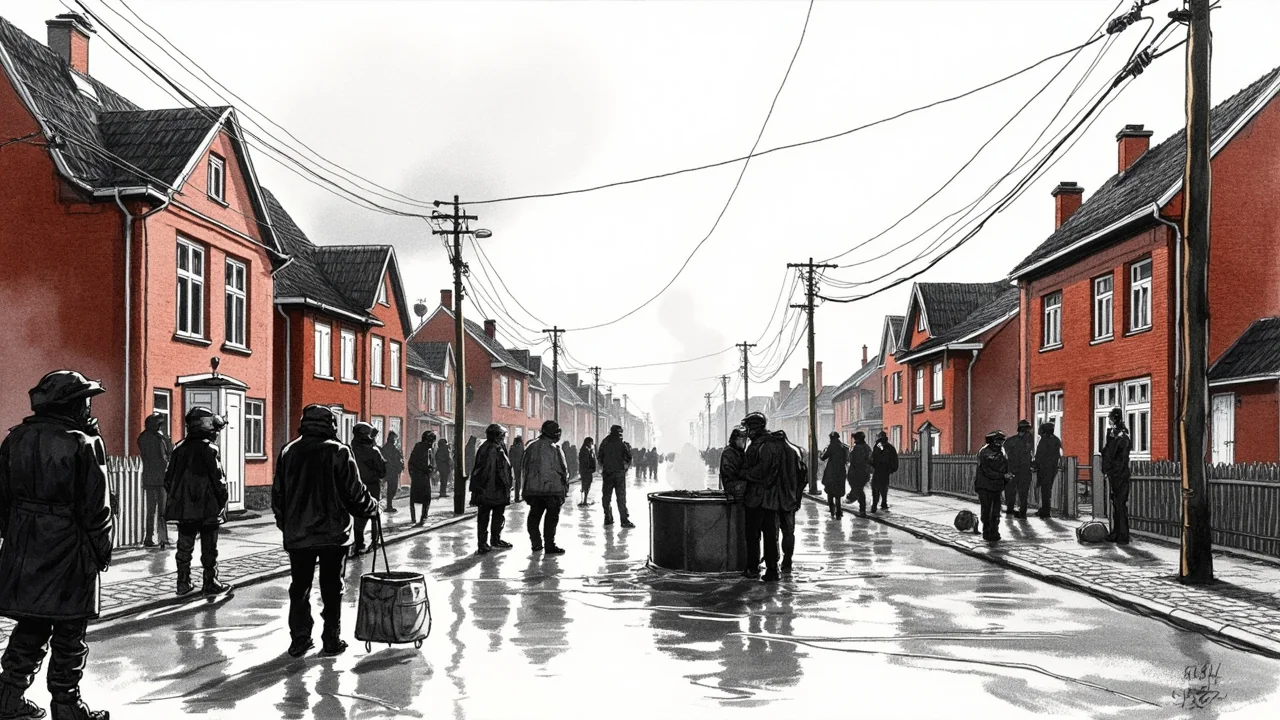
Denmark's public health authority has issued a boil-water advisory for over 2,100 households in Esbjerg. The Styrelsen for Patientsikkerhed and Esbjerg Municipality made the urgent recommendation after detecting harmful bacteria in a routine water sample on Friday. Residents in the Jerne Nord district must now boil all drinking water for at least two minutes, a precaution expected to last into next week. This incident highlights the vulnerability of even Denmark's renowned infrastructure and the immediate social disruption caused by such public health alerts.
For the families living along Spangsbjerg Møllevej, Degnevej, Strandby Kirkevej, and Jernbanen, daily life has been abruptly complicated. The simple act of making coffee, preparing a baby's bottle, or brushing teeth now requires forethought and an extra step. While authorities state the risk of illness from consuming the water is low, the advisory creates a tangible layer of anxiety. It transforms a fundamental trust in the tap—a cornerstone of Danish living standards—into a source of doubt.
A Community on Hold
The local utility, Din Forsyning, is leading the response. Their teams are working to trace the contamination source, a process Eric Lauridsen, a department head at the utility, describes as intense. "We are working intensely to find any sources of the drinking water contamination," Lauridsen said in a statement. "It is still too early to say anything about the cause of the pollution, but we are keeping customers and the media continuously informed about the situation and will report when we know something new." This communication is critical for maintaining public trust during a crisis where information is initially scarce.
Communications officer Anja Helene Jensen provided a tentative timeline, advising residents to boil water at least until the beginning of the coming week. This timeframe, while necessary, places a week-long burden of vigilance on thousands. The logistical impact is significant, affecting not only homes but also any small businesses, childcare institutions, or cafes in the zone that rely on municipal water. It is a stark reminder of how interconnected and dependent modern communities are on unseen systems functioning flawlessly.
The Mechanics of a Precaution
The specific instruction to boil water at 100 degrees Celsius for two minutes is a standard, science-based protocol designed to kill pathogenic bacteria like E. coli or coliforms. These bacteria can indicate that the water has been contaminated by fecal matter, potentially from agricultural runoff, sewage leaks, or breaches in the water mains. The boil order is a blanket precaution; it does not mean every glass of water is contaminated, but that the safety of the system as a whole cannot be guaranteed until the problem is found and fixed.
From a social policy perspective, this event tests the local municipality's crisis response framework. Esbjerg Kommune must ensure vulnerable populations—the elderly, those with health conditions, and families with young children—receive clear information and support. The effectiveness of Denmark's welfare system is often measured in such moments of disruption. It relies on swift, competent action from public agencies and a high degree of public compliance with official guidance, a social contract that is generally strong in Denmark.
Trust in the Tap: A Danish Pillar
Access to clean, safe drinking water directly from the tap is a deeply ingrained expectation in Danish society. It is a symbol of the country's advanced infrastructure and regulatory diligence. Incidents like this, while rare, resonate powerfully because they challenge a fundamental daily security. For immigrants and new residents, it can be particularly unsettling, as trust in public systems is often a key marker of successful integration. A reliable welfare state includes reliable utilities.
The psychological impact should not be underestimated. Even with a "low risk" assessment, the advisory introduces a background hum of concern. Parents will worry more acutely about their children's health. People may question other aspects of their municipal services. Restoring full confidence often takes longer than fixing the technical problem. The utility's transparency, as emphasized by Lauridsen's commitment to ongoing updates, is the primary tool for rebuilding that trust.
Looking for the Source
The investigation now underway is a meticulous process. Technicians from Din Forsyning will be checking the local water network, inspecting pipes, valves, and reservoirs in the affected area. They will take additional water samples from various points to map the extent and pinpoint the origin of the bacterial presence. Potential causes range from a temporary cross-connection, a pressure drop that allowed ingress, to localized damage on a supply line. Until the source is identified and remediated, the precautionary boil notice must remain.
This situation also invites a broader analysis of Denmark's water infrastructure. While modern and well-maintained, it is not immune to the challenges of age, extreme weather events linked to climate change, or accidental damage from construction. Municipalities across the country invest heavily in monitoring and renewal, but this event in Esbjerg shows absolute perfection is an elusive goal. The focus is on rapid detection and response, which in this case, appears to have functioned as intended with the routine sampling catching the issue.
The Week Ahead for Jerne Nord
For the immediate future, life in the affected part of Esbjerg will be slightly more cumbersome. The community's resilience is being quietly tested. Neighbors may check on each other, especially those who might struggle with the physical or cognitive demand of remembering to boil water. Local stores might see a run on bottled water, a market-based response to a public system's temporary fault. The social cohesion of the neighborhood will play a role in navigating this minor crisis.
The true conclusion will come when Din Forsyning announces the source has been eliminated and follow-up testing confirms the water is safe. Only then can the 2,100 households return to their normal routine. The incident will likely end as a footnote in municipal records—a successfully managed public health alert. But for those living through it, it serves as a brief, unwelcome lesson in dependency. It underscores how the smooth functioning of Danish society rests on a complex, mostly invisible network of services that, very occasionally, demands our direct attention and action. The ultimate question is not if such events will occur, but how swiftly and openly they are resolved, defining the public's lasting trust in the systems that serve them.