
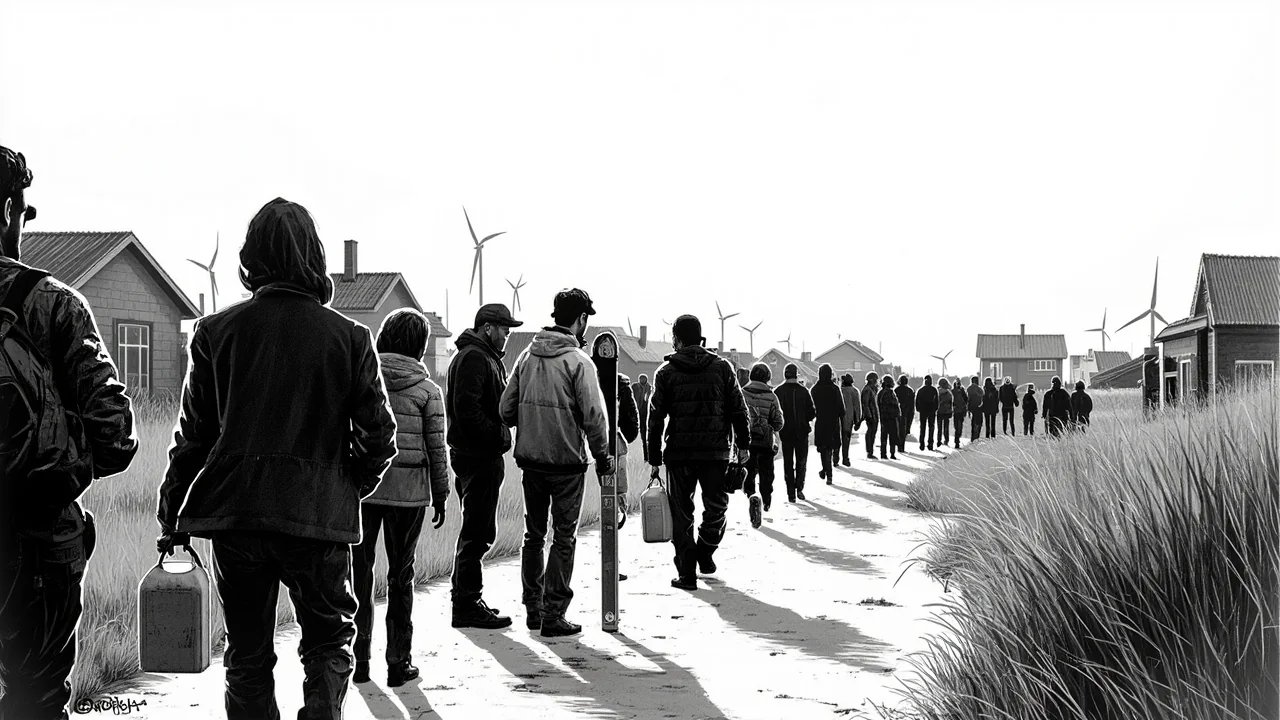
Denmark's water supply system faced a critical test when 4,500 households in the Grindsted area woke up to dry taps on Sunday morning. The outage lasted for several hours, exposing a surprising vulnerability in a nation known for its reliable infrastructure. The director of the local waterworks, René Heiselberg Gier, publicly admitted he was at a loss to explain the failure. This incident raises immediate questions about contingency planning and long-term resilience in Denmark's essential services.
A power cut triggered the water supply failure, a common enough occurrence. The system's designed response, however, never materialized. Backup generators, recently tested and presumed reliable, failed to activate. "Normally, our emergency generators would take over, and they have not done so in this case, which puzzles me," Gier stated. His candid admission of confusion is unusual for a public utility leader and underscores the event's unexpected nature. Electricians are now working to diagnose why the safety net collapsed.
A Failure of Redundancy
The core principle behind any critical infrastructure is redundancy. Systems must have backups for their backups. Denmark's waterworks, like much of its public infrastructure, are built on this principle of fail-safes. The Grindsted incident represents a clear breach of that contract with the public. When the primary power failed, the secondary system—the generators—did not engage. This left the pumps silent and the pipes empty. For residents, the reason mattered less than the result: no water for drinking, cooking, or sanitation for an extended period.
Technical failures happen. What makes this event noteworthy is the apparent gap between scheduled maintenance and real-world performance. The generators had passed recent tests, according to management. This disconnect between a successful test and an operational failure points to a more complex problem. It could involve undetected technical flaws, procedural errors during the crisis, or external factors not accounted for in testing protocols. The investigation must look beyond simple mechanics.
The Human Impact of Invisible Infrastructure
Modern society functions on the assumption that clean water will always flow from the tap. The Grindsted outage shattered that assumption for thousands. For elderly or vulnerable residents, a lack of running water is not merely an inconvenience; it is a health and safety risk. Local businesses, particularly cafes, restaurants, and hair salons, faced disrupted operations and potential financial loss. The incident served as a stark reminder of our dependence on systems that remain invisible until they stop working.
In Denmark, with its high trust in public institutions, such failures can have a disproportionate impact on social confidence. Citizens pay taxes expecting seamless service from utilities managed by professional municipalities. A prolonged, unexplained outage chips away at that trust. It prompts people to question the competence and preparedness of the authorities tasked with their basic well-being. Restoring water is the first step; restoring confidence may take longer.
Municipal Responsibility in the Welfare State
Water supply in Denmark is typically a municipal responsibility, a cornerstone of the local welfare model. Towns like Grindsted are entrusted with delivering this fundamental service. The crisis places the municipal administration and its elected officials directly in the spotlight. They are accountable not only for fixing the fault but also for providing a transparent explanation and a credible plan to prevent recurrence. The public will expect a detailed report on what went wrong and how the system will be hardened.
This event transcends local utility management. It enters the realm of social policy. A reliable water supply is as foundational to the Danish welfare state as healthcare or education. When it falters, it challenges the state's basic promise of security and stability. Other municipalities across Denmark will be—or should be—reviewing their own contingency plans with renewed urgency. The Grindsted failure is a case study for the entire country.
Engineering and the Need for Humility
The director's public bewilderment is a rare moment of humility from an engineering perspective. It acknowledges that complex systems can behave in unpredictable ways. This is not about assigning blame but about embracing a mindset of continuous improvement and resilience. The investigation must avoid the easy conclusion of a "one-off" technical glitch. It should examine system design, maintenance culture, staff training for emergency scenarios, and communication protocols with affected citizens.
Best practice in critical infrastructure now involves stress-testing systems against a range of scenarios, including cascading failures. Could a power outage combined with a communication breakdown or a staffing issue during off-hours lead to a prolonged crisis? The goal is to build systems that are not just robust but also adaptable and resilient when the unexpected occurs. Denmark has the engineering expertise to lead in this area, but this incident shows there is no room for complacency.
A Look Ahead: Securing the Flow
The immediate technical fix in Grindsted is underway. The longer-term task is institutional learning. The waterworks must share its findings with other utilities and with national oversight bodies. This transparency will strengthen the entire national infrastructure network. For residents, clear communication about the findings and the implemented changes is crucial. They deserve to know that their water supply is now more secure, not just that it has been restored.
This Sunday morning outage, while resolved in hours, serves as a warning. Climate change promises more extreme weather events, potentially straining power grids and infrastructure. Society's reliance on uninterrupted utility service will only grow. Denmark's response to this local crisis will signal how prepared it is for broader future challenges. Investing in resilience is not an expense; it is an insurance policy for the foundational elements of daily life. The question for Danish municipalities is no longer if their backups work in a test, but whether they will hold when everything else goes dark.