
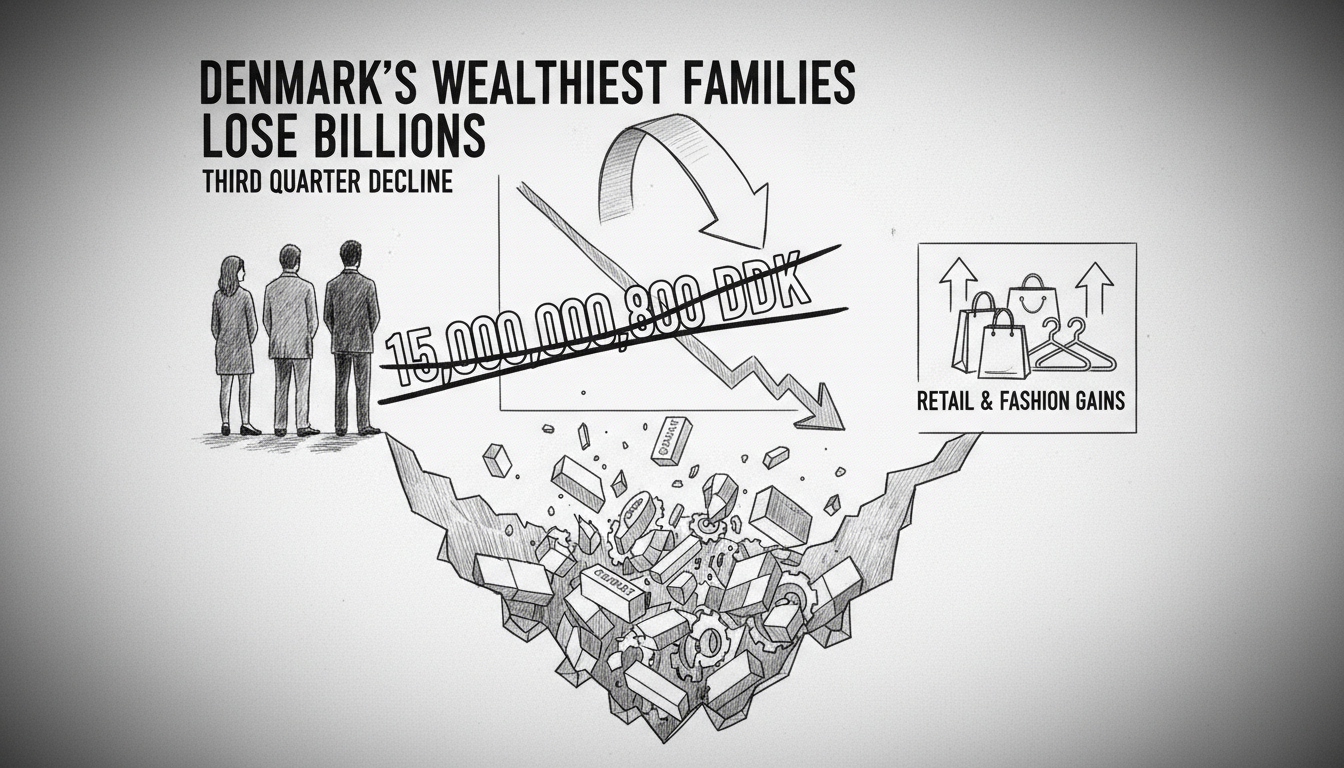
Denmark's top 100 wealthiest families lost a combined 15 billion kroner in the latest financial period. This marks only the second time in over fifteen years that the nation's wealth elite has experienced such substantial financial decline. The findings come from the annual wealth ranking compiled by economic analysts.
Economic journalist Ejlif Thomasen, who oversees the annual assessment, described the development as remarkable. He noted that wealth declines of this magnitude rarely occur in Denmark's stable economy. The most significant losses concentrated among the country's ten richest families, who collectively saw 44 billion kroner evaporate from their fortunes.
Major Danish corporate families faced the steepest declines. The Louis-Hansen family behind medical device company Coloplast suffered the hardest hit, losing 22 billion kroner due to a sharp drop in Coloplast's stock price. The Kirk Kristiansen family, owners of Lego, saw their wealth shrink by 18 billion kroner despite strong company performance. This valuation adjustment reflects market comparisons with other publicly traded companies rather than operational issues.
The Clausen family, controlling shareholders of engineering firm Danfoss, lost 18 billion kroner. The Tøsbjerg family behind footwear manufacturer Ecco saw their fortune decline by over nine billion kroner. Thomasen emphasized that while these numbers appear dramatic, they represent calculated business valuations rather than immediate cash losses.
He explained that no families face immediate financial crisis from these declines. The changes primarily reflect fluctuations in company valuations rather than operational failures. Thomasen did note that sustained declines could create challenges for some businesses if not addressed through strategic adjustments.
While many families experienced setbacks, others saw substantial gains. Retail magnate Anders Holch Povlsen, owner of Bestseller and numerous other ventures, recorded the largest increase among Danish billionaires. His fortune grew by 27 billion kroner, maintaining his position as Denmark's second-wealthiest family after the Lego owners.
The heirs of Jysk founder Lars Larsen also saw significant wealth appreciation, with their fortune increasing by 13 billion kroner. This divergence highlights how different sectors of the Danish economy are performing unevenly amid current market conditions.
The concentration of losses among manufacturing and consumer goods companies suggests broader challenges in these sectors. Medical devices, toys, engineering components, and footwear all showed vulnerability to market valuation adjustments despite strong brand recognition.
Copenhagen's business districts and the Øresund region continue to host most of these family-owned enterprises. The fluctuating fortunes reflect both global market trends and specific industry challenges facing Danish exporters. These wealth movements will likely influence investment patterns and business strategies throughout the Danish economy in coming quarters.
Family-owned businesses remain the backbone of Denmark's export economy, accounting for substantial portions of the country's trade figures. The valuation changes could affect future investment in renewable energy and sustainability initiatives, areas where many Danish family businesses have made substantial commitments.