
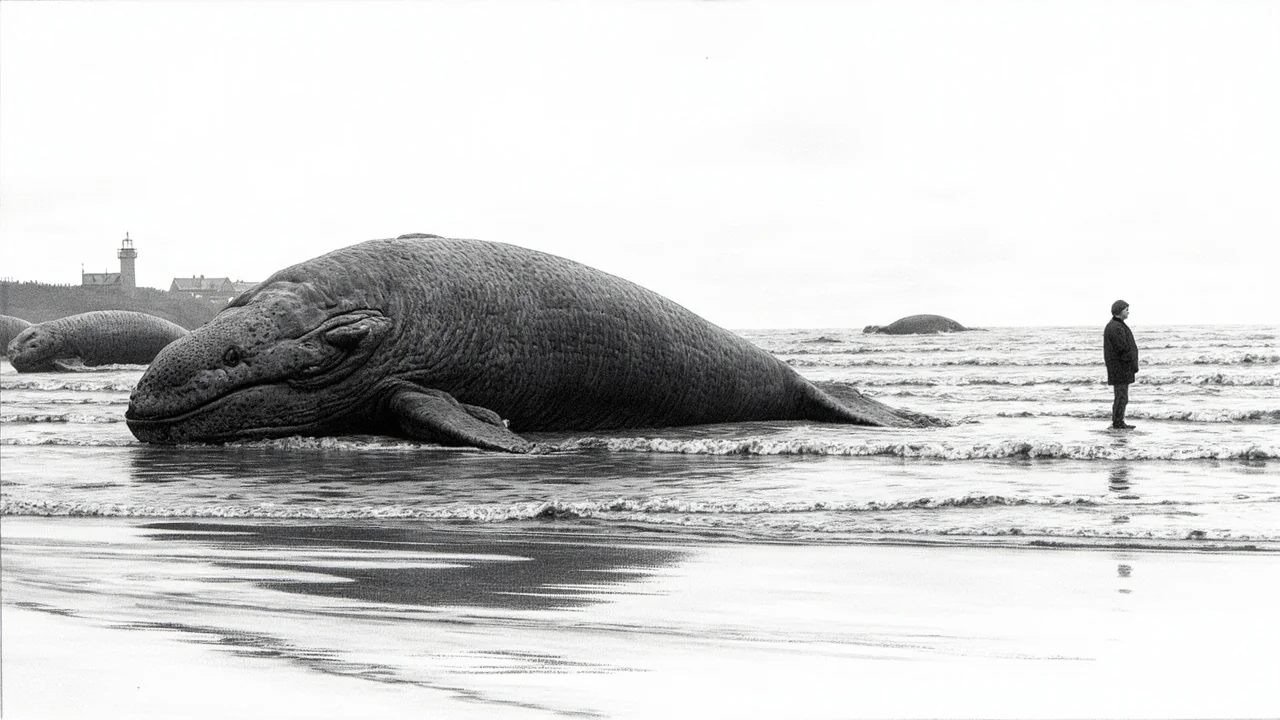
The sperm whale trap catches more victims
Eight sperm whales have stranded on Danish beaches within weeks, marking the most notable series of strandings in a decade. The first whale beached at Ålbæk on January 31, followed by six more at Fanø over a single weekend. One whale even stranded twice. Source: Danish Environmental Protection Agency.
This isn't random bad luck. It's what marine biologist Peter Skødt Knudsen calls the "sperm whale trap" - a navigational dead end that catches young male whales in Denmark's shallow coastal waters. The males migrate south from Arctic Norway each winter after feeding on squid. When they mistakenly turn left around Britain instead of right, they enter the North Sea where their sonar fails in water too shallow for their massive bodies.
According to Charlotte Bie Thøstesen, it's "not unusual" for sperm whales to end up trapped in the North Sea, where young males struggle to escape the shallow depths. The concentration of strandings near Skagen in North Jutland reflects this geographic bottleneck.
Recovery brings new problems
The strandings reflect a conservation success story with an uncomfortable side effect. Global sperm whale populations have rebounded since commercial whaling ended in 1986, growing from near-extinction levels to an estimated 300,000 to 800,000 individuals today. That's still far below the 1-2 million that roamed the oceans in the 18th century, but it's progress.
More whales mean more navigation mistakes. "There are more sperm whales again, and I hope the population will continue to rise globally, but it also means we will see more of these cases in the future," Knudsen explains.
Climate change compounds the problem. Shifting ocean temperatures alter prey distribution, forcing whales to venture into unfamiliar waters while hunting. Young males, already prone to navigational errors, face additional pressure to explore new feeding grounds.
The 1996 mass stranding at Rømø, where 16 sperm whales died, remains Denmark's worst recorded incident. But the current series suggests such events may become routine rather than exceptional.
Denmark's whale problem gets bigger
Danish authorities face a grim reality: they cannot save stranded sperm whales. The animals are too large to move alive, and Miljøstyrelsen (Denmark's Environmental Protection Agency) lacks equipment to euthanize 40-ton mammals humanely. Heavy machinery must remove the carcasses before decomposition creates public health risks.
Knudsen sees one benefit in the tragedy. Public fascination with the strandings - "40 tons of muscle, blubber and tail fin rolling around on a beach" - increases awareness of marine conservation. Each stranding becomes an unintended education opportunity about whale biology and ocean health.
Expect Denmark to see whale strandings annually as populations continue recovering. The country needs better protocols for managing what will become a regular occurrence, not a rare crisis.
Read more: Denmark Charges Families for Dead Children's Transport Home.
Read more: Denmark Expands Rural Housing Loans as Cities Price Out Fami....